

Need to quit your warehouse job? You’ll need a “Warehouse Operative resignation letter.” This is a formal document. Its main purpose is to officially inform your employer about your departure. It also states your last day of employment.
Writing a resignation letter can be tricky. Don’t worry, we’re here to help. We’ll share several templates. You can use them as examples. They’ll make writing your letter simple.
Get ready to craft your perfect goodbye. We provide different letter samples. These will help you cover various situations. Choose the one that suits your needs. It’s time to move forward with ease.
Warehouse Operative Resignation Letter
Below is a sample of a Warehouse Operative Resignation Letter:
[Your Name]
[Your Address]
[Your Phone Number]
[Your Email Address]
[Date]
[Employer’s Name]
[Company Name]
[Company Address]
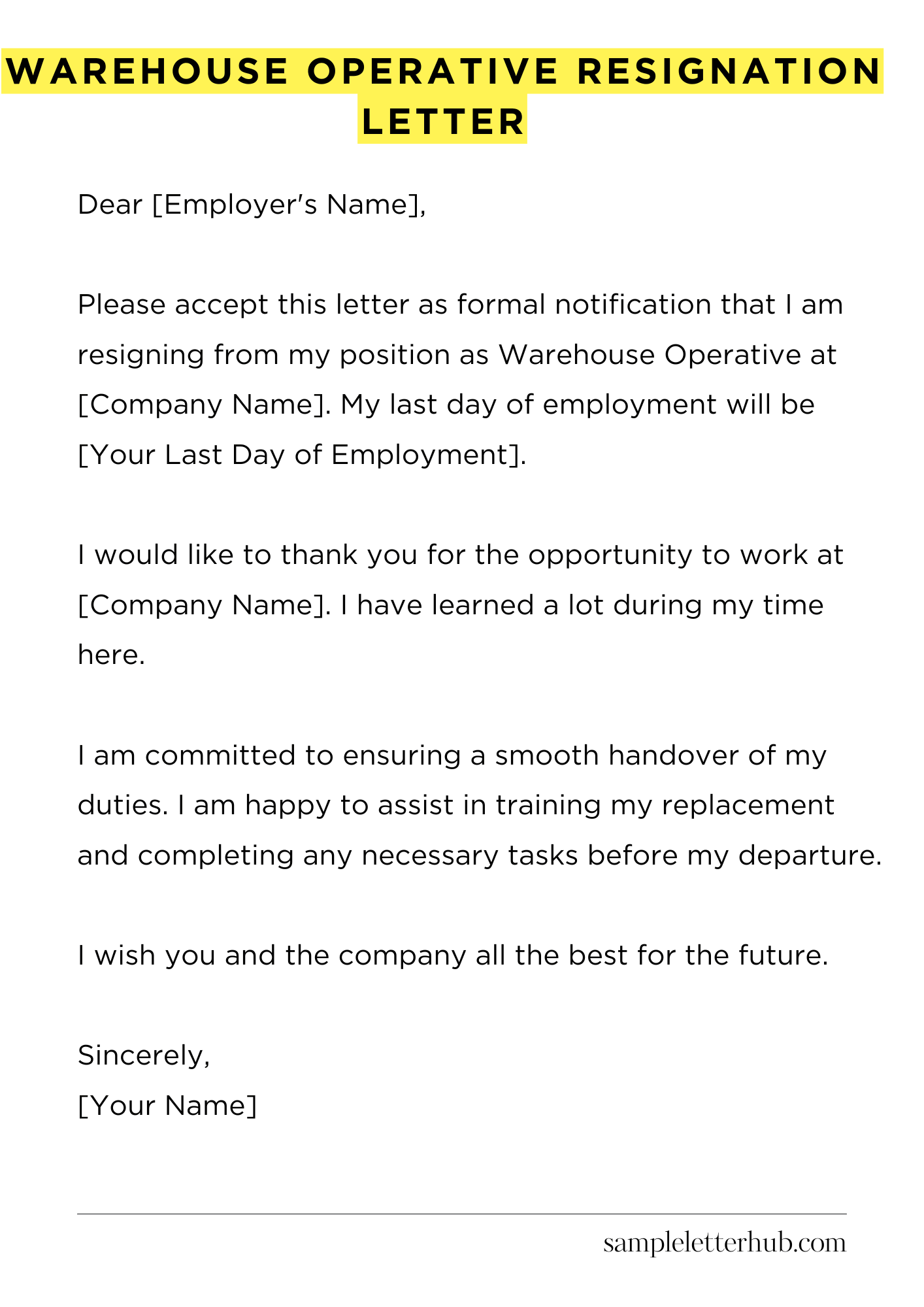
Dear [Employer’s Name],
Please accept this letter as formal notification that I am resigning from my position as Warehouse Operative at [Company Name]. My last day of employment will be [Your Last Day of Employment].
I would like to thank you for the opportunity to work at [Company Name]. I have learned a lot during my time here.
I am committed to ensuring a smooth handover of my duties. I am happy to assist in training my replacement and completing any necessary tasks before my departure.
I wish you and the company all the best for the future.
Sincerely,
[Your Name]
How to Write a Warehouse Operative Resignation Letter
1. Getting Started: The Basics You Need
Resigning from any job can be a bit daunting. This is particularly true when you are working as a Warehouse Operative. The first step to a smooth transition is crafting a professional resignation letter. It is vital to remember this is not a platform for airing grievances! Keep it simple and direct.
You must include your name, the date, and the recipient’s name and title (e.g., Warehouse Manager). Next, state your intention to resign clearly. This is essential for a smooth handover. Ensure you also specify your last day of employment. Consider it the cornerstone of your formal departure. This helps clarify when your employment officially ends.
2. The Core Body: What to Say
The body of your letter should be concise. You need to state your intention and, most importantly, provide a clear, easy to understand end date. Include a brief statement. You can express your gratitude for the opportunity. While it’s tempting to delve into the specifics of why you’re leaving, resist the urge.
Keep the tone professional. A simple “Thank you for the opportunity to work here” is always acceptable. If you have any specific duties or projects that need to be addressed, briefly mention your willingness to assist with the handover process. This demonstrates professionalism.
3. Key Elements: Dates and Details
Accuracy matters. Double-check all dates. Confirm your last day aligns with your employment agreement or any notice period you are required to give. Be sure you have all the information about the recipient. The wrong details will create a bad impression. Remember your goal is to depart professionally.
Also, confirm the letter is sent to the right person. Include your contact information. This makes it easier for your employer to reach you during the handover. This way, communication becomes straightforward and effective.
4. Keeping it Professional: Tone and Language
Choose your words carefully. This is a formal document. Maintain a respectful tone throughout the letter. Avoid any negative language, complaints, or personal opinions about your colleagues or the company. Use polite and professional language. Steer clear of slang. Your goal is to leave on good terms.
You should proofread it carefully to correct any errors. This highlights your attention to detail. This also reflects your professionalism and attention to detail. Consider having a second pair of eyes to check your work.
5. Formatting and Delivery: Final Steps
Format your letter professionally. Use a standard business letter format. This shows respect for the recipient and the company. Use a clear, easy-to-read font, such as Arial or Times New Roman. Ensure your letter is easily readable. Choose a font size that’s appropriate. Print the letter on good-quality paper.
Make sure you get proof of receipt. If possible, deliver the letter in person to your manager. This adds a personal touch. Otherwise, send it via email, and keep a copy for your records. The final steps can secure a positive impression. Following these guidelines ensures a smooth and professional transition.
FAQs about Warehouse Operative resignation letter
Understanding the nuances of a warehouse operative resignation letter is crucial for a smooth transition. Here are some of the most frequently asked questions to help you navigate this process effectively.
What is the essential information to include in a warehouse operative resignation letter?
Your resignation letter should include: your clear and unambiguous statement of resignation (e.g., “I am writing to resign from my position as Warehouse Operative”); the effective date of your resignation (ensure it aligns with your contract and notice period); a brief expression of gratitude for the opportunity; and your signature.
It’s also often advisable to provide your contact information.
How much notice period should a warehouse operative give in a resignation letter?
The required notice period is typically outlined in your employment contract. It’s essential to consult your contract to determine the agreed-upon notice period. Common notice periods are one or two weeks, but it can vary. Adhering to the contractual notice period is legally and professionally sound.
Should I provide a reason for resigning in my warehouse operative resignation letter?
While not always required, you can briefly state your reason for leaving. This is particularly useful if you’re departing for a new opportunity or to address any misunderstandings. Keep it concise, positive, and avoid any negative comments about your employer or colleagues. If you prefer not to state a reason, that is also perfectly acceptable.
How should I deliver my warehouse operative resignation letter?
It is recommended to deliver your resignation letter in writing. Typically, you should submit a hard copy to your supervisor or HR department. It’s often advisable to retain a copy for your records. Some companies may also accept digital submissions via email. Always confirm your company’s preferred method.
What should I avoid including in a warehouse operative resignation letter?
Avoid any unprofessional language, complaints, or negative comments about your employer, colleagues, or working conditions. Refrain from listing grievances or engaging in accusatory statements. Keep the tone positive and professional. Also, do not include confidential company information or trade secrets.
Related:
Resignation letter due to rude boss
Resignation letter moving to another state
Resignation letter due to illness of family member
Resignation letter due to study