

A “Visual Artist resignation letter” is a formal notice. It’s written by an artist. It’s their official way of quitting a job. The letter informs their employer of their departure. It also usually includes their last day of work.
This article is designed to help. We’ll explore different resignation letter examples. You can use them for inspiration. We’ll offer templates and samples. These will make writing your own letter easier.
Need to quit your art job? We’ve got you covered. These examples will guide you. Craft a professional and polished resignation. Let’s make this process simple and stress-free.
Visual Artist Resignation Letter
Below is a sample of a Visual Artist Resignation Letter:
[Your Name]
[Your Address]
[Your Phone Number]
[Your Email Address]
[Date]
[Employer’s Name]
[Employer’s Title]
[Company Name]
[Company Address]
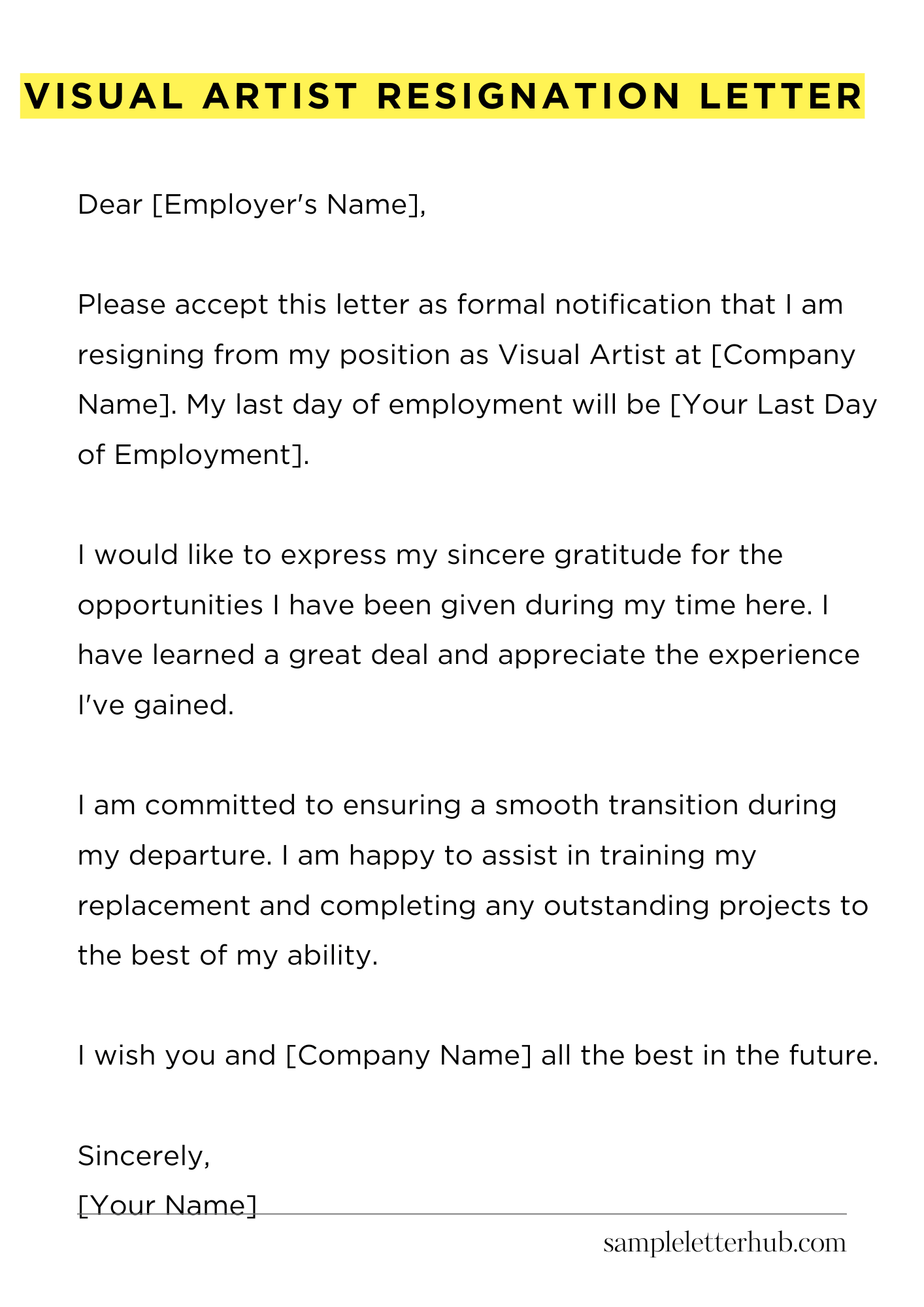
Dear [Employer’s Name],
Please accept this letter as formal notification that I am resigning from my position as Visual Artist at [Company Name]. My last day of employment will be [Your Last Day of Employment].
I would like to express my sincere gratitude for the opportunities I have been given during my time here. I have learned a great deal and appreciate the experience I’ve gained.
I am committed to ensuring a smooth transition during my departure. I am happy to assist in training my replacement and completing any outstanding projects to the best of my ability.
I wish you and [Company Name] all the best in the future.
Sincerely,
[Your Name]
How to Write a Visual Artist Resignation Letter
Resigning from any job can be a daunting task. However, when you’re a visual artist, the process requires a bit more nuance. Your resignation letter is a formal document. It is essentially your official goodbye and must be handled with professionalism. It should reflect your creativity while maintaining clarity.
You want to leave a positive lasting impression. Here’s a guide to help you craft the perfect resignation letter.
1. Start with the Basics: Formatting and Essentials
First things first. You need to get the formatting right. Always begin with your contact information at the top. This includes your name, address, phone number, and email. Next, add the date, followed by the recipient’s information (the hiring manager or supervisor’s name and title). Start the letter with a formal salutation.
“Dear [Recipient’s Name]” is a safe and polite choice. Now, let’s get to the important part. State your intention clearly and concisely. You are resigning. State the date of your last day of employment. This is crucial for their records. Keep it professional. Keep it clean. Avoid any unnecessary embellishments or distractions.
2. Express Gratitude: Showing Appreciation is Key
Even if you’re leaving a less-than-ideal situation, expressing gratitude is vital. This is an opportunity to show your appreciation for the opportunity. Mention any positive experiences, skills you’ve gained, or relationships you’ve built. For instance, acknowledge the company for the chance to work with them and learn.
Keep the tone positive. Acknowledge your team’s support, if any. Your words will set the tone for your departure. A few well-chosen words of thanks can go a long way.
3. Provide a Reason (Optional, But Sometimes Necessary)
You are not always obligated to give a reason for your resignation. However, in some situations, it can be helpful. Do so if you are comfortable. If you are leaving for a new opportunity, briefly mention it. Avoid negativity.
Do not provide overly specific details, especially if you have been offered a more favorable opportunity elsewhere. Keep the focus on the positive aspects of your new direction. Your reason, if you provide one, should be brief and professional. Always keep in mind, clarity is the priority.
4. Offer Assistance: Smooth Transition
Consider offering your help during the transition period. This shows professionalism and respect. You could offer to assist with training your replacement. You can also offer to document any ongoing projects or procedures.
This can make the transition smoother. This demonstrates you are committed to making your departure as seamless as possible. This approach leaves a lasting impression that is favorable. Be realistic about what you can do. It’s about being helpful, not over-committing.
5. Closing and Next Steps: Finalizing the Letter
Conclude your letter with a formal closing. “Sincerely,” or “Respectfully,” are both suitable options. Include your typed name below your closing. Print the letter and sign it by hand. Consider keeping a copy for your records. Before sending, proofread carefully. Ensure there are no spelling or grammatical errors. Delivery is critical.
Submit your resignation letter to the appropriate person. Send it via email or hand-deliver a printed copy. With these steps, you are one step closer to your new chapter.
FAQs about Visual Artist Resignation Letter
What is the primary purpose of a visual artist’s resignation letter?
The primary purpose of a visual artist’s resignation letter is to formally communicate the artist’s decision to leave their current position or project. It serves as an official record of the artist’s departure and allows for a smooth transition. It also allows the artist to express their reasons for leaving and to formally sever ties with the employer or client.
What key elements should be included in a visual artist’s resignation letter?
A well-crafted resignation letter should include the artist’s name, the date, the recipient’s name and title, a clear statement of resignation, the effective date of resignation, a brief statement of gratitude (if applicable), and any relevant details regarding project handover or outstanding obligations. It should also be professional, concise, and respectful.
How much notice should a visual artist give when resigning?
The amount of notice a visual artist should give depends on their employment contract, industry standards, and the nature of their relationship with the employer or client. Standard practice typically involves two weeks’ notice, but contracts may specify a longer period. It’s crucial to review the contract and comply with its stipulations. When in doubt, providing more notice is always preferable.
Can a visual artist include a reason for leaving in their resignation letter?
Yes, a visual artist can choose to include a reason for leaving, but it is not always mandatory. If the artist is comfortable doing so, they may briefly explain their reasons for resigning, such as pursuing new opportunities, career advancement, or personal reasons. However, the tone should remain professional and avoid negativity.
If the reasons are sensitive, it’s acceptable to keep the explanation brief or omit it altogether.
What is the proper format for a visual artist’s resignation letter?
A visual artist’s resignation letter should follow a professional business letter format. This typically includes a formal salutation (e.g., “Dear [Recipient’s Name]”), a clear and concise body, and a professional closing (e.g., “Sincerely,” or “Regards,” followed by the artist’s signature and printed name).
The letter should be well-formatted, with clear paragraphs and a professional tone. It is also advised that you keep a copy for your personal records.
Related:
Resignation letter due to rude boss
Resignation letter moving to another state
Resignation letter due to illness of family member
Resignation letter due to study