

So, you’re leaving your UI design role? You need a “User Interface resignation letter.” It’s a formal notice. Its purpose is to inform your employer of your departure. It officially marks the end of your employment.
Writing this letter can feel tricky. You want to be professional. You also want to keep it simple. That’s where we come in. We will provide helpful templates. We’ll share clear examples.
We’ve got samples. They’ll make writing your letter easy. Use these as a starting point. Adapt them to fit your specific situation. Craft a great letter with confidence.
User Interface Resignation Letter
Below is a sample of a User Interface Resignation Letter:
[Your Name]
[Your Address]
[Your Phone Number]
[Your Email Address]
[Date]
[Hiring Manager Name] (If known, otherwise use title)
[Hiring Manager Title]
[Company Name]
[Company Address]
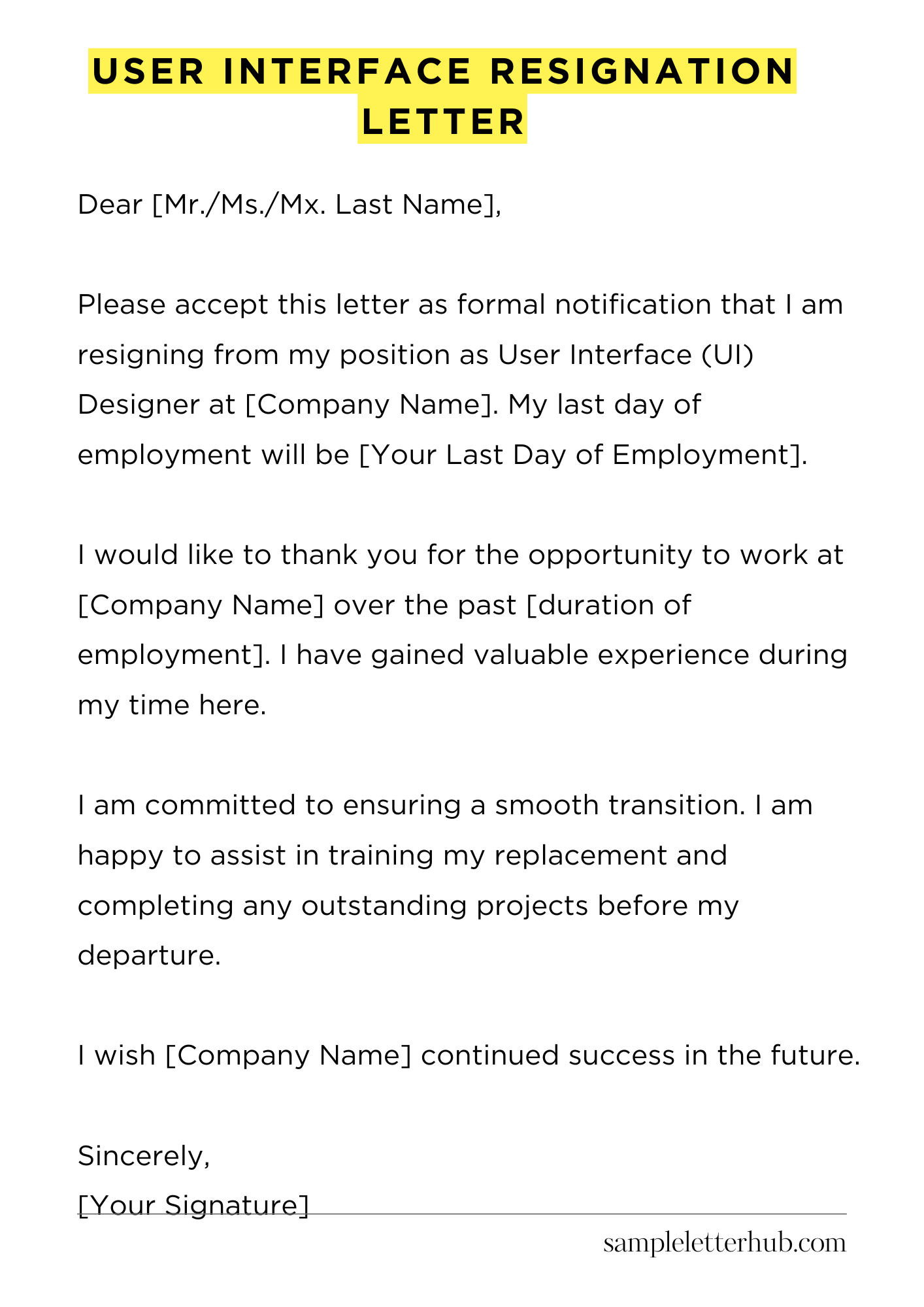
Dear [Mr./Ms./Mx. Last Name],
Please accept this letter as formal notification that I am resigning from my position as User Interface (UI) Designer at [Company Name]. My last day of employment will be [Your Last Day of Employment].
I would like to thank you for the opportunity to work at [Company Name] over the past [duration of employment]. I have gained valuable experience during my time here.
I am committed to ensuring a smooth transition. I am happy to assist in training my replacement and completing any outstanding projects before my departure.
I wish [Company Name] continued success in the future.
Sincerely,
[Your Signature]
How to Write a User Interface Resignation Letter
Leaving a job can be a big step. It often requires careful planning. Crafting a resignation letter is a crucial part of the process. For those in the User Interface (UI) field, this letter represents your professionalism and sets the tone for your departure. Let’s delve into how to create a solid UI resignation letter.
Step 1: Get the Basics Right
First things first. You must include some essential information. Start with your name and contact information. Then add the date. Next, identify the recipient. Usually, this is your direct supervisor or HR manager. Keep it concise. This section simply provides context.
Next, state your intention to resign. This should be clear and direct. For example, “Please accept this letter as formal notification that I am resigning from my position as UI Designer, effective [Your Last Day].” Make sure to include your last day of employment. This helps avoid confusion.
Step 2: Express Gratitude and Professionalism
This is extremely important. Briefly express your gratitude for the opportunity to work at the company. A simple “I would like to thank you for the opportunity to work at [Company Name]” often works well. Be polite. Be appreciative of your time there, even if you’re leaving because of something negative.
Maintaining a professional tone is paramount. Even if you’ve had a challenging experience, avoid negativity. Focus on the positive aspects of your employment, or simply state that you are pursuing other opportunities. This shows respect. It protects your future prospects.
Step 3: Handle the Details
Now, address practical considerations. If you’re willing to help with the transition, mention it. Consider adding something like, “I am committed to ensuring a smooth handover of my responsibilities and am happy to assist in training a replacement during my remaining time here.” This demonstrates responsibility. It also makes you look good.
Consider the company’s guidelines. Your company may have specific procedures for resignation letters. Be sure to check your employee handbook or consult with HR. This will help you to avoid any issues.
Step 4: Keep it Concise and Clear
The best resignation letters are succinct. Avoid lengthy explanations or justifications for your departure. This is not the place for detailed feedback or complaints. Keep the focus on your resignation and the practical elements involved.
Use clear, straightforward language. Avoid jargon or overly flowery prose. Your goal is to be understood. This ensures the letter is easy to read. It will be appreciated.
Step 5: Review and Proofread
Before submitting, proofread your letter carefully. Check for any grammatical errors or typos. These mistakes can undermine your professionalism. Ask a friend or colleague to read it over for a second opinion.
Once you are satisfied, print the letter. Sign it. Then, submit it according to your company’s policy. Usually, this is done via email or in person to your supervisor or HR.
Following these steps will help you to create a professional and effective UI resignation letter. Good luck with your next endeavor!
FAQs about User Interface Resignation Letter
What is the primary purpose of a User Interface (UI) resignation letter?
The primary purpose of a UI resignation letter is to formally notify your employer of your intention to leave your UI design or related role. It officially marks the end of your employment and serves as a record of your departure.
What key elements should be included in a UI resignation letter?
A well-crafted UI resignation letter should include your formal announcement of resignation, the effective date of your departure, a brief expression of gratitude for the opportunity, and any necessary information regarding the handover of your responsibilities or ongoing projects. You may also include your contact information for future correspondence, if you wish.
How much notice should I give in my UI resignation letter?
The amount of notice required is typically specified in your employment contract or company policy. Common notice periods range from two weeks to a month. It is important to adhere to the agreed-upon timeframe to maintain a professional relationship with your employer.
Can I provide a reason for leaving in my UI resignation letter?
While not mandatory, you may choose to briefly state your reason for leaving, such as pursuing another opportunity, career growth, or personal reasons. Keep it concise and positive, focusing on your future goals rather than any negative aspects of your current role.
What should I do after submitting my UI resignation letter?
After submitting your resignation letter, you should prepare for your departure by completing any outstanding tasks, documenting your work, and assisting in the handover of your responsibilities. Maintain a professional attitude and offer assistance to ensure a smooth transition for your colleagues.
Related:
Resignation letter due to rude boss
Resignation letter moving to another state
Resignation letter due to illness of family member
Resignation letter due to study