

A trustee resignation letter formally declares your decision to step down from your role. It’s a crucial document. It officially informs the relevant parties of your departure. This letter ensures a smooth transition.
Writing this letter can seem daunting. No worries! We’ve got you covered. We’ll provide you with various templates. You’ll find different examples and samples.
These samples will simplify the writing process. They will help you craft your letter with ease. Find the right format for your situation. Get ready to create a clear and professional resignation.
Trustee Resignation Letter
Below is a sample of a Trustee Resignation Letter:
[Your Name]
[Your Address]
[Your Phone Number]
[Your Email Address]
[Date]
[Recipient Name]
[Recipient Title]
[Organization Name]
[Organization Address]
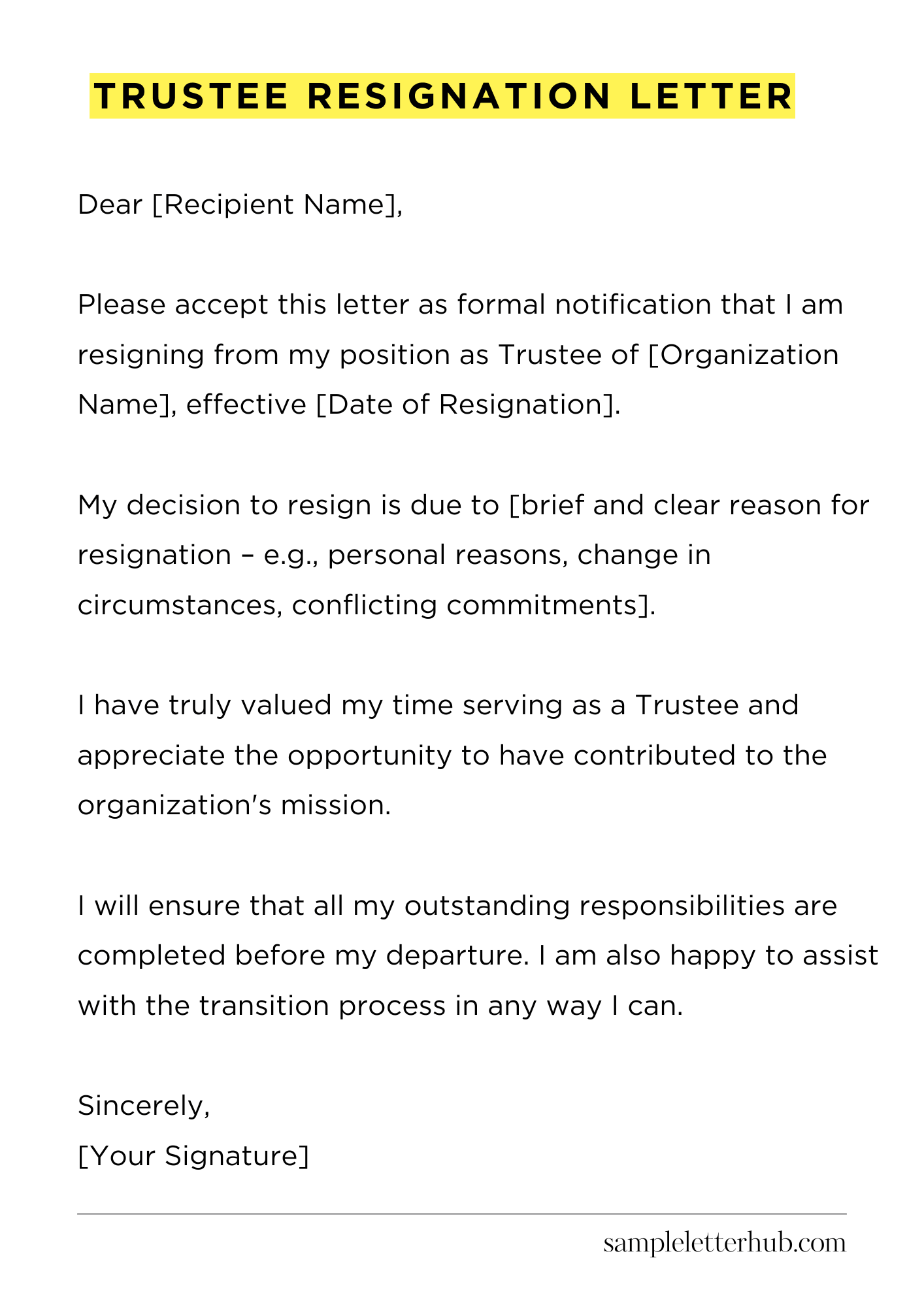
Dear [Recipient Name],
Please accept this letter as formal notification that I am resigning from my position as Trustee of [Organization Name], effective [Date of Resignation].
My decision to resign is due to [brief and clear reason for resignation – e.g., personal reasons, change in circumstances, conflicting commitments].
I have truly valued my time serving as a Trustee and appreciate the opportunity to have contributed to the organization’s mission. I wish [Organization Name] continued success in the future.
I will ensure that all my outstanding responsibilities are completed before my departure. I am also happy to assist with the transition process in any way I can, including providing any relevant information to the incoming Trustee.
Thank you for your understanding.
Sincerely,
[Your Signature]
How to Write a Trustee Resignation Letter
Why Resigning as a Trustee Matters
Being a trustee comes with significant responsibility. You’re entrusted with managing assets and making important decisions. Sometimes, though, circumstances change, and you need to step down. Perhaps your personal life is too hectic. Maybe you’re relocating. Whatever the reason, resigning properly is crucial.
A well-written trustee resignation letter protects you from future liability and ensures a smooth transition. Don’t simply vanish – that’s a recipe for trouble.
Essential Elements of Your Letter
Your resignation letter needs to be clear, concise, and professional. It’s not the time for rambling. Keep it straightforward. Start with the date. Then, clearly state your intent to resign as trustee. Identify the trust by name and date. Next, state the effective date of your resignation.
This is when your responsibilities formally end. Include the name and contact information of the successor trustee, if known. If you aren’t suggesting a replacement, specify that. Also, and very important, mention that you’re delivering all the trust documents and assets (if applicable) to the proper parties.
Finally, end the letter with your signature and printed name. You might want to include your contact information too, just in case they need to get in touch. Keep a copy for your records.
Crafting the Right Tone
Maintain a respectful and professional tone throughout the letter. Even if the circumstances surrounding your resignation are less than ideal, avoid negativity or blaming. Thank the beneficiaries, if you like. Keep your language neutral and focused on the facts. This is about formality, not feelings.
It’s also wise to consult with an attorney to ensure the letter meets all legal requirements. This can help with the proper wording for your specific situation. This added step provides crucial protection.
Delivering the Letter Properly
How you deliver the letter matters, too. Send the original letter via certified mail with a return receipt requested. This provides proof of delivery. This is very important. Keep the tracking information. Always send copies to all relevant parties, including the beneficiaries and any co-trustees or the trust’s attorney.
Be sure to follow any specific instructions outlined in the trust document regarding resignation procedures. If the trust document dictates the method of delivery, adhere to it precisely. A little extra effort can go a long way.
After the Resignation: Wrapping Up
After your resignation is official, there are a few final steps. Cooperate fully with the successor trustee. Answer any questions they might have and assist with the transition as much as possible. This shows good faith. Ensure all records are properly transferred. Get confirmation that all the duties of trustee are being passed to a new trustee.
File copies of the resignation letter and any related documentation. Keep them in a safe place. Consider getting legal advice to review your responsibilities and protect yourself. The end is the start of a new chapter.
FAQs about Trustee resignation letter
What is a Trustee resignation letter and when is it required?
A Trustee resignation letter is a formal document stating a trustee’s decision to step down from their role. It is required when a trustee no longer wishes or is unable to fulfill their duties as outlined in the trust document. This could be due to personal reasons, health concerns, conflicts of interest, or simply a desire to relinquish the responsibility.
What information should be included in a Trustee resignation letter?
A comprehensive Trustee resignation letter typically includes the trustee’s full name, the date of resignation, the name of the trust, the specific role held, the effective date of resignation, a clear statement of resignation, and potentially a brief explanation of the reason (though this is not always necessary).
It also needs to provide contact information for the resigning trustee, and may acknowledge the appointment of a successor trustee, if applicable. A signature is essential.
Who should receive the Trustee resignation letter?
The Trustee resignation letter should be sent to the appropriate parties as specified within the trust document. This usually includes the beneficiaries of the trust, any co-trustees (if applicable), and potentially the grantor (the person who created the trust) or their legal representative. Proof of delivery, such as certified mail, is recommended.
What are the legal implications of resigning as a Trustee?
Resigning as a Trustee has several legal implications. It officially terminates the trustee’s responsibilities, liabilities, and authority. The resignation must follow the procedures outlined in the trust document. The resigning trustee might be required to hand over assets and financial records to the successor trustee.
They may also need to file an accounting with the beneficiaries. The resigning trustee remains responsible for their actions while they were trustee before resignation is effective.
Can a Trustee’s resignation be contested?
Yes, a Trustee’s resignation can be contested under certain circumstances. Beneficiaries or other interested parties can challenge the resignation if they believe it violates the trust’s terms, is not in the best interest of the beneficiaries, or if there is a dispute regarding the handling of trust assets before resignation. Such a challenge typically requires legal action in court.
Related:
Resignation letter due to rude boss
Resignation letter moving to another state
Resignation letter due to illness of family member
Resignation letter due to study