

A Treasury Manager resignation letter is a formal document. It is written by a Treasury Manager. Its purpose is to officially announce the end of their employment. The letter details the manager’s intent to leave the company. It may also include a reason for leaving and appreciation for the opportunity.
Crafting the perfect resignation letter can feel daunting. We’ve got you covered. We’re here to help you get started. This article is your guide to creating your own resignation. We’ll share several templates and examples. Use them as a springboard for your own letter.
Need a quick exit strategy? Looking for inspiration? You’ve come to the right place. We’ve compiled a range of sample letters. They’re designed to make your writing process simpler. Explore these examples to find the right tone and content for your situation.
Treasury Manager Resignation Letter
Below is a sample of a Treasury Manager Resignation Letter:
[Your Name]
[Your Address]
[Your Phone Number]
[Your Email Address]
[Date]
[Hiring Manager Name] (If known, otherwise use title)
[Hiring Manager Title]
[Company Name]
[Company Address]
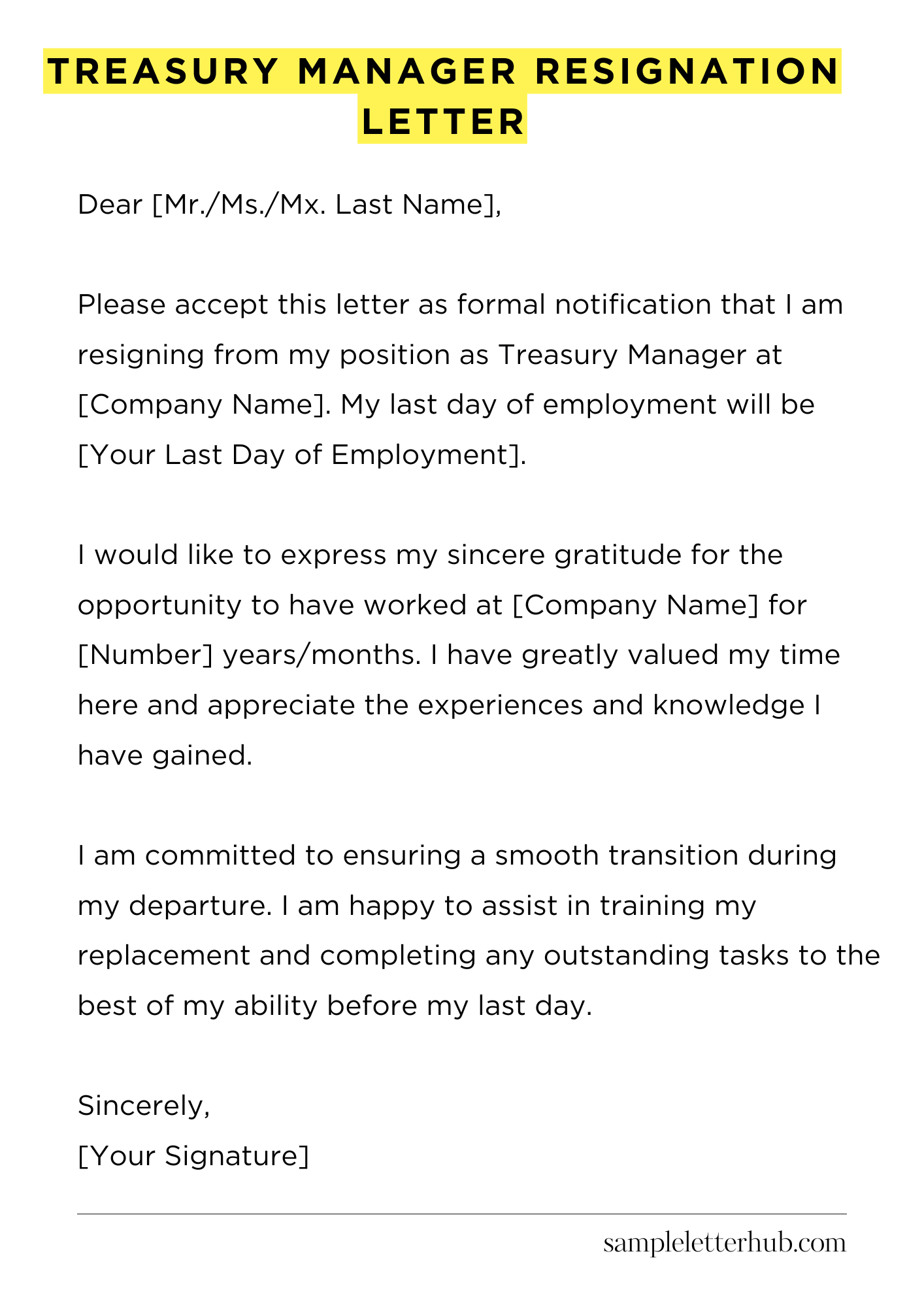
Dear [Mr./Ms./Mx. Last Name],
Please accept this letter as formal notification that I am resigning from my position as Treasury Manager at [Company Name]. My last day of employment will be [Your Last Day of Employment].
I would like to express my sincere gratitude for the opportunity to have worked at [Company Name] for [Number] years/months. I have greatly valued my time here and appreciate the experiences and knowledge I have gained.
I am committed to ensuring a smooth transition during my departure. I am happy to assist in training my replacement and completing any outstanding tasks to the best of my ability before my last day.
I wish you and the company continued success in the future.
Sincerely,
[Your Signature]
How to Write a Treasury Manager Resignation Letter
Why a Well-Crafted Resignation Matters
Leaving a job, especially a role as important as Treasury Manager, requires careful consideration. Your resignation letter is more than just a formality; it is a professional statement. It reflects your character and leaves a lasting impression on your employer. Doing it right can have a significant impact on your future career prospects.
Think about it: this letter will be part of your employment record. It’s crucial to treat it with the same level of professionalism and attention to detail as you would any other important business document. A poorly written letter can damage relationships and potentially affect future references.
Essential Elements to Include
Several key components are necessary for a successful resignation letter. These parts ensure clarity and maintain a professional tone. Let’s look at what you need to include:
- Your Name and Contact Information: Always begin with your full name, address, phone number, and email address. This ensures the company knows who the letter is from and how to reach you if needed.
- Date: Place the current date under your contact information. This is simple, but important.
- Recipient Information: Include the name of your supervisor or the appropriate HR representative, their title, and the company’s address.
- Formal Salutation: Start the letter with a professional greeting, such as “Dear [Mr./Ms./Mx. Last Name]”.
- Statement of Resignation: Clearly state your intention to resign from your position as Treasury Manager. Specify your last day of employment.
- Reason (Optional): While not always required, you might choose to briefly state your reason for leaving. Keep it concise, positive, and avoid negativity.
- Expression of Gratitude: Thank your employer for the opportunity to have worked there. Acknowledge your experiences and any skills you’ve gained.
- Offer of Assistance: Offer to assist in the transition process. This shows your commitment and professionalism. This shows you are professional and ready to help.
- Closing: End with a professional closing, such as “Sincerely” or “Best Regards,” followed by your signature and typed name.
Crafting the Right Tone
The tone of your letter is just as important as its content. Aim for a professional, respectful, and positive approach. Avoid any negative comments about your employer, colleagues, or workplace.
Be concise and to the point. Your letter should be easy to read and understand. Maintain a professional demeanor throughout. Review your letter carefully for any spelling or grammatical errors before sending it.
Example Letter Template
Here’s a basic template to get you started. Remember to customize it to your specific situation and circumstances:
    [Your Name]
    [Your Address]
    [Your Phone Number]
    [Your Email Address]

    [Date]

    [Recipient Name]
    [Recipient Title]
    [Company Name]
    [Company Address]

    Dear [Mr./Ms./Mx. Last Name],

    Please accept this letter as formal notification that I am resigning from my position as Treasury Manager at [Company Name]. My last day of employment will be [Your Last Day of Employment].

    [Optional: You may include a brief, positive statement about your reason for leaving. For example: "I am pursuing a new opportunity that aligns with my long-term career goals."]

    I am grateful for the opportunities I have been given during my time here. I have learned a great deal, and I appreciate the experience I have gained.

    I am committed to ensuring a smooth transition during my departure and am happy to assist in any way possible to train my replacement.

    Sincerely,

    [Your Signature]

    [Your Typed Name]
Final Checklist and Considerations
Before submitting your letter, perform a final review using a checklist. This simple step can help avoid any errors. Here’s what you need to check:
- Accuracy of Information: Verify all dates, names, and titles.
- Clarity and Conciseness: Make sure your message is clear and easy to understand.
- Professionalism: Ensure your tone is respectful and positive.
- Proofreading: Check for any spelling or grammatical errors.
- Delivery Method: Consider how you will deliver the letter. Typically, a hard copy delivered to your supervisor is standard. Email is acceptable in some workplaces, but confirm with HR or your supervisor if unsure.
- Timing: Provide adequate notice as specified in your employment contract. Two weeks is customary, but some roles may require more.
By following these guidelines, you can write a resignation letter that reflects your professionalism and leaves a positive lasting impression. Remember, this is a bridge to your next opportunity. Make it a good one.
FAQs about Treasury Manager Resignation Letter
What are the essential elements to include in a Treasury Manager resignation letter?
A comprehensive Treasury Manager resignation letter should include your formal resignation statement, the effective date of your departure, a concise statement of gratitude for the opportunity, and your willingness to assist with the transition.
It’s also advisable to mention any outstanding projects you’re involved in and offer to help complete or hand them over. Maintain a professional tone throughout the letter, and consider mentioning a forwarding address for final communications.
How much notice should a Treasury Manager provide when resigning?
The standard notice period for a Treasury Manager typically aligns with the company’s policy, often around two to four weeks. However, this can vary based on your employment contract, local labor laws, and your seniority level.
Review your employment agreement to ascertain the required notice period. Providing ample notice is considered professional and can help ensure a smooth transition of your responsibilities.
What should a Treasury Manager avoid including in a resignation letter?
While expressing gratitude is important, avoid including excessive personal details, negative comments about your current employer or colleagues, or a detailed explanation of your reasons for leaving.
Refrain from burning bridges or sharing confidential company information. Keep the tone positive, professional, and focused on the transition of your duties rather than dwelling on grievances or personal motivations.
Should a Treasury Manager offer assistance during the transition period, and if so, what kind?
Offering assistance during the transition is highly recommended. You can offer to train your replacement, document key processes, provide handover notes, or assist with ongoing projects.
Specify the extent of your availability and which areas you’re prepared to assist with. This helps ensure business continuity and demonstrates a professional commitment to your employer until your last day.
How should a Treasury Manager handle sensitive information in their resignation letter, such as ongoing projects or confidential company data?
When addressing sensitive information, exercise caution. Your letter should acknowledge any key projects or responsibilities and offer a plan for their handover without revealing confidential data.
Avoid any specifics that could compromise the company. Consult with your supervisor or legal counsel if you have any doubts about disclosing sensitive information. Always err on the side of caution to maintain professional integrity and protect confidential company data.
Related:
Resignation letter due to rude boss
Resignation letter moving to another state
Resignation letter due to illness of family member
Resignation letter due to study