

So, you’re a Treasury Analyst, and you’re moving on? A Treasury Analyst resignation letter is your official goodbye. It formally informs your employer of your departure. It’s a crucial document. It helps maintain a professional relationship.
Need help crafting your letter? You’re in the right place. We’ve got you covered. We’ll provide you with various letter templates. We’ll also offer examples and samples. Use these as a starting point.
Writing a resignation letter is now easy. These templates will help you. They’ll help you communicate clearly. You can adapt them to your specific situation. Let’s get started.
Treasury Analyst Resignation Letter
Below is a sample of a Treasury Analyst Resignation Letter:
[Your Name]
[Your Address]
[Your Phone Number]
[Your Email Address]
[Date]
[Recipient Name]
[Recipient Title]
[Company Name]
[Company Address]
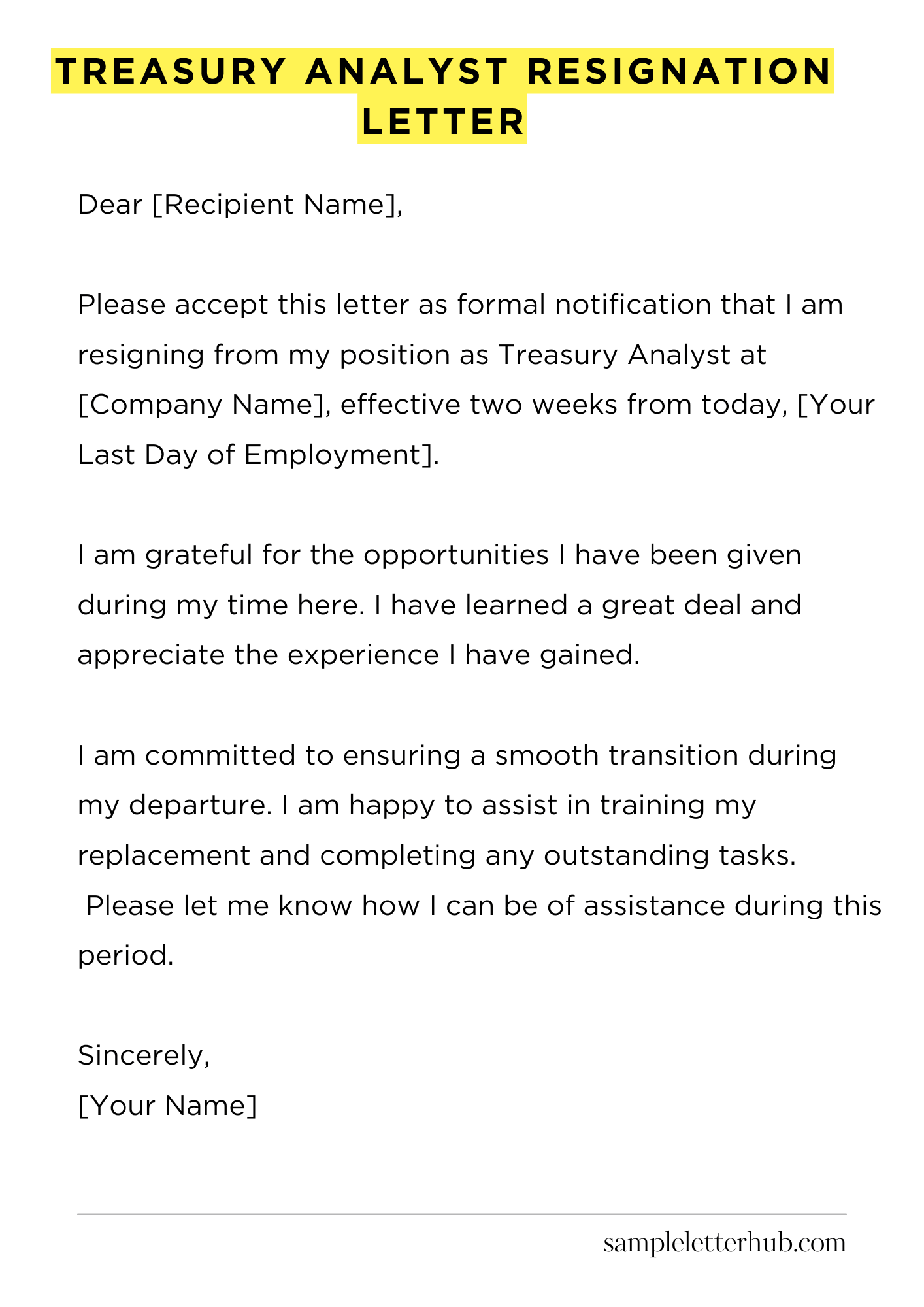
Dear [Recipient Name],
Please accept this letter as formal notification that I am resigning from my position as Treasury Analyst at [Company Name], effective two weeks from today, [Your Last Day of Employment].
I am grateful for the opportunities I have been given during my time here. I have learned a great deal and appreciate the experience I have gained.
I am committed to ensuring a smooth transition during my departure. I am happy to assist in training my replacement and completing any outstanding tasks. Please let me know how I can be of assistance during this period.
I wish you and [Company Name] all the best in the future.
Sincerely,
[Your Name]
How to Write a Treasury Analyst Resignation Letter
1. Get Started: Why It Matters
Leaving a job is a big deal. You’ve got to do it right. Especially when you’re dealing with something as important as your career. A well-written resignation letter is your professional farewell.
It’s a crucial step in maintaining a positive relationship with your current employer. This document sets the tone for your exit and can influence future opportunities. Think of it as your final, lasting impression.
2. Essential Elements: What to Include
Your letter needs to be clear, concise, and professional. Avoid lengthy explanations or personal gripes. Start with a straightforward statement of your intention to resign. Specify your last day of employment.
This is incredibly important to avoid any miscommunication. Next, express your gratitude for the opportunity to work at the company. Mention specific aspects you appreciated, such as the experience gained or the team you worked with. Keep it positive. Briefly state your reason for leaving, if you choose to. Avoid negativity.
Finally, offer assistance during the transition period. This shows your commitment to a smooth handover.
3. Crafting the Content: Putting Pen to Paper (or Fingers to Keyboard)
Think about the tone. It should be polite, respectful, and professional. Focus on brevity. Keep it short and to the point. Start with a simple salutation, like “Dear [Manager’s Name]”.
Then, state your resignation clearly: “Please accept this letter as formal notification that I am resigning from my position as Treasury Analyst, effective [Your Last Day of Employment].” Next, show your appreciation: “I am grateful for the opportunities I’ve had at [Company Name] and for the experience I have gained.”
Briefly mention your reason for leaving, if desired. You can say something like, “I have accepted a position that aligns more closely with my long-term career goals.” Conclude by offering assistance: “I am committed to ensuring a smooth transition and am happy to assist in training my replacement.” End with a professional closing, such as “Sincerely” or “Respectfully”.
4. Proofread and Polish: The Final Check
Before you send it, proofread, proofread, proofread! Errors can undermine your professionalism. Check for grammar and spelling mistakes. Ensure the formatting is consistent and easy to read.
Have a friend or colleague review it for a fresh perspective. Double-check all dates and names. Make sure the letter reflects the positive image you want to leave behind. A polished letter demonstrates attention to detail and respect for your employer. Take your time, get it right, and feel confident in your departure.
5. Delivery and Follow-Up: What to Do Next
Deliver your letter to your manager in person if possible. This is the most professional way to do it. Provide a printed copy. Keep a copy for your records. After submitting your letter, be prepared to discuss your departure. Remain professional and cooperative during the handover process.
Answer any questions your employer may have. Assist in the training of your replacement. If you have been asked, offer a brief exit interview. Thank your manager and colleagues for their support. A gracious exit leaves a lasting positive impression. This can benefit you in the long run.
FAQs about Treasury Analyst resignation letter
A Treasury Analyst resignation letter is a formal document. It is used to inform an employer about a decision to leave their position. Understanding its core components is crucial for a smooth transition.
What essential information should be included in a Treasury Analyst resignation letter?
A Treasury Analyst’s resignation letter should contain: your formal intent to resign, the effective date of your resignation, a concise statement of gratitude for the opportunity, and any relevant details regarding the handover of responsibilities. It is also good practice to include your contact information for any future correspondence, especially the forwarding address.
What is the appropriate tone to use when writing a Treasury Analyst resignation letter?
Maintain a professional and respectful tone throughout the letter. Express your appreciation for the experience gained and the opportunities provided. Avoid negative comments about the company or your colleagues. Use a neutral or positive tone, even if your reasons for leaving are not entirely positive.
How much notice should a Treasury Analyst provide when resigning?
The standard notice period is typically two weeks, but this can vary depending on your employment contract or company policy. Always refer to your contract for the agreed-upon notice period. If no specific period is mentioned, two weeks is generally considered acceptable and professional.
Should I include the reason for my resignation in the letter?
While not mandatory, it is generally acceptable to briefly mention the reason for your resignation. Keep it simple and positive, such as “to pursue other opportunities” or “to advance my career goals.” Avoid overly detailed explanations or negative remarks about the company or its employees.
How should a Treasury Analyst handle the handover of responsibilities?
In your resignation letter, offer to assist with the transition. Provide a detailed handover plan that outlines your current projects, tasks, and responsibilities. Offer to train your replacement and ensure all the necessary documents and information are passed on. This ensures a smooth transition and demonstrates professionalism.
Related:
Resignation letter due to rude boss
Resignation letter moving to another state
Resignation letter due to illness of family member
Resignation letter due to study