

A Tax Assistant resignation letter is a formal document. It is written to inform an employer about leaving a job. The letter officially states the intention to resign. It also clarifies the last day of employment.
Thinking of moving on? Drafting a resignation letter might seem tricky. Don’t worry, we’ve got you covered. We’ll explore several sample letters. These will help you craft your own.
Whether you’re moving to a new opportunity or changing careers, this guide simplifies the process. We will offer different examples. Choose the one that suits your situation. Make your transition smooth and professional.
Tax Assistant Resignation Letter
Below is a sample of a Tax Assistant Resignation Letter:
[Your Name]
[Your Address]
[Your Phone Number]
[Your Email Address]
[Date]
[Employer’s Name]
[Company Name]
[Company Address]
Dear [Employer’s Name],
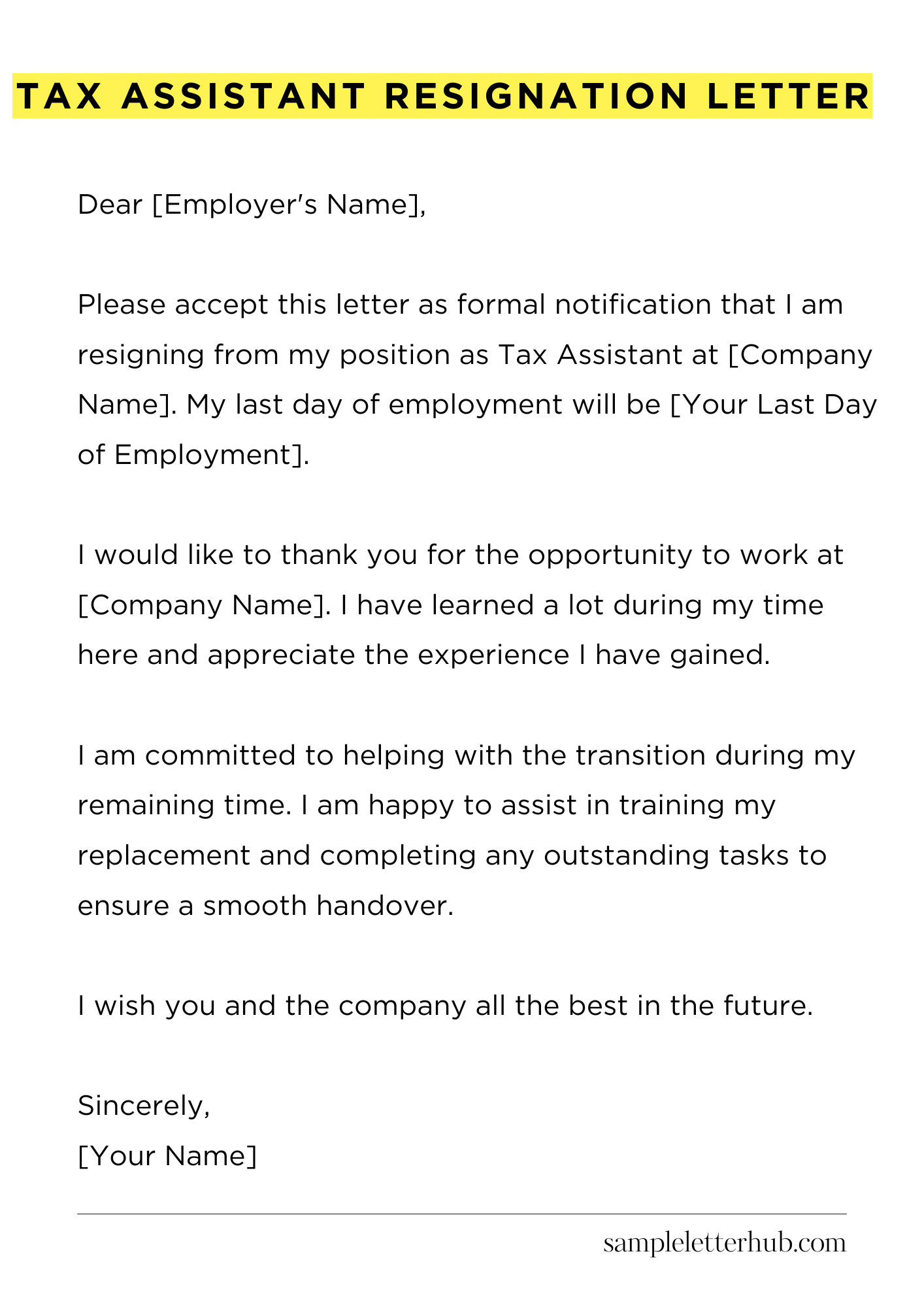
Please accept this letter as formal notification that I am resigning from my position as Tax Assistant at [Company Name]. My last day of employment will be [Your Last Day of Employment].
I would like to thank you for the opportunity to work at [Company Name]. I have learned a lot during my time here and appreciate the experience I have gained.
I am committed to helping with the transition during my remaining time. I am happy to assist in training my replacement and completing any outstanding tasks to ensure a smooth handover.
I wish you and the company all the best in the future.
Sincerely,
[Your Name]
How to Write Tax Assistant Resignation Letter
Leaving a job is a big decision. When you’re ready to move on from your role as a Tax Assistant, a well-crafted resignation letter is crucial. It’s your official notice, and it helps maintain a professional relationship with your employer. Here’s a breakdown of how to write an effective one.
1. Start with the Basics: Formatting and Date
Begin with a standard business letter format. This is important. Place your contact information (name, address, phone number, email) at the top left. Then, skip a line and add the date, followed by your employer’s information (name, title, company address). This sets a professional tone immediately.
For example, your header will look like this:
[Your Name]
[Your Address]
[Your Phone Number]
[Your Email Address]

[Date]

[Employer's Name]
[Employer's Title]
[Company Name]
[Company Address]
Ensure that the date is the day you are writing the letter. This provides a clear timeline of your departure.
2. The Opening: State Your Intent Clearly
The first paragraph is where you state your intention: to resign. Be direct and concise. Avoid beating around the bush. Use clear language.
A good example:
“Please accept this letter as formal notification that I am resigning from my position as Tax Assistant at [Company Name], effective [Your Last Day of Employment].”
That is all it takes to communicate your intent. Now, your employer has no doubt.
3. Express Gratitude and Positive Comments
Even if you’re leaving for negative reasons, keeping a positive tone is beneficial. Express your appreciation for the opportunity. Mention any specific experiences you enjoyed or skills you gained.
You can say something like:
“I am grateful for the opportunities I have been given during my time at [Company Name]. I have learned valuable skills and appreciate the experience I have gained.”
This leaves a good impression.
4. Offer Assistance with the Transition
Showing willingness to help with the transition demonstrates professionalism. It also makes your departure smoother for everyone involved. Offer to assist in training a replacement or completing ongoing tasks. This is a crucial element of a good resignation letter.
Consider something along these lines:
“I am happy to assist in any way possible during the transition period to ensure a smooth handover of my responsibilities. I am available to train my replacement, and will complete any pending tasks before my departure.”
This shows you’re a team player.
5. Closing and Formalities
Conclude with a final expression of gratitude and a polite closing. Keep it short. Sign your name above your typed name. This is a must-do.
A simple closing could read:
“Thank you again for the opportunity. I wish you and the company all the best in the future.”
Sincerely,
[Your Signature]
[Your Typed Name]
Writing a resignation letter for a Tax Assistant role doesn’t have to be hard. By following these steps and keeping it professional, you can ensure a smooth transition and leave a positive lasting impression.
FAQs about Tax Assistant resignation letter
Navigating the process of resigning from your position as a Tax Assistant requires careful consideration. Here are some of the most common questions regarding the resignation letter.
What is the essential information to include in a Tax Assistant resignation letter?
Your resignation letter should contain: your formal intention to resign, the effective date of your resignation, your formal name, your job title, and a brief expression of gratitude for the opportunity. You should also include your contact information for any follow-up.
How much notice should a Tax Assistant give when resigning?
The standard notice period is typically two weeks, but this may vary depending on your employment contract or company policy. Always refer to your contract to confirm the required notice period. If no such guidance is available within the employment contract, then following the two-week practice is generally the safest course of action.
Should I provide a reason for resigning in my Tax Assistant resignation letter?
While not mandatory, it’s customary to include a brief, professional reason for your resignation. This could be for career advancement, personal reasons, or pursuing new opportunities. Keep the reason concise and positive. Avoid going into excessive detail or negativity.
How should I format a Tax Assistant resignation letter?
Your resignation letter should be formatted professionally. Use a formal business letter style: include your name, address, the date, and the recipient’s information. Use a clear, concise tone and ensure the letter is free of grammatical errors.
What should I do after submitting my Tax Assistant resignation letter?
After submitting your letter, follow up with your manager to discuss your departure. Be prepared to answer questions and assist with the transition process. Cooperate with any handover procedures to ensure a smooth transition for your colleagues and the firm.
Related:
Resignation letter due to rude boss
Resignation letter moving to another state
Resignation letter due to illness of family member
Resignation letter due to study