

A structural engineer resignation letter is a formal document. It informs your employer of your intention to leave your job. The letter officially marks the end of your employment. It is a crucial step in the transition process.
Are you a structural engineer preparing to move on? Writing a resignation letter can be tricky. This article provides helpful examples. We’ll share various templates. They are designed to streamline your writing process. These samples will ease the creation of your perfect letter.
Whether you’re seeking a new opportunity or retiring, we’ve got you covered. Consider these samples your guide. They’ll assist you in crafting a professional and polished resignation letter. Adapt them to fit your unique circumstances.
Structural Engineer Resignation Letter
Below is a sample of a Structural Engineer Resignation Letter:
[Your Name]
[Your Address]
[Your Phone Number]
[Your Email Address]
[Date]
[Employer’s Name]
[Employer’s Title]
[Company Name]
[Company Address]
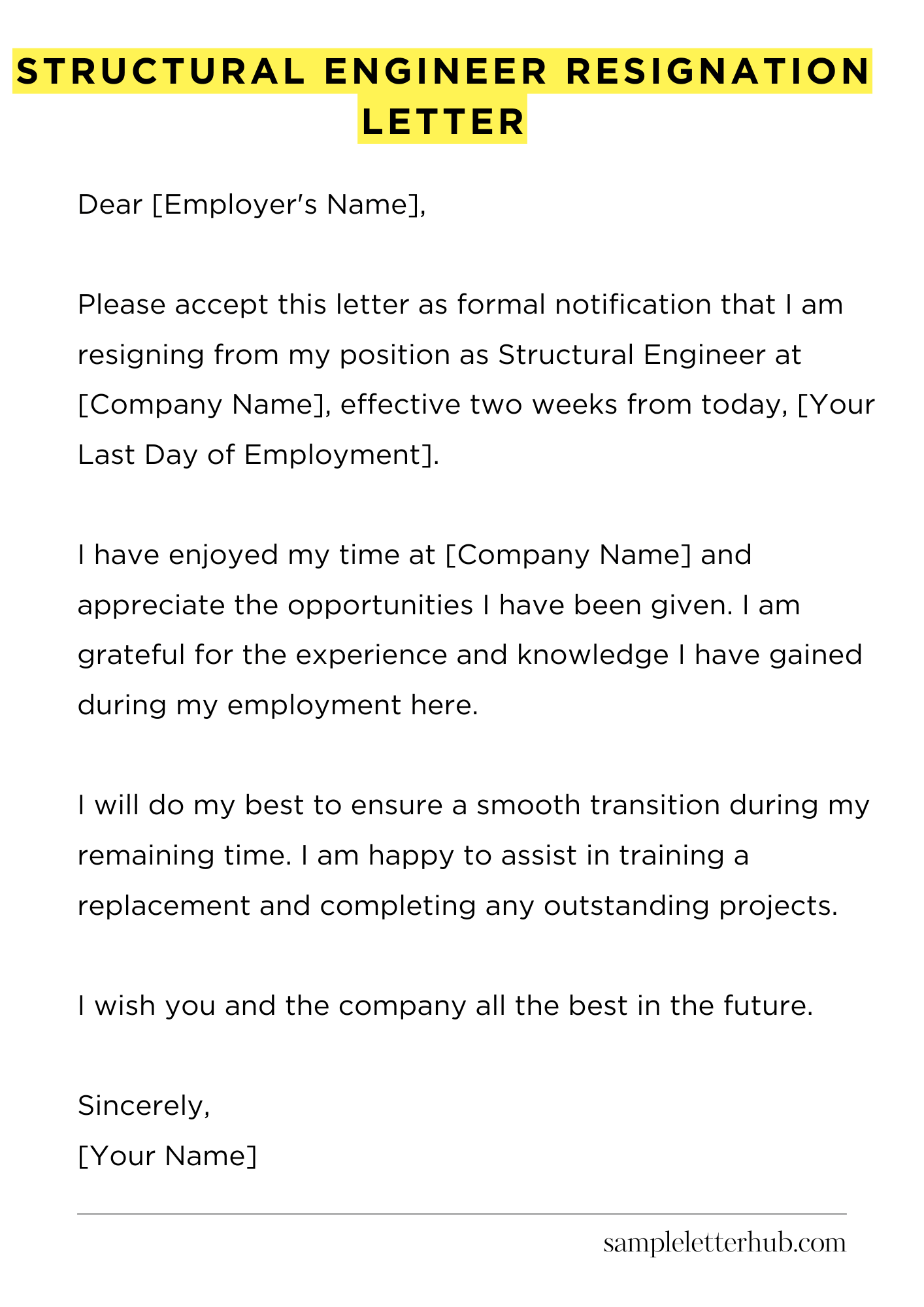
Dear [Employer’s Name],
Please accept this letter as formal notification that I am resigning from my position as Structural Engineer at [Company Name], effective two weeks from today, [Your Last Day of Employment].
I have enjoyed my time at [Company Name] and appreciate the opportunities I have been given. I am grateful for the experience and knowledge I have gained during my employment here.
I will do my best to ensure a smooth transition during my remaining time. I am happy to assist in training a replacement and completing any outstanding projects.
I wish you and the company all the best in the future.
Sincerely,
[Your Name]
How to Write a Structural Engineer Resignation Letter
So, you’re ready to move on. You’ve made a big decision, and now it’s time to put it in writing. Resigning from your role as a structural engineer requires a professional and clear resignation letter. It is crucial to handle this with care. Here’s how to craft a resignation letter that is both respectful and effective.
1. Begin with a Clear Statement of Intent
First things first. You must state your intention to resign. Keep it direct and to the point. Start with a straightforward sentence, clearly stating your position and the date of your last day of employment. This removes any ambiguity from the very beginning.
For example, “Please accept this letter as formal notification that I am resigning from my position as Structural Engineer, effective [Your Last Day of Employment].” The date is essential. Make sure you adhere to any company policies regarding notice periods. Be sure to confirm the specific date in your employment agreement.
2. Express Gratitude and Professionalism
Even if you’re not thrilled about leaving, maintain a tone of gratitude. Acknowledge your time at the company and any positive experiences you’ve had. This is a very important step. Thank your employer for the opportunities you’ve been given.
You can say something along the lines of, “I am grateful for the opportunities I have been given during my time at [Company Name].” It is a sign of respect and it leaves a good impression. Consider mentioning specific projects or experiences that have helped you grow professionally.
This shows you were engaged and valued your time there. Maintaining professionalism throughout the process is critical.
3. Provide Necessary Information and Offer Assistance
Your resignation letter isn’t just about saying goodbye. Also, it should be about ensuring a smooth transition. Offer your assistance during the handover period. Briefly mention your willingness to help with the transition.
You could write, “I am committed to ensuring a smooth handover of my responsibilities and am available to assist in the training of my replacement.” List any ongoing projects. Offer to help complete them.
It is important to demonstrate your commitment to ensuring a seamless workflow during your departure. Provide your contact information, if you are comfortable. This will help with any questions. Be sure to respect the company’s confidentiality protocols.
4. Keep it Concise and Avoid Negative Comments
Keep your letter focused and succinct. Avoid going into lengthy explanations for your departure. A few sentences are all you need. Do not include any negative comments about your current employer, colleagues, or workplace. This is a crucial rule. Even if you’ve had a less-than-ideal experience, now is not the time to air grievances.
Dwelling on negativity achieves nothing and can potentially damage your reputation. Stay positive and focus on the future. Remember, you want to leave a good impression. Maintaining a professional and upbeat tone is key.
5. Review and Proofread Carefully
Before you send it, read it again. Proofread your letter carefully for any errors in grammar and spelling. A well-written letter reflects your professionalism and attention to detail.
Double-check all dates and company names. Have a colleague review it too, if possible. This extra step helps catch any mistakes you may have missed. Ensure the formatting is clean and easy to read. After all this, send your resignation letter. It is complete.
FAQs about Structural Engineer resignation letter
How do I write a resignation letter as a structural engineer?
Your resignation letter should be concise, professional, and clearly state your intent to resign, your last day of employment, and ideally, express gratitude for the opportunity. Include your name, the date, and the recipient’s name and title. You can keep it brief, mentioning your reason for leaving (if you wish), and offering to assist with the transition. It should also be error-free.
What key information should be included in a structural engineer’s resignation letter?
Essential elements include a clear statement of resignation, the effective date of your departure, your printed name, your signature, and the recipient’s name and title. It’s also professional to express your appreciation for the opportunity and offer assistance during the handover process. Consider including your contact information for future correspondence.
Should a structural engineer include a reason for leaving in their resignation letter?
Including a reason is optional. It’s generally acceptable to briefly state you are pursuing another opportunity or personal reasons, or simply state you are resigning for career advancement. However, you are not obligated to provide detailed explanations. Keeping it brief and professional is the best approach.
What is the typical timeframe for a structural engineer to provide a resignation notice?
The standard notice period is typically two weeks, but this can vary depending on your employment contract, company policy, or the local laws. Review your contract and employee handbook. Some senior roles may require a longer notice period. Always check your agreement with your employer for clarification.
How should a structural engineer handle handover responsibilities after resigning?
Offer to assist with the transition process. This might involve preparing documentation, training colleagues, and answering questions to ensure a smooth handover. Be professional and cooperative during your remaining time, and try to leave your projects in an organized and accessible state. Prioritize completing pending tasks and documenting project progress.
Related:
Resignation letter due to rude boss
Resignation letter moving to another state
Resignation letter due to illness of family member
Resignation letter due to study