

A statistician resignation letter is a formal document. It informs an employer of your intention to leave your job. The letter officially ends your employment. It’s a necessary step when moving on.
Thinking of a career change? Crafting the perfect resignation letter can be tricky. We’ve got you covered. This article offers sample letters. We will also provide templates. Use these resources to make your letter writing easy.
Our goal is to assist you. Whether you’re moving to a new role or retiring, we’re here. These samples will help you find the right words. Make your transition smoother with our guidance.
Statistician Resignation Letter
Below is a sample of a Statistician Resignation Letter:
[Your Name]
[Your Address]
[Your Phone Number]
[Your Email Address]
[Date]
[Employer’s Name]
[Company Name]
[Company Address]
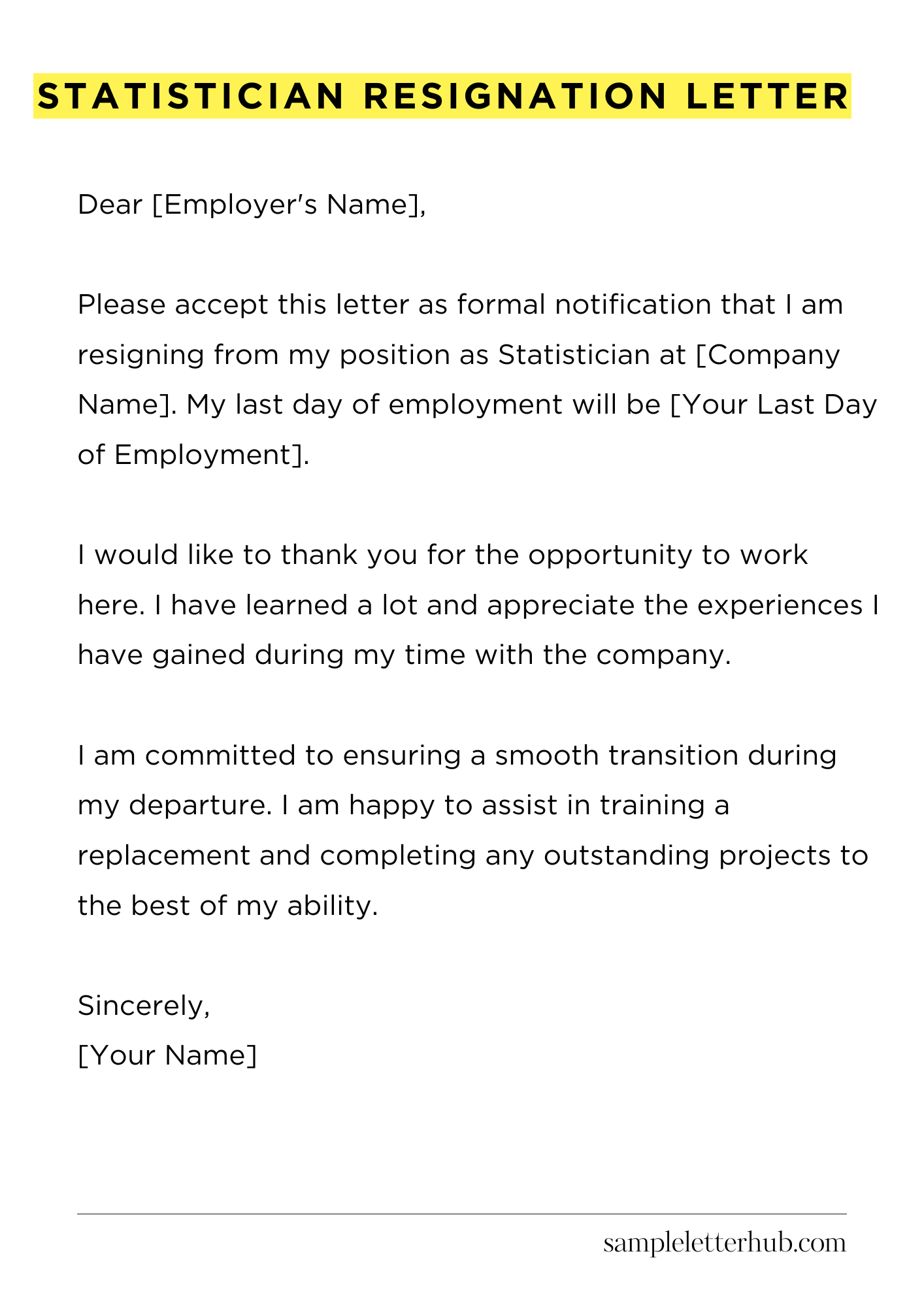
Dear [Employer’s Name],
Please accept this letter as formal notification that I am resigning from my position as Statistician at [Company Name]. My last day of employment will be [Your Last Day of Employment].
I would like to thank you for the opportunity to work here. I have learned a lot and appreciate the experiences I have gained during my time with the company.
I am committed to ensuring a smooth transition during my departure. I am happy to assist in training a replacement and completing any outstanding projects to the best of my ability.
I wish you and [Company Name] all the best in the future.
Sincerely,
[Your Name]
How to Write Statistician Resignation Letter
1. Getting Started: The Basics
So, you’re ready to move on. Leaving a job is a big decision, and your resignation letter is an important step. First things first: be professional. This means keeping it concise, clear, and focused on the facts.
You need to be respectful, even if your reasons for leaving are less than positive. Your letter is a reflection of you; it’s a part of your permanent record. No matter what, keep it simple.
Begin with a formal salutation, such as “Dear [Manager’s Name]”. State your intention to resign clearly in the first paragraph. After that, you’ll need to clearly state your last day of employment.
2. Core Content: What to Include
The heart of your letter needs to be well-structured. It’s often helpful to explain what your role was, even if the manager knows. This helps with the administrative process.
Briefly state your reason for leaving, if you feel comfortable doing so. Keep it positive if you can, focusing on new opportunities. If you are not leaving on good terms, avoid long and elaborate explanations. Consider a simple statement about the direction of your career.
Next, offer to help with the transition. Be willing to train your replacement or tie up loose ends. Include a statement of gratitude for the opportunity. This is a crucial element for maintaining a good relationship. Finish by expressing your gratitude again and including your contact information.
3. Formatting and Tone: Making It Work
The layout matters. Your letter should be business-like. Use a standard font like Arial or Times New Roman, and keep the font size consistent. Ensure your letter has a clean format, with clear paragraphs and proper spacing. Avoid long, rambling sentences. Clarity is key.
The tone is equally important. Remain professional and courteous throughout. Avoid negative language or criticisms of the company or its employees. Even if you have had negative experiences, it is vital to keep a professional tone to ensure that you are viewed favorably in the future. End with a formal closing, such as “Sincerely” or “Best regards”, followed by your typed name.
4. Key Elements: Specific to Statisticians
As a statistician, your analytical skills can be very helpful here. Check your calculations twice – proofread your letter carefully. If you’ve been working on specific projects, and you feel comfortable mentioning them, you can offer to provide documentation or summaries.
This will ensure an easier transition. If you are comfortable, you can suggest steps that should be taken to replace you. This is an offer that may be valued.
Consider the company’s needs. If there are ongoing analyses or projects that require your expertise, offering assistance during the transition will be appreciated.
5. Proofreading and Final Touches: Finishing Strong
Before you send your resignation letter, proofread it carefully. Check for any spelling or grammatical errors. Also, ensure the dates and other critical information are correct.
Have someone else review it as well, preferably a person who can provide an objective perspective. It’s always a good idea to seek a second opinion. This helps make sure that the content is both professional and clear. This is the last step before sending your letter to your manager. Good luck on your next opportunity.
FAQs about Statistician resignation letter
How do I write a statistician resignation letter?
A statistician resignation letter should be professional, concise, and respectful. Start by stating your intention to resign, including your last day of employment. Briefly express gratitude for the opportunity. Keep the tone positive and avoid negative comments about the company or colleagues.
Acknowledgment of any ongoing projects and an offer to assist with the transition are also recommended. Maintain a formal and courteous tone throughout the letter.
What should I include in my statistician resignation letter?
Your resignation letter should contain: a clear statement of resignation, your last day of employment, a brief expression of gratitude, a mention of ongoing projects and offer of assistance, and your contact information. If you’re comfortable, you can briefly mention the reason for leaving, but this is optional. The key is to be professional and make the transition as smooth as possible.
What are some common reasons for resigning from a statistician role?
Common reasons for resignation include better job opportunities with higher salaries or more responsibilities, career advancement, dissatisfaction with the company culture or management, seeking better work-life balance, relocation, or personal reasons. Statistics roles can also involve stress, so seeking a less stressful environment can also be a motivation.
How much notice should I give when resigning as a statistician?
The standard notice period is typically two weeks, but this can vary depending on your employment contract and company policy. Check your contract for the specified notice period. Providing more notice, if possible, can be beneficial, especially for senior statisticians or those involved in complex projects.
What are some tips for a smooth transition after submitting my resignation letter?
During the transition period, be cooperative and helpful to your colleagues. Complete any outstanding tasks to the best of your ability. Offer to train your replacement or document your work processes. Maintain a positive attitude, and focus on leaving a good impression. Make sure to collect any personal belongings before your last day.
Related:
Resignation letter due to rude boss
Resignation letter moving to another state
Resignation letter due to illness of family member
Resignation letter due to study