

A software engineering manager resignation letter is a formal document. It announces your departure from your role. Its primary purpose is to inform your employer of your decision. It also outlines the end date of your employment.
Writing this letter can feel tricky. You want to be professional and clear. We understand. This article provides helpful examples. You’ll find templates and samples tailored for software engineering managers.
These examples offer a head start. Customize them to fit your specific situation. Consider it your guide. Craft a resignation letter with confidence.
Software Engineering Manager Resignation Letter
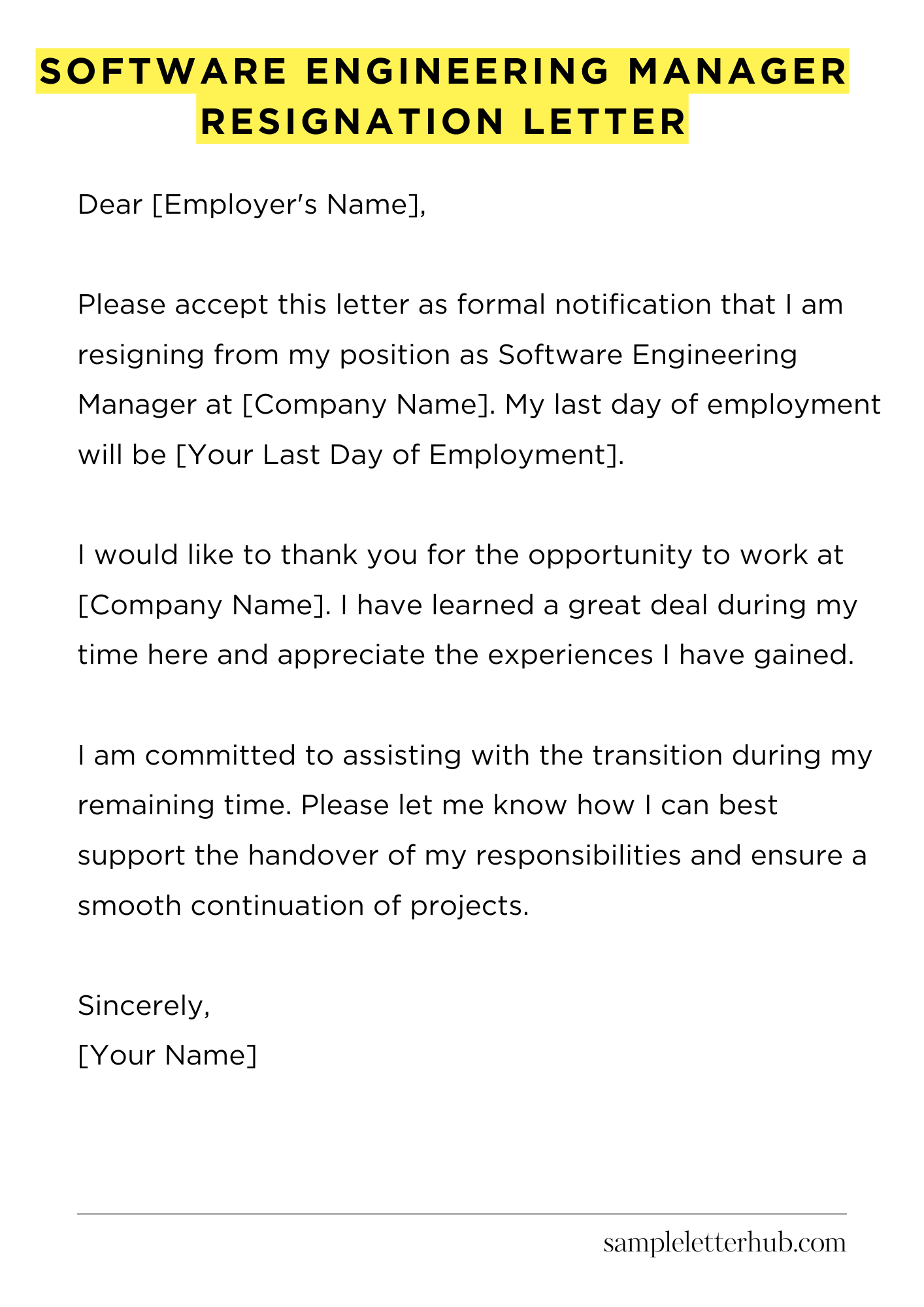
Below is a sample of a Software Engineering Manager Resignation Letter:
[Your Name]
[Your Address]
[Your Phone Number]
[Your Email Address]
[Date]
[Employer’s Name]
[Company Name]
[Company Address]
Dear [Employer’s Name],
Please accept this letter as formal notification that I am resigning from my position as Software Engineering Manager at [Company Name]. My last day of employment will be [Your Last Day of Employment].
I would like to thank you for the opportunity to work at [Company Name]. I have learned a great deal during my time here and appreciate the experiences I have gained.
I am committed to assisting with the transition during my remaining time. Please let me know how I can best support the handover of my responsibilities and ensure a smooth continuation of projects.
I wish you and [Company Name] all the best in the future.
Sincerely,
[Your Name]
How to Write a Software Engineering Manager Resignation Letter
1. Why Resign, Anyway? Laying the Groundwork
So, you’re considering leaving your Software Engineering Manager role? That’s a big decision. Before you even *think* about writing a resignation letter, take some time for self-reflection. What’s driving this change?
Maybe you’ve found a better opportunity. Perhaps the current work environment isn’t a good fit. Or maybe, you’re simply ready for a career shift. Understanding your motivations is crucial. This will help you craft a letter that’s both professional and clear. Knowing your “why” gives context to your departure. It also helps you stay calm during the transition.
2. The Essential Elements: What to Include
A well-written resignation letter is a formal document. It needs to convey professionalism and respect. There are certain things you absolutely *must* include. Start with a clear and direct statement of your intent to resign. State your final day of employment. This is critical for the company’s planning.
Thank your employer for the opportunity you were given. Briefly mention any specific contributions or experiences you’re grateful for. Be professional, not overly emotional. Offer to assist in the transition process.
This shows you’re committed to a smooth handover. Provide your contact information, just in case. Finally, proofread it! Make sure there are no typos or grammatical errors. This attention to detail reflects well on you. Always be polite and grateful.
3. Structure and Tone: Keeping it Professional
The structure of your letter matters. Use a professional business letter format. Start with your contact information, the date, and the recipient’s information. Use a formal tone throughout the letter. Avoid any negativity or harsh language. Focus on facts and gratitude. Keep your sentences concise and to the point.
Refrain from lengthy explanations of your reasons for leaving. It is wise to have your last day mentioned. Remember, the letter is a record, and it represents you. Be concise, polite, and maintain a respectful tone.
4. Addressing Common Questions & Difficult Situations
Sometimes things get tricky. What if you’re leaving due to a difficult situation? Should you include details about your issues? Generally, the best approach is to keep it brief. You do not need to overshare! Consider a simple statement like, “I am pursuing other opportunities that better align with my career goals.”
If your reasons are complex, you can mention you’re available for a discussion with HR or your manager if needed. If you feel uncomfortable, don’t mention the issue at all. Focus on a positive departure. Always prioritize professionalism. If you have been treated badly, think again before you create a letter in anger.
5. After the Letter: The Follow-Up
Once you’ve submitted your resignation letter, you’re not quite done. Be prepared for a conversation with your manager or HR. Be ready to answer questions about your departure. Stay committed to a smooth transition. Follow through on your offer to help with the handover. Be professional until your last day.
Maintain positive relationships with your colleagues. Leaving on good terms can be beneficial. It is essential for future job prospects. You never know when you might cross paths with someone again! Remember, how you leave a company is often just as important as how you arrived.
FAQs about Software Engineering Manager Resignation Letter
What is the essential information to include in a Software Engineering Manager’s resignation letter?
A Software Engineering Manager’s resignation letter should contain: a clear statement of resignation, your official last day of employment, a brief expression of gratitude for the opportunity, and any necessary information for a smooth transition, such as willingness to assist with the handover process. It’s often beneficial to thank specific individuals who have supported your career.
How far in advance should a Software Engineering Manager submit their resignation letter?
Typically, a Software Engineering Manager should submit their resignation letter at least two weeks before their last day, according to standard employment practices. However, this may vary depending on the company’s policy and your employment contract.
Some senior roles may require a longer notice period, such as one month or more. Always refer to your employment agreement for the specific requirements.
Should a Software Engineering Manager provide a reason for resigning in their letter?
While not mandatory, providing a concise reason for resigning can be helpful. You can simply state that you are pursuing a new opportunity or are seeking a change. Avoid going into excessive detail or negativity about your current employer. Keep the reason professional and positive. In some instances, a brief, neutral explanation can be included.
How should a Software Engineering Manager handle confidential company information in their resignation letter?
Software Engineering Managers should refrain from including any confidential company information in their resignation letter. This includes proprietary data, trade secrets, and internal strategies.
The letter should be a professional communication of your intent to leave and should not violate any non-disclosure agreements or confidentiality clauses in your employment contract. Focus on the core message of your departure.
What should a Software Engineering Manager’s resignation letter not include?
A Software Engineering Manager’s resignation letter should avoid negativity, complaints, or criticisms of the company or its employees. It should also exclude any information that could be construed as a breach of confidentiality or non-compete agreements. Avoid making demands or ultimatums and focus on maintaining a professional and amicable tone.
Related:
Resignation letter due to rude boss
Resignation letter moving to another state
Resignation letter due to illness of family member
Resignation letter due to study