


A Senior Financial Analyst resignation letter is a formal document. It informs your employer of your decision to leave your job. The letter also states your last day of employment. It’s an important step in ending your employment professionally.
We know leaving a job can be stressful. We’re here to help make it easier. We’ve gathered different templates for you. These are examples of Senior Financial Analyst resignation letters.
Need a letter that’s easy to adapt? You’ll find different options here. Choose the one that suits your situation. You can use these to create your own letter. Writing a resignation letter just got simpler.
Senior Financial Analyst Resignation Letter
Below is a sample of a Senior Financial Analyst Resignation Letter:
[Your Name]
[Your Address]
[Your Phone Number]
[Your Email Address]
[Date]
[Hiring Manager Name] (If known, otherwise use title)
[Hiring Manager Title]
[Company Name]
[Company Address]
Dear [Mr./Ms./Mx. Last Name],
Please accept this letter as formal notification that I am resigning from my position as Senior Financial Analyst at [Company Name]. My last day of employment will be [Your Last Day of Employment].
I would like to thank you and the company for the opportunities I have been given during my time here. I have learned a great deal and appreciate the experience I have gained.
I am committed to ensuring a smooth transition during my departure. I am happy to assist in training my replacement and completing any outstanding tasks to the best of my ability. Please let me know how I can be of assistance during this period.
I wish you and the company all the best in the future.
Sincerely,
[Your Signature]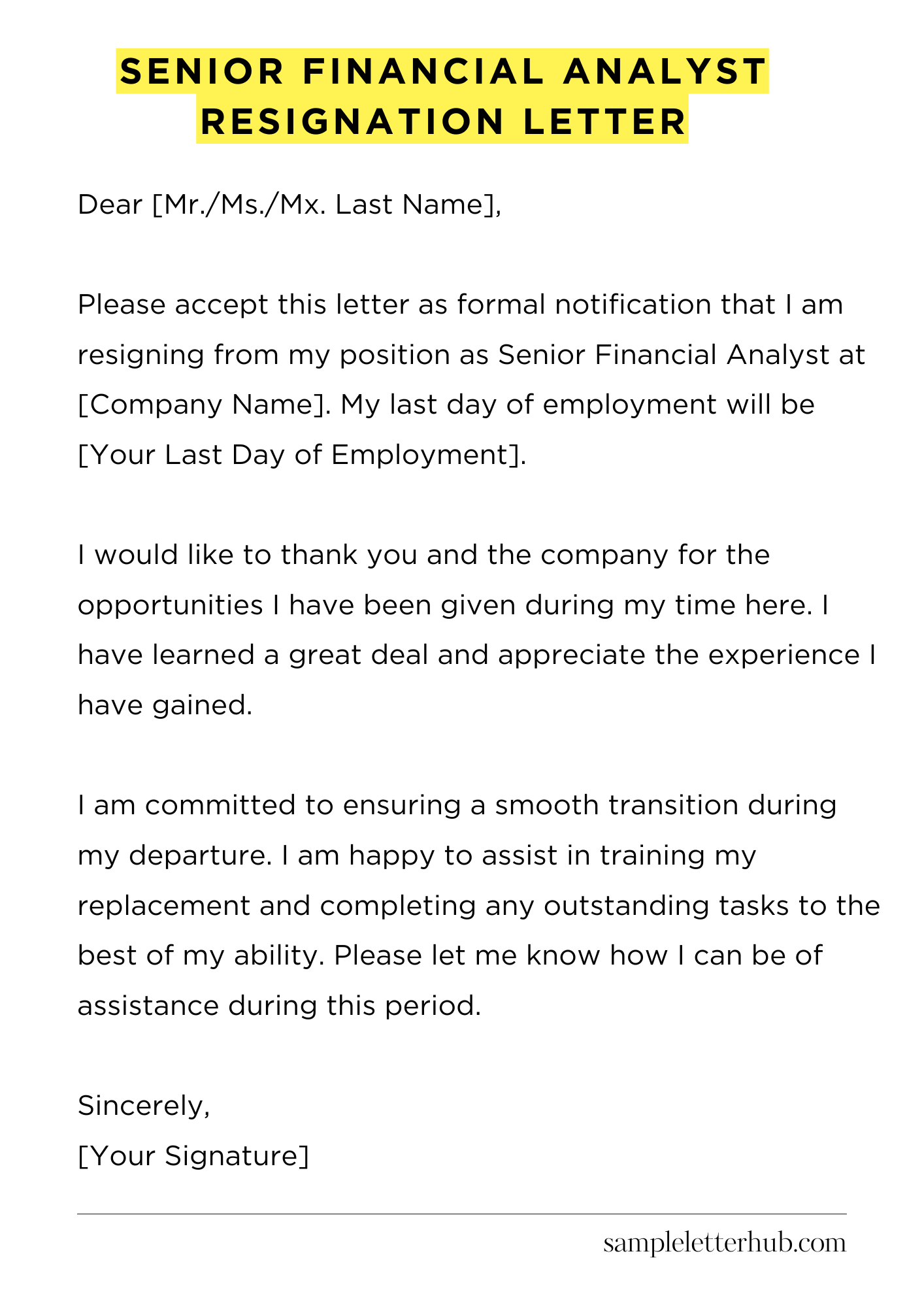
How to Write a Senior Financial Analyst Resignation Letter
1. Why is a Resignation Letter Important?
Leaving a job is a big step. You’ve made a decision that will impact your future. Whether you’re moving on to something new, or simply taking a break, it is critical to leave on good terms.
A well-crafted resignation letter is the cornerstone of a professional departure. Think of it as your final formal communication with your current employer. This document sets the tone for your exit and can influence your future prospects. It documents your intention to leave, and that’s the bottom line.
2. Essential Elements of a Senior Financial Analyst Resignation Letter
A successful resignation letter is straightforward and concise. First, always start with a clear statement of your intention to resign. Specify your job title (Senior Financial Analyst) and the effective date of your departure. Next, you should express gratitude for the opportunities you’ve been given.
Briefly acknowledge the experience you’ve gained and the relationships you’ve built. Next, offer your assistance with the transition. Finally, keep it brief and professional.
3. Crafting the Perfect Letter: A Template to Follow
Here’s a basic template. Start with your name, address, and contact information. Also, include the date. Next, address your letter to your supervisor or HR representative. After that, state your intention to resign from your position, include your job title and effective date.
Next, express your appreciation and offer assistance with the handover of your duties. Finally, you can close with a professional closing, such as “Sincerely,” or “Respectfully,” followed by your full name. It’s really that simple.
4. Dos and Don’ts: Navigating the Nuances
There are some things you should and shouldn’t do. Always maintain a professional tone, even if you are leaving due to negative experiences. Do not include negative feedback about your employer, colleagues, or the company. Keep the focus on your future goals. Be positive and appreciative.
Be sure to proofread your letter carefully for any grammatical errors or typos. And always keep a copy of your letter for your records. Remember, it’s a formal, official document.
5. After the Letter: The Next Steps
Submitting your letter is only the first step. Once you’ve submitted your letter, be prepared for a response from your employer. They may schedule an exit interview or reach out to discuss the terms of your departure. Be professional and cooperative throughout this process.
Complete your handover duties as outlined, and ensure a smooth transition. Now, you can look forward to the next chapter of your career. Good luck, you got this!
FAQs about Senior Financial Analyst resignation letter
How much notice should a Senior Financial Analyst give when resigning?
The standard notice period for a Senior Financial Analyst typically ranges from two to four weeks, depending on company policy, employment contract, and local labor laws. It’s crucial to review the employment agreement for the specific notice requirements. Offering more notice than required, if possible, can often be viewed positively by the employer.
What should be included in a Senior Financial Analyst resignation letter?
A well-crafted Senior Financial Analyst resignation letter should include a clear and concise statement of resignation, the effective date of departure, a brief expression of gratitude for the opportunity, and any relevant details regarding the handover of responsibilities. It’s also advisable to include contact information for future communication.
Should a Senior Financial Analyst provide a reason for leaving in the resignation letter?
While not always mandatory, providing a brief, professional reason for leaving can be beneficial. It allows for transparency and can help maintain a positive relationship with the employer. Common reasons include pursuing a new opportunity, seeking career advancement, or personal reasons. Avoid going into excessive detail or expressing negativity.
How should a Senior Financial Analyst handle the handover of responsibilities?
A Senior Financial Analyst should actively participate in a smooth handover process. This involves preparing thorough documentation of current projects and ongoing tasks, training colleagues, and being available to answer questions during the transition period. Proactively offering assistance ensures a seamless transfer of knowledge and responsibilities.
What are some common mistakes to avoid in a Senior Financial Analyst resignation letter?
Avoid burning bridges. Some common mistakes include using a negative or accusatory tone, providing excessive or unnecessary personal details, failing to proofread for errors, and not adhering to the company’s formal resignation procedures. It’s also wise not to mention confidential company information.
Related:
Resignation letter due to rude boss
Resignation letter moving to another state
Resignation letter due to illness of family member
Resignation letter due to study