

Sometimes, a security officer decides to move on. They might seek a new job. They could have personal reasons. A security officer resignation letter is necessary. It formally informs an employer of their departure. This document starts the official process.
Writing this letter can feel tricky. You want to leave on good terms. You need to be professional. We’re here to help simplify things. We’ll share several examples.
These templates can be your starting point. You can easily adapt them. Find the perfect fit for your situation. Make your resignation process stress-free.
Security Officer Resignation Letter
Below is a sample of a Security Officer Resignation Letter:
[Your Name]
[Your Address]
[Your Phone Number]
[Your Email Address]
[Date]
[Employer’s Name]
[Company Name]
[Company Address]
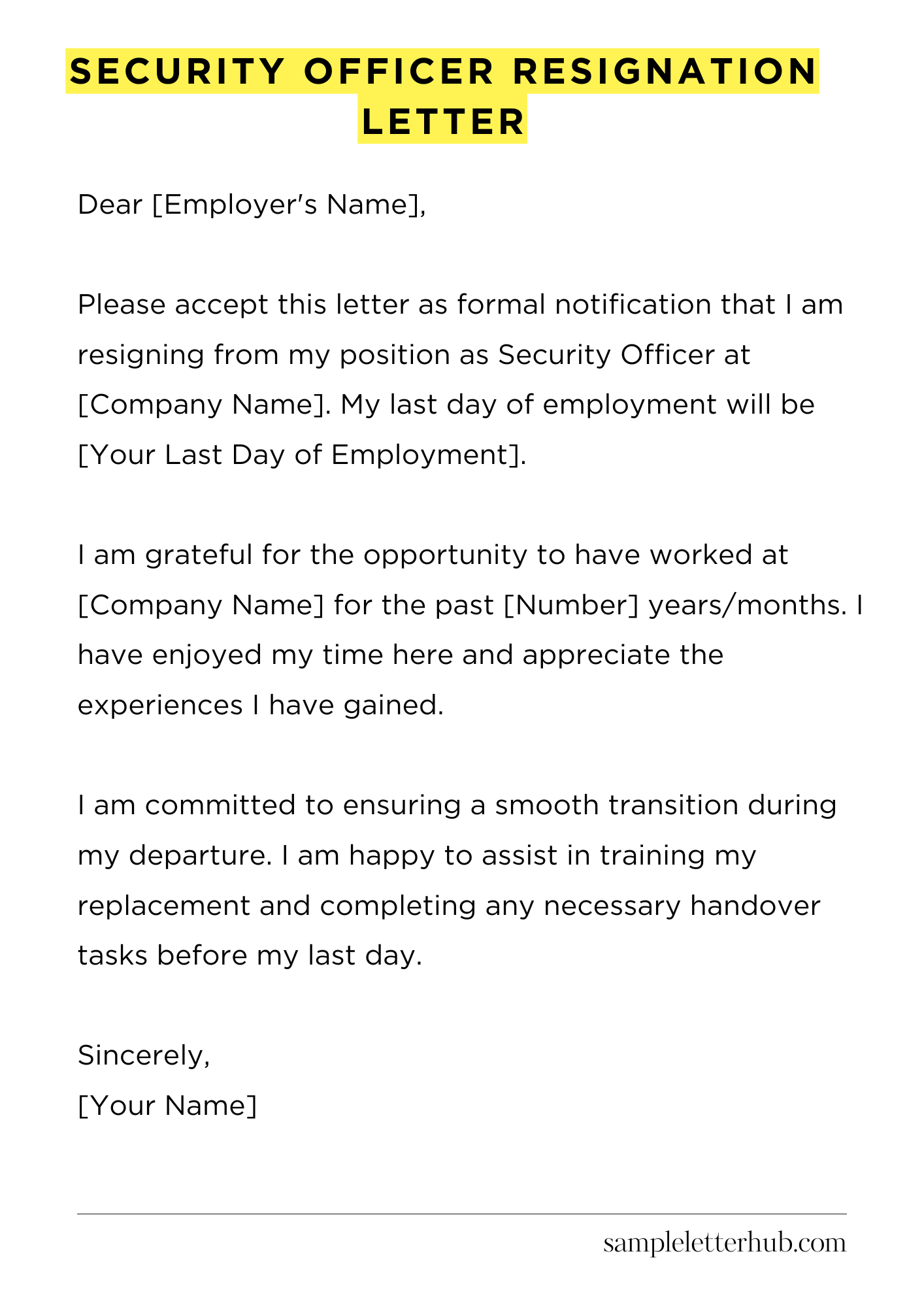
Dear [Employer’s Name],
Please accept this letter as formal notification that I am resigning from my position as Security Officer at [Company Name]. My last day of employment will be [Your Last Day of Employment].
I am grateful for the opportunity to have worked at [Company Name] for the past [Number] years/months. I have enjoyed my time here and appreciate the experiences I have gained.
I am committed to ensuring a smooth transition during my departure. I am happy to assist in training my replacement and completing any necessary handover tasks before my last day.
I wish [Company Name] continued success in the future.
Sincerely,
[Your Name]
How to Write a Security Officer Resignation Letter
So, you’re moving on? Congratulations! Making the decision to leave a job, especially a position like Security Officer, is a big step. A crucial element of this transition is crafting a professional and effective resignation letter. Let’s delve into how to write one that’s both polite and gets the job done.
1. Get Started Right: The Basics
First things first, your letter needs to be clear and concise. This isn’t the place for lengthy stories or complaints. Always start with the date, followed by the recipient’s name and title.
Next comes the standard opening, stating your intent to resign from your position as Security Officer. Keep it formal and direct. It’s important to be professional, even if your departure isn’t entirely amicable.
Here’s a simple example:
[Date]
[Recipient Name]
[Recipient Title]
Dear [Mr./Ms./Mx. Last Name],
Please accept this letter as formal notification that I am resigning from my position as Security Officer at [Company Name], effective [Your Last Day of Employment].
2. The Core of Your Letter: Key Information
The main body of your letter should include a few essential pieces of information. Clearly state your final day of employment. This is non-negotiable and provides the company with necessary notice.
Generally, a two-week notice is standard, but check your employment contract or company policy for specific requirements. Then, you may want to express gratitude for the opportunity to work there, this is especially useful. Keep it short and sweet, demonstrating professionalism. Consider offering assistance with the transition.
This is not compulsory, but a kind gesture often leaves a positive final impression.
For example, you could write: “I am committed to making this transition as smooth as possible. I am available to assist in training my replacement or completing any outstanding tasks before my last day.”
3. Keeping It Professional: What to Avoid
Your resignation letter is not the place to air grievances. Steer clear of negative comments about your colleagues, superiors, or the company itself. Avoid writing long, emotional, and complaining paragraphs.
Even if you’ve had a less-than-ideal experience, maintain professionalism. Remember, your letter will likely become part of your permanent employment record. It is very important for your future prospects.
Similarly, avoid including overly personal information that is not relevant to your resignation. Keep it strictly business.
4. Polishing Your Letter: Formatting and Tone
Pay close attention to formatting. Use a standard business letter format. Ensure there are no spelling or grammatical errors. Proofread carefully before sending. The tone should be formal and respectful. Even if you dislike your job, the letter should maintain a tone of polite formality. Think of this as your final professional impression.
Always close with a polite and concise closing. Common options include “Sincerely,” “Respectfully,” or “Best regards.”
5. Final Steps: Delivery and Follow-Up
Once your letter is ready, make sure you know who it should be addressed to. Ideally, you should give your letter to your direct supervisor or the Human Resources department. It’s often helpful to submit a hard copy to the appropriate person. Be sure to keep a copy for your records.
Consider sending a digital copy via email as well. After submitting your letter, be prepared to discuss your resignation with your employer. You may be asked for an exit interview, so prepare yourself. And remember, good luck in your future endeavors!
FAQs about Security Officer Resignation Letter
What is the primary purpose of a security officer resignation letter?
The primary purpose of a security officer resignation letter is to formally notify an employer of an employee’s intent to leave their position. It serves as an official record of the resignation, the effective date of departure, and may include reasons for leaving and expressions of gratitude.
What essential information should be included in a security officer resignation letter?
An effective resignation letter should include the following: a clear statement of resignation, the date of resignation, the last day of employment, a brief and professional reason for leaving (optional), and an expression of gratitude to the employer (optional). It should also include contact information and a professional closing.
How much notice should a security officer give when resigning?
The amount of notice required varies depending on the employment contract or company policy. However, as a general guideline, it’s recommended to provide at least two weeks’ notice. This allows for a smooth handover of responsibilities and demonstrates professionalism.
Should I provide a reason for resigning in my letter?
While not mandatory, providing a reason for resignation is optional. If you choose to include a reason, keep it brief, professional, and positive. Avoid including negative comments about the employer or colleagues. If you prefer, you can simply state that you are resigning to pursue other opportunities.
How should a security officer handle the handover of their responsibilities?
Before resigning, a security officer should proactively prepare for the handover of their responsibilities. This includes identifying key tasks, documenting procedures, and training a replacement, or assisting in the transition. A professional handover ensures continuity and minimizes disruption for the employer.
Related:
Resignation letter due to rude boss
Resignation letter moving to another state
Resignation letter due to illness of family member
Resignation letter due to study