

A scientist resignation letter is a formal document. It informs an employer of a scientist’s decision to leave their job. The letter officially ends the employment relationship. It’s a professional courtesy.
We understand leaving a job can be tricky. Writing the resignation letter can be stressful. We’ve got you covered. This article offers sample resignation letters. These samples are for scientists. They cover various scenarios and situations.
Use these examples to create your own letter. Tailor them to fit your specific needs. Say goodbye to guesswork. Say hello to a well-crafted resignation letter.
Scientist Resignation Letter
Below is a sample of a Scientist Resignation Letter:
[Your Name]
[Your Address]
[Your Phone Number]
[Your Email Address]
[Date]
[Recipient’s Name]
[Recipient’s Title]
[Company Name]
[Company Address]
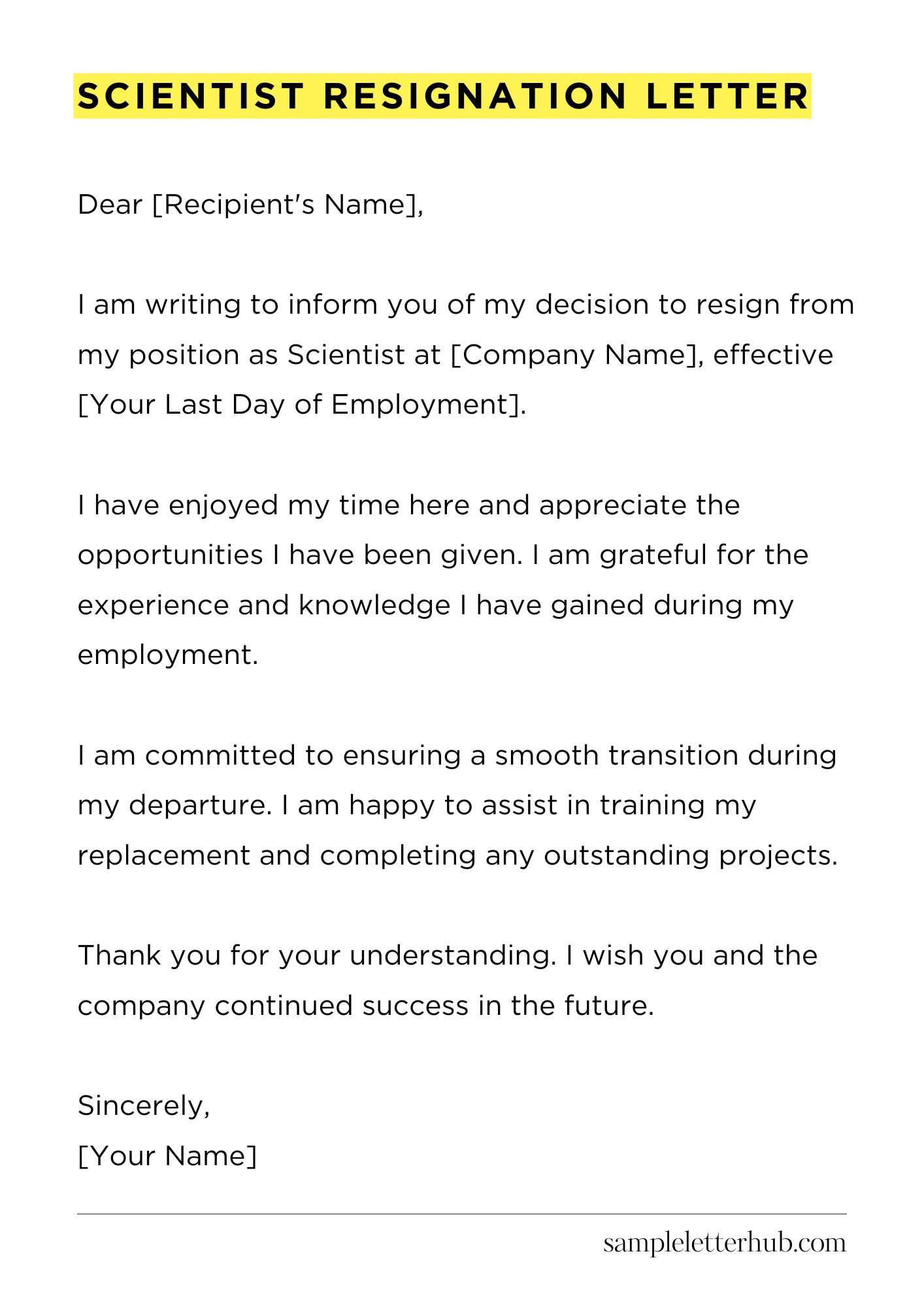
Dear [Recipient’s Name],
I am writing to inform you of my decision to resign from my position as Scientist at [Company Name], effective [Your Last Day of Employment].
I have enjoyed my time here and appreciate the opportunities I have been given. I am grateful for the experience and knowledge I have gained during my employment.
I am committed to ensuring a smooth transition during my departure. I am happy to assist in training my replacement and completing any outstanding projects. Please let me know how I can be of assistance.
Thank you for your understanding. I wish you and the company continued success in the future.
Sincerely,
[Your Name]
How to Write a Scientist Resignation Letter
Getting Started: The Essentials
Leaving a scientific position requires a bit more care than quitting a retail job. Think about it. You’ve likely invested years, perhaps even decades, in education and specific research. That hard work deserves a thoughtful exit. First things first: be professional, always.
Drafting a resignation letter is your official notice to your employer. Make sure you know exactly when your last day of employment is going to be. Then you can put that into your letter.
Keep the tone polite and formal. The scientific community is small, and you never know when your paths will cross again. Consider this document a critical stepping stone in your career progression.
The Core Components of Your Letter
Every resignation letter, especially for a scientist, requires specific information. Begin with your contact information (name, address, email, phone number) at the top. Next, include the date of the letter. Then address it to your direct supervisor or the relevant HR representative.
The first paragraph should clearly state your intent to resign, and, importantly, the specific date of your last day of employment. Be direct and concise. You don’t need a long, drawn-out introduction. Keep it simple and to the point.
The second paragraph should briefly thank your employer for the opportunity to work there. You can mention specific skills you’ve gained or opportunities you’ve been given. This is a chance to show gratitude for the experiences you have encountered.
This is also your chance to leave on a positive note, even if your experience hasn’t been perfect. However, avoid going into any negativity.
The final paragraph needs to be a call to action. You need to offer assistance with the transition. Be prepared to help with any handover processes to make the transition as seamless as possible.
Structuring Your Letter: The Format Matters
Formatting is key. A well-formatted letter looks professional and shows respect. Use a standard business letter format. That means proper spacing and alignment. You can find free templates online.
Use a professional font like Times New Roman or Arial in a readable size (usually 12-point). Ensure the letter is free of grammatical errors and typos. Proofread it carefully. Multiple times.
Consider the use of short paragraphs. Breaking up your text makes it easier to read. Remember, clarity is paramount, especially when you are quitting a job!
What to Include (and What to Avoid)
Here’s the thing. You need to be professional. Avoid negative comments about colleagues, the company, or your reasons for leaving. Your letter is not a platform for complaints.
Focus on your positive experiences and what you’ve learned. If you are comfortable, you can briefly mention your reason for leaving (e.g., “pursuing a new opportunity”). However, you are not obligated to offer detailed explanations. It’s really up to you.
Be sure to express your willingness to assist in the transition. This shows that you are a responsible professional. Offer to help train a replacement or assist with ongoing projects. Offer a contact method for after you have left. This could be useful.
Final Steps: Before You Hit “Send”
Before submitting your letter, proofread it thoroughly. Get a second opinion from a trusted colleague or friend. A fresh pair of eyes can spot errors you missed.
After you have checked your letter make a copy for your records. This is vital in case you need it in the future for references, or in the very unlikely case of any employment disputes. Make sure you have one for yourself.
Deliver the letter according to your company’s policy (usually electronically or via hard copy to your supervisor or HR). Be prepared for a meeting to discuss your departure. Good luck with your future endeavors!
FAQs about Scientist Resignation Letter
What is the primary purpose of a scientist’s resignation letter?
The primary purpose of a scientist’s resignation letter is to formally notify their employer of their intent to leave their position. It serves as an official record of the resignation, providing a clear date of departure and initiating the necessary administrative processes for the employee’s exit.
What key elements should a scientist include in their resignation letter?
A scientist’s resignation letter should include: a clear and concise statement of resignation; the effective date of their departure; a brief expression of gratitude for the opportunity (optional); any necessary details regarding the handover of projects, data, or equipment; and the scientist’s contact information for future correspondence.
How much notice should a scientist give when resigning?
The amount of notice a scientist should give depends on their employment contract, company policy, and local regulations. Typically, a minimum of two weeks’ notice is standard, but longer periods may be required for senior positions or those involving complex projects. It’s essential to review the employment contract for specific notice requirements.
Is it necessary to provide a reason for resigning in the letter?
While not always mandatory, scientists often choose to briefly state a reason for their resignation in their letter, especially if they are leaving for another opportunity. However, it is not always necessary or advisable to provide extensive details. Keeping the reason concise and professional is generally recommended.
What should a scientist do after submitting their resignation letter?
After submitting the resignation letter, the scientist should: confirm receipt with their supervisor or HR department; cooperate with the handover process; adhere to any post-employment agreements; and ensure they fulfill all remaining responsibilities until their departure date. Maintaining a professional demeanor throughout this process is crucial.
Related:
Resignation letter due to rude boss
Resignation letter moving to another state
Resignation letter due to illness of family member
Resignation letter due to study