

A “Research Fellow resignation letter” is a formal document. It is written by a research fellow. The purpose is to officially inform their employer of their decision to leave. This letter initiates the resignation process. It ensures a clear and professional departure.
Thinking of moving on from your Research Fellow position? Crafting the perfect resignation letter can feel tricky. We understand. That’s why we’re here to help.
Inside this article, you’ll discover a variety of letter templates. You will find different examples and samples. Each is designed to guide you. You can easily adapt them. Write your own resignation letter confidently.
Research Fellow Resignation Letter
Below is a sample of a Research Fellow Resignation Letter:
[Your Name]
[Your Address]
[Your Phone Number]
[Your Email Address]
[Date]
[Hiring Manager Name (if known), or Title]
[Department Name]
[University/Institution Name]
[University/Institution Address]
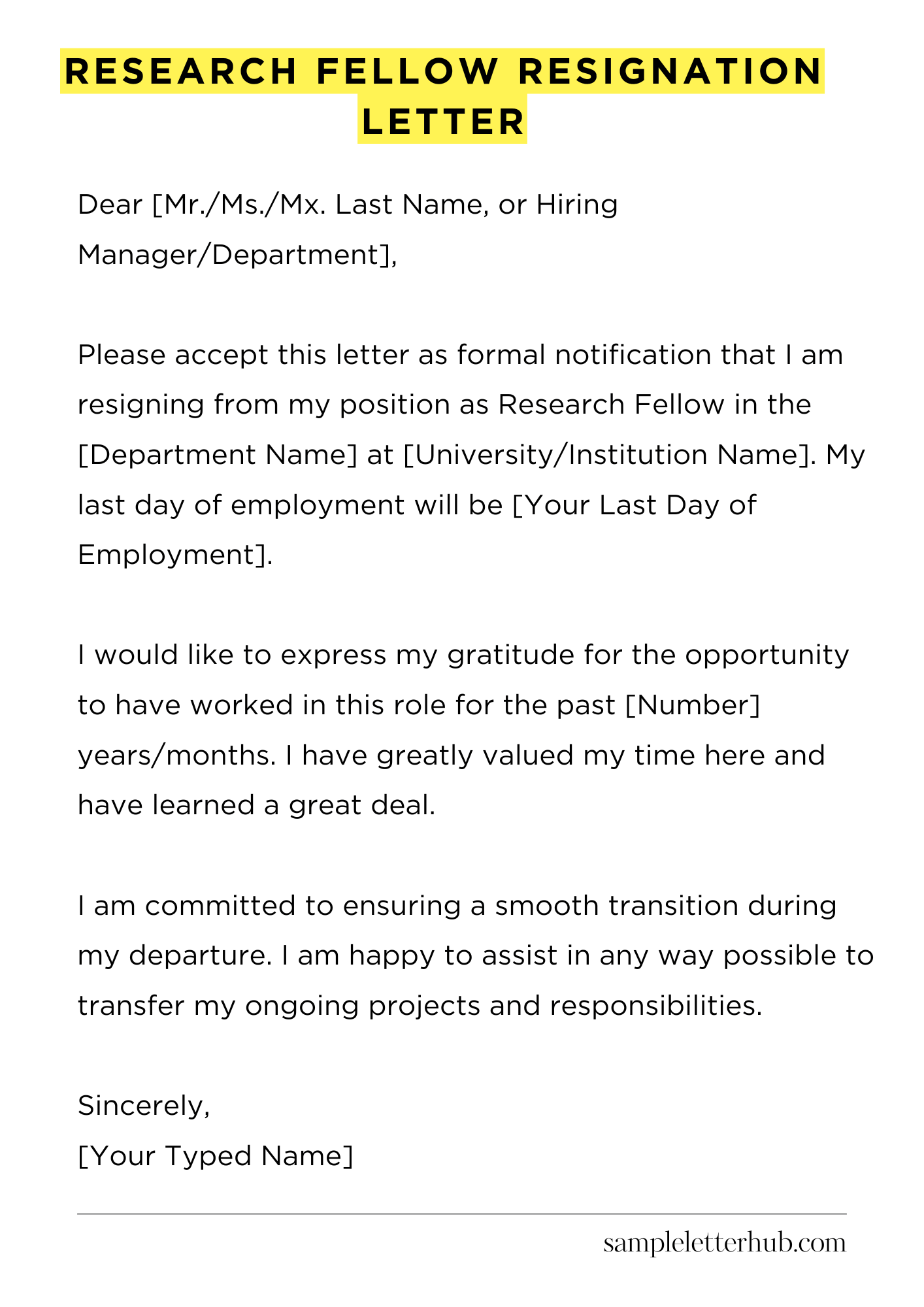
Dear [Mr./Ms./Mx. Last Name, or Hiring Manager/Department],
Please accept this letter as formal notification that I am resigning from my position as Research Fellow in the [Department Name] at [University/Institution Name]. My last day of employment will be [Your Last Day of Employment].
I would like to express my gratitude for the opportunity to have worked in this role for the past [Number] years/months. I have greatly valued my time here and have learned a great deal.
I am committed to ensuring a smooth transition during my departure. I am happy to assist in any way possible to transfer my ongoing projects and responsibilities. Please let me know how I can be of assistance.
I wish you and the [Department Name] all the best in the future.
Sincerely,
[Your Typed Name]
How to Write a Research Fellow Resignation Letter
Know Your Obligations First
Before you even think about putting pen to paper (or fingers to keyboard), there are some important things you need to understand. Review your employment contract. It’s really the bible in this situation. It should spell out the required notice period. This is crucial! You don’t want to burn any bridges.
Check for any clauses about completing ongoing projects or returning equipment. Make sure you are crystal clear about your contractual obligations before you take any further steps. Consider speaking to HR; they can offer clarity.
Crafting the Core of Your Letter
Now, let’s get into the actual writing. Keep it concise. Start with a clear and direct statement of your intent. State that you are resigning from your position as a Research Fellow. Include the effective date of your resignation. That date is very important and should be carefully considered, ensuring it aligns with your notice period.
Next, express your gratitude for the opportunity. Briefly acknowledge any positive experiences or skills gained during your time in the role. Finally, and this is where you show professionalism, offer to assist with the transition. This can involve training a replacement or completing specific tasks before you leave. Be very specific about your willingness to help.
The Essential Formatting and Tone
Good formatting is key to a successful resignation letter. Use a standard business letter format. Include your contact information and the date at the top. Address the letter to your direct supervisor or the appropriate authority (usually the Head of Department or Principal Investigator).
Keep your tone professional and respectful throughout. Avoid any negativity or criticism of your colleagues or the institution. Even if you’ve had a negative experience, a polite and professional tone will always be more beneficial. This is a very important point that should not be overlooked.
Key Information to Include
What details are essential? Absolutely include your name and the title of your position. Mention the name of the department or research group you’re leaving. The effective date of resignation *must* be included. State this clearly. If applicable, specify how you plan to return any equipment.
Also, if you are able to, note any ongoing projects you will be leaving and mention your willingness to assist in the handover. Be very clear about what you are willing to do, but do not promise something you cannot deliver.
Proofreading and Final Touches
Before you send your letter, proofread it thoroughly. Check for any typos, grammatical errors, and ensure the formatting is correct. Ask a colleague or friend to review it as a second pair of eyes is always useful. Print a hard copy for your records, too. After you have delivered the letter, follow up if you have not received confirmation within a reasonable timeframe.
Keep a positive outlook and maintain professional conduct throughout the transition period. These steps will help you move forward on good terms.
FAQs about Research Fellow resignation letter
What is the primary purpose of a Research Fellow resignation letter?
The primary purpose of a Research Fellow resignation letter is to formally notify the employing institution or principal investigator of the intention to leave the research position. It serves as an official record of the resignation, sets the effective date of departure, and allows for a smooth transition of responsibilities.
What key information should be included in a Research Fellow resignation letter?
A well-crafted Research Fellow resignation letter should include: a clear and concise statement of resignation, the effective date of the resignation, a brief expression of gratitude for the opportunity (optional), a mention of any ongoing projects or responsibilities to ensure a seamless handover, and contact information for future correspondence.
The letter should be addressed to the appropriate person, usually the supervisor or head of the department.
How much notice should a Research Fellow give when resigning?
The required notice period for a Research Fellow resignation varies depending on the employment contract, institutional policies, and local labor laws. Generally, a minimum of two to four weeks’ notice is standard. Review the employment contract or consult with the human resources department to determine the specific notice period requirements.
Can a Research Fellow resign without providing a reason in the resignation letter?
Yes, a Research Fellow is not obligated to provide a specific reason for resigning in the letter. However, it’s often courteous to offer a brief explanation, such as pursuing other opportunities or personal reasons, though this is not a requirement. Focus on the formal aspects of resignation rather than detailing reasons.
What should a Research Fellow do after submitting the resignation letter?
After submitting the resignation letter, a Research Fellow should: confirm receipt with the supervisor or human resources, cooperate with any handover procedures, complete any outstanding tasks, return any institutional property (e.g., equipment, keys), and ensure that all necessary documentation is completed.
It’s also advisable to maintain a professional demeanor throughout the transition period.
Related:
Resignation letter due to rude boss
Resignation letter moving to another state
Resignation letter due to illness of family member
Resignation letter due to study