

So, you’re a Research Engineer and need to resign? A “Research Engineer resignation letter” is a formal document. It informs your employer of your departure. It states your last day of work. It is a crucial step in the resignation process.
This article has you covered. We’ve compiled various templates. We’ll show you examples. Need to craft a quick letter? Want something more detailed? We’ve got you. Consider it your creative launchpad.
Ready to start writing your own letter? Dive into our samples. They will help streamline the process. Make your resignation smooth and professional. Let’s get started.
Research Engineer Resignation Letter
Below is a sample of a Research Engineer Resignation Letter:
[Your Name]
[Your Address]
[Your Phone Number]
[Your Email Address]
[Date]
[Hiring Manager Name] (If known, otherwise use title)
[Hiring Manager Title]
[Company Name]
[Company Address]
Dear [Mr./Ms./Mx. Last Name],
Please accept this letter as formal notification that I am resigning from my position as Research Engineer at [Company Name]. My last day of employment will be [Your Last Day of Employment].
I would like to thank you for the opportunity to work at [Company Name] over the past [Number] years/months. I have learned a great deal and appreciate the experiences I have gained during my time here.
I am committed to ensuring a smooth transition during my departure. I am happy to assist in training my replacement and completing any outstanding projects to the best of my ability. Please let me know how I can be of assistance in the coming weeks.
I wish you and [Company Name] all the best in the future.
Sincerely,
[Your Signature]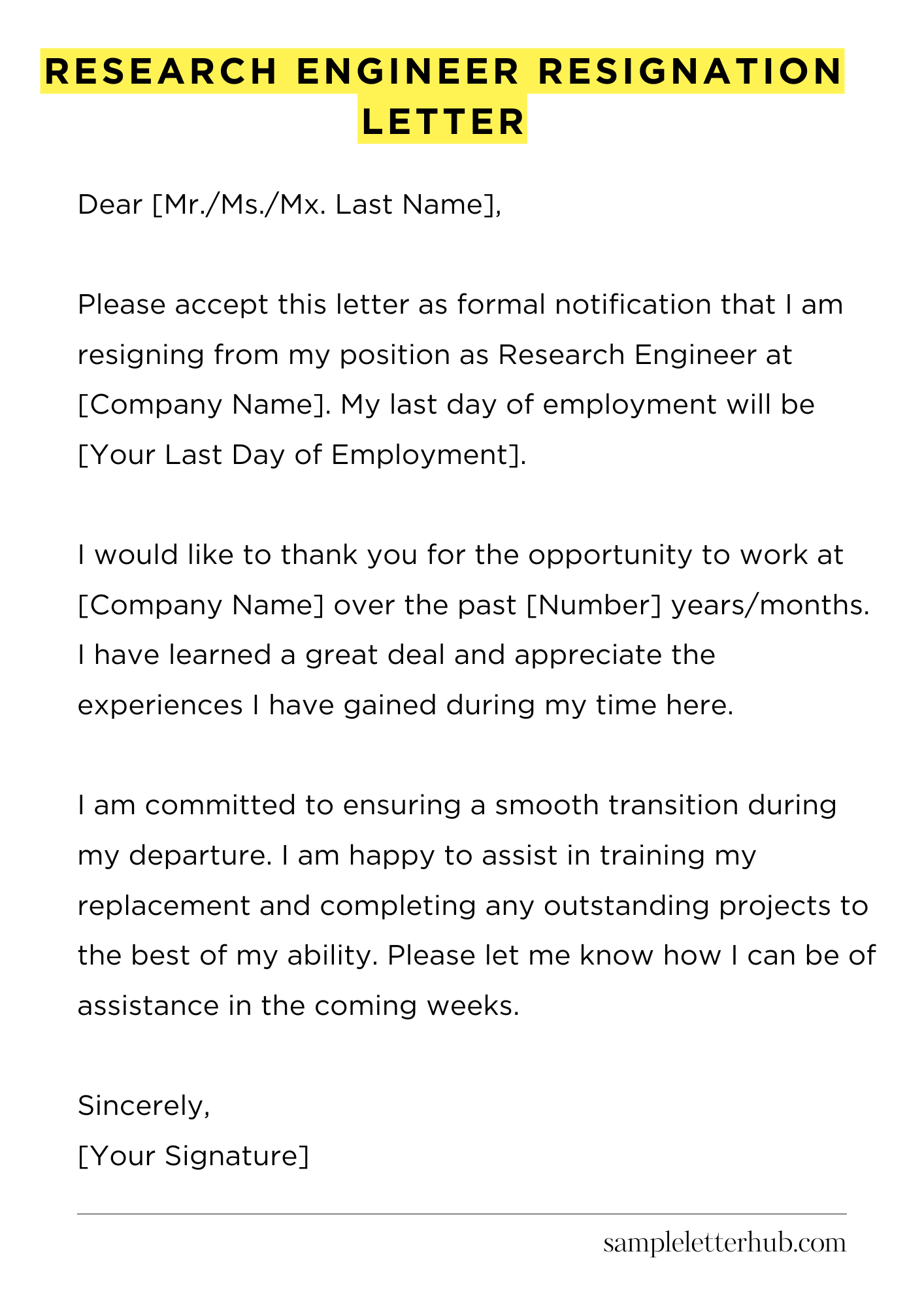
How to Write a Research Engineer Resignation Letter
1. Getting Started: The Basics You Need
Leaving a job, especially a role like Research Engineer, requires careful consideration and a professional approach. Your resignation letter is a vital document. It’s a formal record of your departure and how you end your professional relationship. First things first: be absolutely certain about your decision.
Think through the pros and cons; make sure this is what you really want. Once you’ve decided, the next step is writing a clear and concise letter.
You’ll need the basics: your name, the date, and the recipient’s name and title. Address it to your direct supervisor or the appropriate HR representative. Keep it simple and easy to understand. Using a formal tone helps project maturity. Consider the impact of your words; this letter reflects your professionalism.
2. The Core Components: What to Include
The core of your letter should cover specific elements. You must clearly state your intention to resign. Include the specific date of your last day of employment. This provides clarity and prevents any confusion. This is standard procedure and essential for a smooth transition.
A brief, but sincere, expression of gratitude is also essential. Thank your employer for the opportunity you’ve been given. Did you learn a lot? Mention that!
Acknowledge any positive experiences or skills you gained during your time there. Keep this part brief. Finally, it’s good practice to offer assistance with the transition.
3. Crafting the Perfect Wording
Now, let’s talk about the actual writing. Use a professional tone. Avoid slang or overly casual language. Steer clear of negative comments about your experience or the company. Focus on the positive aspects if you can. It demonstrates you are a professional.
For example, instead of saying, “I hated working here,” consider “I am grateful for the experience and the opportunity to contribute to the project.”
Be direct and to the point. Keep your sentences short. Proofread thoroughly for any typos or grammatical errors before you send it! A well-written letter reflects positively on you and your professionalism.
4. Addressing the Transition: Being Helpful
Offering your assistance with the transition is a very thoughtful step. It shows you care about the company’s well-being. Offer to help train your replacement, complete any outstanding tasks, or transfer knowledge. It makes the departure feel less abrupt.
Provide contact information in case they need to reach you for any questions after you leave. This demonstrates your commitment to a smooth handover and leaves a good impression.
Consider how much time you are realistically able to give. Be as detailed as possible to prevent any potential problems after you leave.
5. Final Steps and Beyond: Polishing & Delivery
Before you send it, proofread your letter several times. Check for any errors in grammar or spelling. Make sure all the details are accurate.
Once you are satisfied, deliver the letter to the appropriate person. Be sure to keep a copy of the letter for your records. Consider a face-to-face conversation with your supervisor after you submit your letter.
This allows you to explain your decision and answer any questions. Even if it’s awkward, maintaining a professional demeanor is important. After leaving, stay in touch with your colleagues. You never know when you might cross paths again!
FAQs about Research Engineer Resignation Letter
What is the essential information to include in a Research Engineer resignation letter?
A Research Engineer’s resignation letter should include your formal resignation, the effective date of your departure, a concise statement of gratitude for the opportunity, and any relevant details regarding the handover of projects or responsibilities. It is also wise to include your contact information for any follow-up.
How far in advance should a Research Engineer submit their resignation letter?
Typically, a Research Engineer should provide at least two weeks’ notice. However, this can vary based on company policy and employment contracts. Review your employment agreement to clarify the required notice period. If you have a specific project or deadlines, consider providing more notice to ensure a smooth transition.
What tone and language are most appropriate for a Research Engineer resignation letter?
Maintain a professional and courteous tone. Express your gratitude for the opportunity and avoid negative comments about the company or colleagues. Be concise, direct, and factual.
Focus on providing necessary information about your departure rather than dwelling on reasons for leaving (unless specifically requested in an exit interview).
Should I provide a reason for resigning in my Research Engineer resignation letter?
While not mandatory, you may briefly state your reason for leaving, such as “to pursue other opportunities” or “to focus on personal commitments.” Keep the reason brief and positive.
Avoid going into excessive detail or expressing dissatisfaction. If the company requests further clarification, it’s best to address it during an exit interview.
What should a Research Engineer do after submitting their resignation letter?
After submitting your letter, discuss your departure with your supervisor. Cooperate fully with any handover procedures, including documentation, training, and the transfer of knowledge.
Be professional throughout the transition period, and make yourself available to answer any questions. Ensure you return any company property and follow all exit procedures.
Related:
Resignation letter due to rude boss
Resignation letter moving to another state
Resignation letter due to illness of family member
Resignation letter due to study