

Need to remove a property from your insurance policy? A “Request Letter to Remove Property from Insurance Policy” is the key. This letter officially informs your insurance provider. Its purpose is to exclude a specific property from your coverage. It ensures you’re not paying premiums for something you no longer need insured.
This can be a tricky process. Don’t worry, we’re here to help. We’ll be sharing templates and examples. These are sample request letters. You can use these samples as a guide. They’ll simplify writing your own letter. This article has ready-made samples for a “Request Letter to Remove Property from Insurance Policy”.
We know writing can be tough. These samples make it simple. Tailor these to fit your situation. This guide helps you craft a clear, concise letter. Get your property removed efficiently. Use these samples to save time and effort.
[Your Name]
[Your Address]
[Your Phone Number]
[Your Email Address]
[Date]
[Insurance Company Name]
[Insurance Company Address]
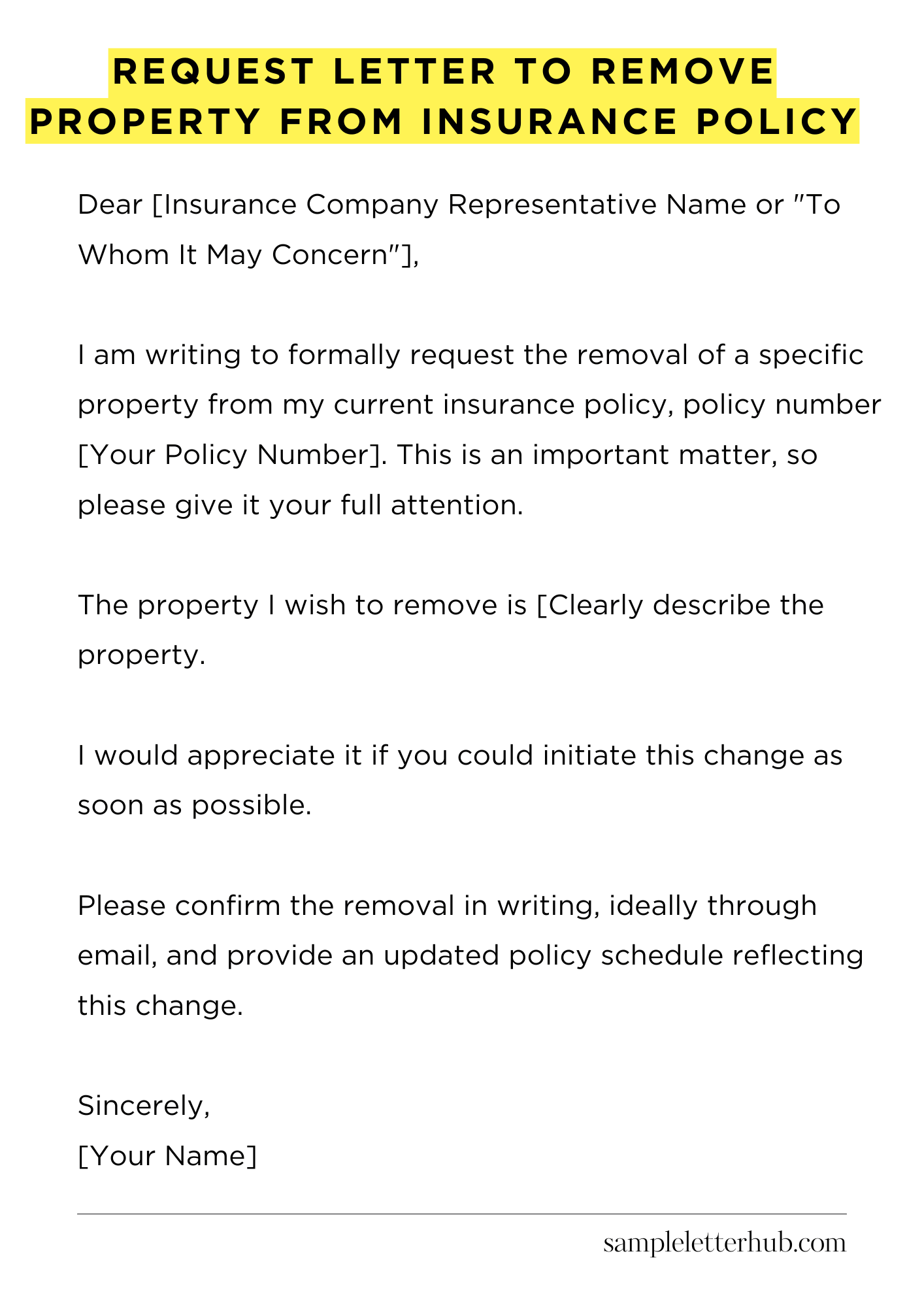
Dear [Insurance Company Representative Name or “To Whom It May Concern”],
I am writing to formally request the removal of a specific property from my current insurance policy, policy number [Your Policy Number]. This is an important matter, so please give it your full attention.
The property I wish to remove is [Clearly describe the property – e.g., “the detached garage located at 123 Main Street”]. This property is no longer in my possession. It is no longer relevant to my insurance needs.
I would appreciate it if you could initiate this change as soon as possible. Doing so will help adjust my premium accordingly. I believe it is a straightforward adjustment.
Please confirm the removal in writing, ideally through email, and provide an updated policy schedule reflecting this change. I value your prompt attention to this request. The sooner this is done, the better.
Thank you for your assistance and understanding in this regard. I look forward to receiving your confirmation shortly. I appreciate your time and effort.
Sincerely,
[Your Name]
How to Write Request Letter to Remove Property from Insurance Policy
Circumstances evolve, and your insurance coverage must adapt accordingly. Sometimes, you need to shed a property from your insurance policy. This usually happens when a property has been sold, gifted, or is no longer under your purview. Composing a cogent request letter is the first, crucial step. It is the formal instrument to get the ball rolling.
1. Identifying the Concessions Needed
Before you even put pen to paper (or fingers to keyboard), you must have a concrete idea of what you are seeking. Scrutinize your insurance policy. Pinpoint the specific property you intend to exclude.
Verify the property’s address, the policy number, and any relevant identifiers that the insurance company uses. This pre-writing stage is crucial to ensure clarity. It allows you to frame your request effectively.
2. The Imperative Art of Salutation
Begin your letter with a professional salutation. Address the letter to the appropriate department, usually the “Underwriting Department” or a specific claims representative if you have one.
Use the recipient’s name if known. Appropriate salutations exhibit respect and foster a positive impression. Avoid generic greetings. They can make the letter sound impersonal and less impactful.
3. Articulating the Core Request
The crux of your letter lies in its main body. State your request explicitly and succinctly. Commence by referencing your policy number and the specific property you want to remove. Indicate the reason for the removal.
This is where you explain that you are no longer the owner or the circumstances which necessitate the exclusion. Be as precise as possible, leaving no room for ambiguity. Any obscurity in your request will lead to delays. Clarity will expedite the process.
4. Providing Supporting Vestiges
Accompanying your request with supporting documentation fortifies your position. This often includes a copy of the deed, a bill of sale, or any legal documents that corroborate the transfer of ownership or the property’s changed status.
These artifacts substantiate your claim and expedite the insurer’s investigation. Ensure all documents are clear and legible. This is very important for the insurance company to take it seriously.
5. Deciphering the Conclusion
Conclude your letter with a courteous closing and a call to action. Reiterate your request for property removal. Clearly state that you look forward to their prompt confirmation and action.
You can also specify a time frame within which you anticipate a response. Include your contact information—phone number and email address—for any follow-up inquiries. This shows your commitment to a smooth process.
6. Polishing the Prosaic Details
Before dispatching your letter, meticulously proofread it. Check for grammatical errors, typos, and factual inaccuracies. The tone should be formal and polite throughout.
Ensure that the layout is clean and easy to read. Double-check all the information. Presenting a polished and well-crafted letter signifies professionalism and respect for the recipient’s time.
7. Delivery and Documentation
Once you are fully satisfied with your letter, decide on the delivery method. Consider sending it via certified mail with a return receipt requested. This provides proof of delivery and ensures the insurance company receives your request.
Keep a copy of the letter, all supporting documents, and the return receipt for your records. This is invaluable in case of any future disputes or if you need to track the status of your request. Keeping records will save you a lot of trouble.
FAQs about Request Letter to Remove Property from Insurance Policy
What information should I include in my request letter?
Your request letter should clearly identify the insurance policy number, the specific property you wish to remove (including its address and a detailed description), and the effective date for the removal.
It’s crucial to include your full name, contact information, and a clear statement requesting the removal of the specified property from the policy. You may also want to include a brief reason for the removal, such as the sale of the property, or if the property is no longer relevant.
What is the proper format for a request letter?
The letter should be formatted as a formal business letter. Include your contact information (name, address, phone number, and email address) at the top, followed by the insurance company’s address.
Use a professional salutation (e.g., “Dear Claims Department”), state your request clearly and concisely in the body of the letter, and conclude with a professional closing (e.g., “Sincerely”). Consider sending the letter via certified mail with a return receipt requested to maintain proof of delivery.
How long does it take for the insurance company to process my request?
The processing time can vary depending on the insurance company’s internal procedures. However, most companies will acknowledge receipt of your letter within a few days.
The actual removal process can take anywhere from a few days to a few weeks. It’s best to contact your insurance provider after submitting your letter to confirm receipt and inquire about the expected processing timeframe. You might be able to find the relevant information on their website too.
Will I receive a refund after removing a property from my insurance policy?
Whether you receive a refund depends on your insurance policy’s terms and the timing of your request. If the removal is effective before the policy’s renewal date, you may be entitled to a partial refund for the remaining premium covering the removed property.
The refund amount will be calculated based on the unused portion of the premium. Review your policy documents or contact your insurance company to understand their refund policy.
What if I have a mortgage on the property I’m removing?
If you have a mortgage on the property, it’s critical to notify your mortgage lender before removing it from your insurance policy. The lender may require you to maintain insurance coverage on the property.
Failing to inform your lender may violate the terms of your mortgage agreement. Your lender may also want to be added as a loss payee on the policy for the remaining insured properties. Contact your lender to understand their specific requirements.
Related:
Resignation letter due to rude boss
Resignation letter moving to another state
Resignation letter due to illness of family member
Resignation letter due to study
Resignation letter due to long commute