

Adding a new vehicle to your insurance policy? It’s essential. You need to formally notify your insurance provider. This is where a request letter comes in. The purpose? To officially add a new car, truck, or any vehicle to your existing policy. This ensures the new vehicle is covered.
Feeling overwhelmed by paperwork? Don’t worry. Crafting the perfect request letter to add a vehicle to insurance doesn’t have to be hard. We’ve got you covered. We’re sharing a collection of easy-to-adapt templates, examples, and samples. Use them as a starting point. Make your vehicle insurance changes seamless.
Need a head start? We’ve done the heavy lifting. Customize our sample letters. Make your request clear. Get your new vehicle insured quickly. These examples of request letters are easy to use. Simplify the process of adding your new car to your policy today.
[Your Name]
[Your Address]
[Your Phone Number]
[Your Email Address]
[Date]
[Insurance Company Name]
[Insurance Company Address]
Subject: Request to Add a New Vehicle to Insurance Policy – Policy Number [Your Policy Number]
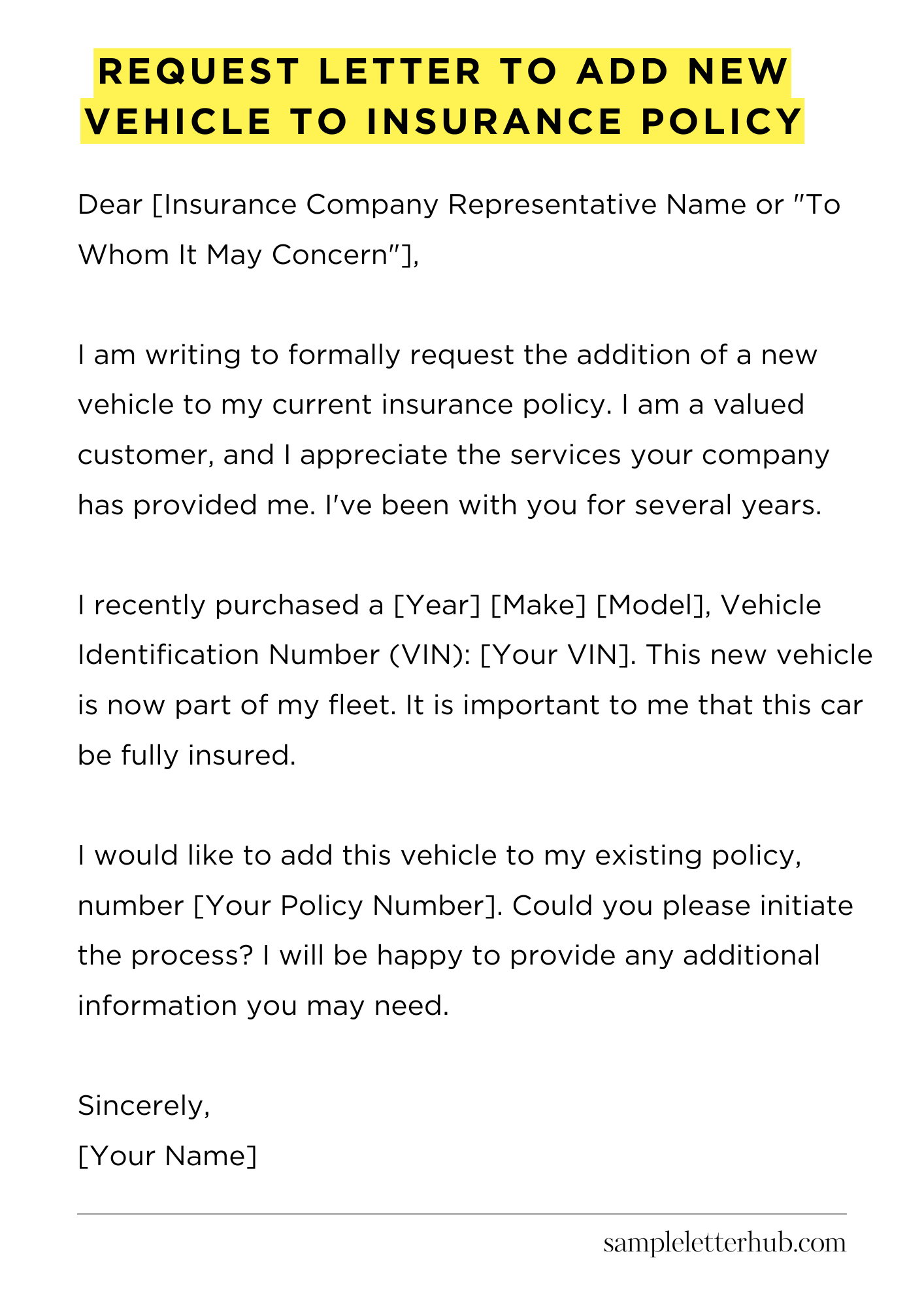
Dear [Insurance Company Representative Name or “To Whom It May Concern”],
I am writing to formally request the addition of a new vehicle to my current insurance policy. I am a valued customer, and I appreciate the services your company has provided me. I’ve been with you for several years.
I recently purchased a [Year] [Make] [Model], Vehicle Identification Number (VIN): [Your VIN]. This new vehicle is now part of my fleet. It is important to me that this car be fully insured.
I would like to add this vehicle to my existing policy, number [Your Policy Number]. Could you please initiate the process? I will be happy to provide any additional information you may need. This includes things like the vehicle’s registration and purchase details.
Please let me know the updated premium and any other necessary details to finalize the process. I am available to discuss this matter further at your convenience. You can reach me by phone or email.
I look forward to hearing from you soon and getting this matter resolved quickly. Thank you very much for your time and assistance.
Sincerely,
[Your Name]
How to Write Request Letter to Add New Vehicle to Insurance Policy
Acquiring a new vehicle is a thrilling experience. However, ensuring it’s adequately protected requires immediate action. The first crucial step is to formally notify your insurance provider.
You accomplish this through a well-crafted request letter. This missive serves as the official conduit for adding your new acquisition to your existing policy. Here’s a comprehensive guide to help you compose an effective letter.
1. Commence with a Formal Salutation
Your letter should begin with a professional salutation. Address the letter to the appropriate department or individual at your insurance company. This frequently involves the underwriting department or your dedicated agent.
Examples include “Dear Claims Department” or “Dear Mr./Ms. [Agent’s Last Name]”. Avoid casual greetings, opting instead for a tone of decorum.
2. Explicitly State Your Purpose
Immediately declare the intent of your letter in the opening paragraph. Clarity is paramount. Clearly state that you are requesting the addition of a new vehicle to your current insurance policy. Specify your policy number. This helps the insurer swiftly locate your account. Concise language is critical here.
3. Furnish Vehicle Particulars
Include all the pertinent details about the new vehicle. This encompasses the make, model, year, and Vehicle Identification Number (VIN). The VIN is the most critical identifier. It allows the insurer to precisely verify the vehicle’s specifications. Don’t omit anything; thoroughness is key. Further, furnish any specific details like trim level, and if the vehicle is new or used.
4. Include Purchase and Ownership Details
Provide the date you acquired the vehicle. Include the method of acquisition (e.g., purchased outright, leased, or financed). If financed, include the lienholder’s name and address. This information is indispensable for the insurance company to assess their risk appropriately. Accurate documentation prevents subsequent operational glitches.
5. Specify Desired Coverage
Clearly delineate the coverage levels you require for the new vehicle. This includes the desired liability limits, comprehensive coverage, collision coverage, and any other add-ons, like uninsured/underinsured motorist protection. It’s often pragmatic to mirror the existing coverage on your other vehicles. A thorough assessment of your needs is crucial before initiating this step.
6. Enclose Supporting Documentation
Attach copies of any supporting documentation to substantiate your request. This often includes a copy of the vehicle’s registration, the purchase agreement or bill of sale, and any financing documents. Providing this collateral ensures prompt processing and avoids any potential delays. All the necessary paperwork strengthens your claim’s efficacy.
7. Conclude with a Call to Action
End your letter with a polite but assertive call to action. Request confirmation that the new vehicle has been added to your policy. Include your preferred method of communication (phone, email, or regular mail) for the insurer to respond to you. Also, mention when you expect to hear back. This shows professionalism and respect for their time.
FAQs about Request Letter to Add New Vehicle to Insurance Policy
What information should I include in the request letter?
Your request letter should clearly state your intention to add a new vehicle to your existing insurance policy. Include your full name, policy number, and the effective date you want the new coverage to begin.
You must also provide detailed information about the new vehicle, such as the make, model, year, VIN (Vehicle Identification Number), and any optional features. Additionally, include the vehicle’s usage (e.g., personal, business) and estimated annual mileage. Consider including your contact information such as phone and email to avoid communication delay.
How do I submit the request letter to my insurance provider?
Most insurance companies accept requests through multiple channels. You can typically submit your letter via email, postal mail, or through your insurance company’s online portal or mobile app, if available.
Some providers may also accept requests via fax. Always confirm the preferred submission method with your specific insurance provider. Ensure you keep a copy of your request and any confirmation of receipt from your insurer.
What supporting documentation should I include with the letter?
Depending on your insurance provider, you might need to include supporting documentation with your request letter. Common requirements are a copy of the vehicle’s registration or title, proof of ownership, and potentially a bill of sale.
Your insurance provider might also require information about any financing or leasing agreements associated with the vehicle. Contact your insurance company to confirm what documentation is required.
How long does it typically take to add a new vehicle to my policy?
The processing time can vary depending on your insurance company’s procedures and the completeness of the information you provide. It generally takes between a few hours to several business days for your insurer to process your request and update your policy.
They may need to verify the information, assess the risk associated with the new vehicle, and calculate any premium adjustments. It’s advisable to submit your request well in advance of the date you need coverage to avoid any gaps in coverage.
Will adding a new vehicle to my policy affect my insurance premium?
Yes, adding a new vehicle to your policy will almost certainly affect your insurance premium. The premium adjustment will depend on several factors, including the make and model of the new vehicle, its safety features, its intended use, your driving record, and the existing coverage on your policy.
The insurance company will assess the risk associated with the new vehicle and calculate a premium based on these factors. Contact your insurer to discuss the potential increase in the premium before you send your request letter.
Related:
Resignation letter due to rude boss
Resignation letter moving to another state
Resignation letter due to illness of family member
Resignation letter due to study
Resignation letter due to long commute