

A Representative resignation letter is a formal document. It is used to announce your departure from a representative role. The letter officially informs the organization of your decision. It also states your last day of employment.
Are you looking to resign from a representative position? This article is for you. We understand writing these letters can be tricky. We’ve got you covered.
We’ve compiled several templates. These samples will guide you. You can easily adapt them to your specific situation. Craft your letter with confidence and ease.
Representative Resignation Letter
Below is a sample of a Representative Resignation Letter:
[Your Name]
[Your Address]
[Your Phone Number]
[Your Email Address]
[Date]
[Recipient’s Name]
[Recipient’s Title]
[Recipient’s Address]
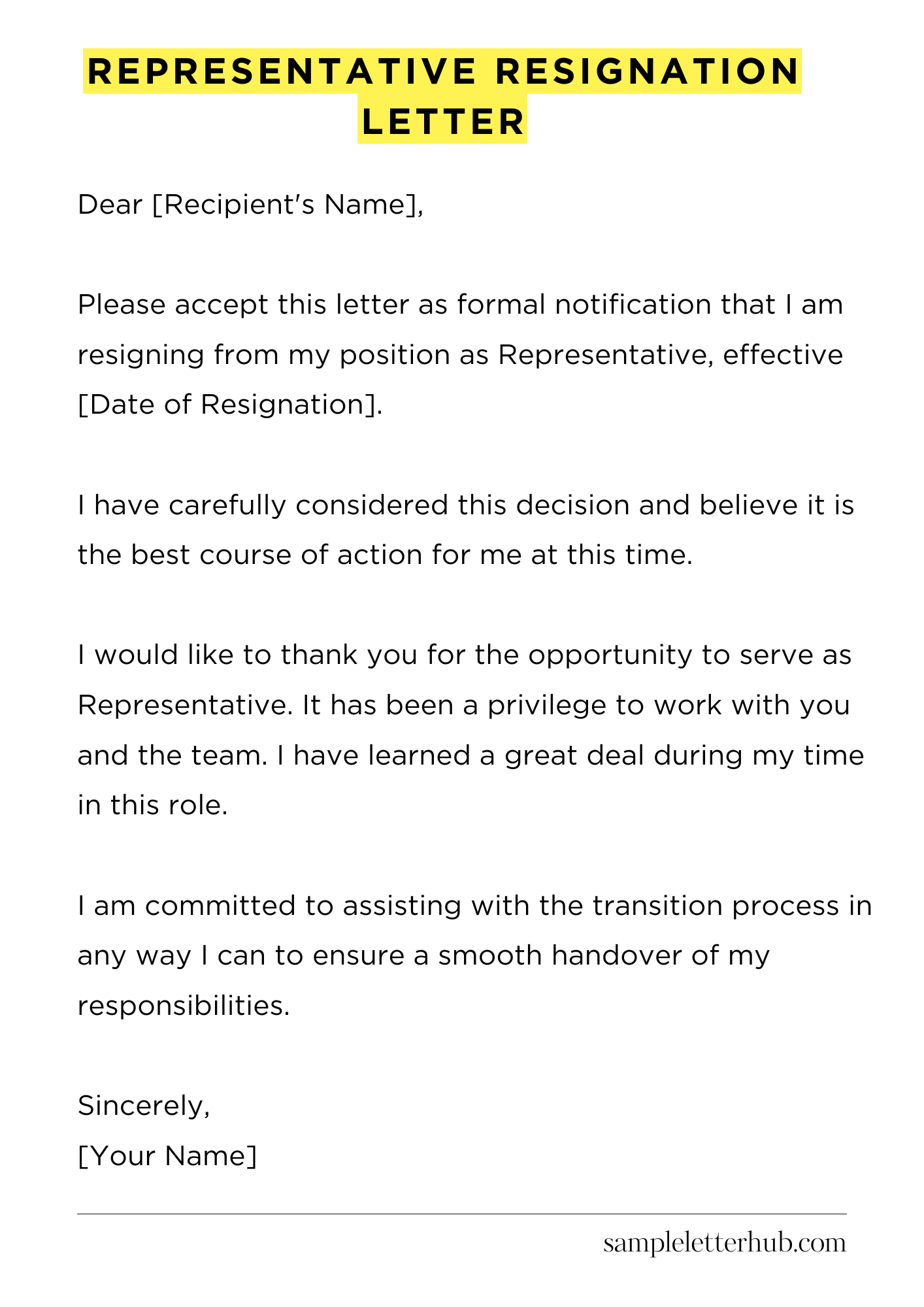
Dear [Recipient’s Name],
Please accept this letter as formal notification that I am resigning from my position as Representative, effective [Date of Resignation].
I have carefully considered this decision and believe it is the best course of action for me at this time.
I would like to thank you for the opportunity to serve as Representative. It has been a privilege to work with you and the team. I have learned a great deal during my time in this role.
I am committed to assisting with the transition process in any way I can to ensure a smooth handover of my responsibilities.
I wish you and the organization continued success in the future.
Sincerely,
[Your Name]
How to Write a Representative Resignation Letter
1. Understand the Purpose and Importance
So, you’re leaving a representative role? Good for you! A well-crafted resignation letter is absolutely vital. It officially communicates your decision to step down from your representative position, whether it’s on a board, within a company, or in any other capacity.
Remember, it’s not just about saying goodbye; it’s about leaving a positive and professional impression. Think of it as your final act in the role. A thoughtfully written letter can pave the way for a smooth transition and maintain positive relationships with your colleagues. Furthermore, it ensures there’s a clear record of your departure.
2. Essential Elements to Include
Let’s get down to the nitty-gritty. Your resignation letter needs certain elements to be effective. First, clearly state your intention to resign. Specify the role you’re leaving. Second, specify your last day of service. This is a crucial detail! Third, express your gratitude. A simple “Thank you for the opportunity” goes a long way.
Consider mentioning any specific experiences or people you valued. Finally, provide your contact information, if you wish to do so. This can be helpful for future communication or handover purposes. Keep it concise, professional, and to the point.
3. Structure and Formatting for Impact
Formatting matters. A well-formatted letter is easier to read and reflects professionalism. Start with your contact information (address, phone number, email) at the top, followed by the date. Address the letter to the appropriate person, usually your supervisor or the head of the organization. Use a formal tone throughout the letter.
Keep paragraphs short and focused. Employ a clear and easy-to-read font, like Times New Roman or Arial. Proofread meticulously! Typos and grammatical errors diminish your credibility.
4. Tailoring Your Letter: Examples and Considerations
Every situation is unique. Therefore, customize your letter to fit your circumstances. Are you leaving for a new job? Briefly mention it, if you feel comfortable doing so. Have you had a positive experience?
Express it! Were there challenges? Consider how to address them respectfully and constructively. Remember, your goal is to depart on good terms. Think carefully about the tone. Be positive and avoid negativity.
For example, “I have greatly valued my time…” or “I am grateful for the chance to…” are good starting points. If possible, offer to assist with the transition process.
5. Review and Refine Before Submitting
Before hitting “send,” take a step back. Review your entire letter. Read it aloud to catch any awkward phrasing or errors. Ask a friend or colleague to proofread it for a fresh perspective. Is it clear and concise?
Does it convey the right message? Does it maintain a professional tone? Make necessary revisions. Finally, save a copy for your records. Consider whether you want to send a physical copy or an email, depending on your organization’s protocols.
Submitting a polished letter is the final step in ensuring a professional and positive departure. You’ve got this!
FAQs about Representative resignation letter
Why is a Representative resignation letter needed?
A Representative resignation letter serves as a formal declaration of intent to leave a specific representative role. It’s crucial for several reasons: it officially notifies the relevant parties (employer, board, etc.) of the resignation, clarifies the last day of employment, and provides a documented record of the separation.
This helps in maintaining transparency and avoiding future misunderstandings regarding the departure.
What key elements should be included in a Representative resignation letter?
A well-crafted Representative resignation letter should include: a clear statement of resignation, the specific representative role being vacated, the effective date of the resignation, a brief and professional reason for leaving (optional but often included), expressions of gratitude for the opportunity (also optional), and any relevant contact information for future correspondence.
It should also be addressed to the appropriate person or body.
How should the effective date of resignation be determined?
The effective date should be determined based on the terms of the employment agreement, company policy, or any applicable legal requirements. Consider the notice period required (e.g., two weeks, one month).
If unsure, review the employment contract or consult with HR. It’s important to give enough time to allow for a smooth transition of duties and to adhere to any required timelines.
Can I include a reason for resigning in the letter, and if so, what kind of information should I add?
Yes, you can include a reason for resigning, although it’s not always required. If you choose to, keep it brief and professional. Common reasons include accepting a new opportunity, seeking better work-life balance, or personal reasons. Avoid negative comments about the employer or colleagues.
Focusing on the positive aspects of your new direction can be a good approach.
What is the proper way to submit a Representative resignation letter?
The method of submission can depend on company policy. Typically, it involves submitting a physical copy or sending the letter via email to the appropriate person (e.g., supervisor, HR representative). Always retain a copy of the letter for your records. It’s often advisable to follow up with a brief discussion or meeting to discuss the resignation in person, if feasible.
Related:
Resignation letter due to rude boss
Resignation letter moving to another state
Resignation letter due to illness of family member
Resignation letter due to study