

Dealing with property damage can be stressful. You file a property damage claim. Sometimes, your claim gets denied or the payout is too low. This is where a property damage claim appeal letter comes in handy. Its purpose is to request a review of the insurance company’s decision. It is your formal way to fight for what you deserve.
Are you ready to take action? We will help you. We will give you a head start. We have examples. We have templates. You can use these Property Damage Claim Appeal Letter samples. They’re designed to help you write your own letters quickly. These appeal letter examples will guide you.
No matter the situation, these sample letters cover it. From appealing a denial to requesting more money, we have you covered. Use these resources to craft a compelling property damage claim appeal letter. Get ready to get your claim approved or get more insurance money for your property damage.
[Your Name]
[Your Address]
[Your Phone Number]
[Your Email Address]
[Date]
[Insurance Company Name]
[Insurance Company Address]
Subject: Appeal for Property Damage Claim – Policy Number [Your Policy Number]
Dear Claims Adjuster,
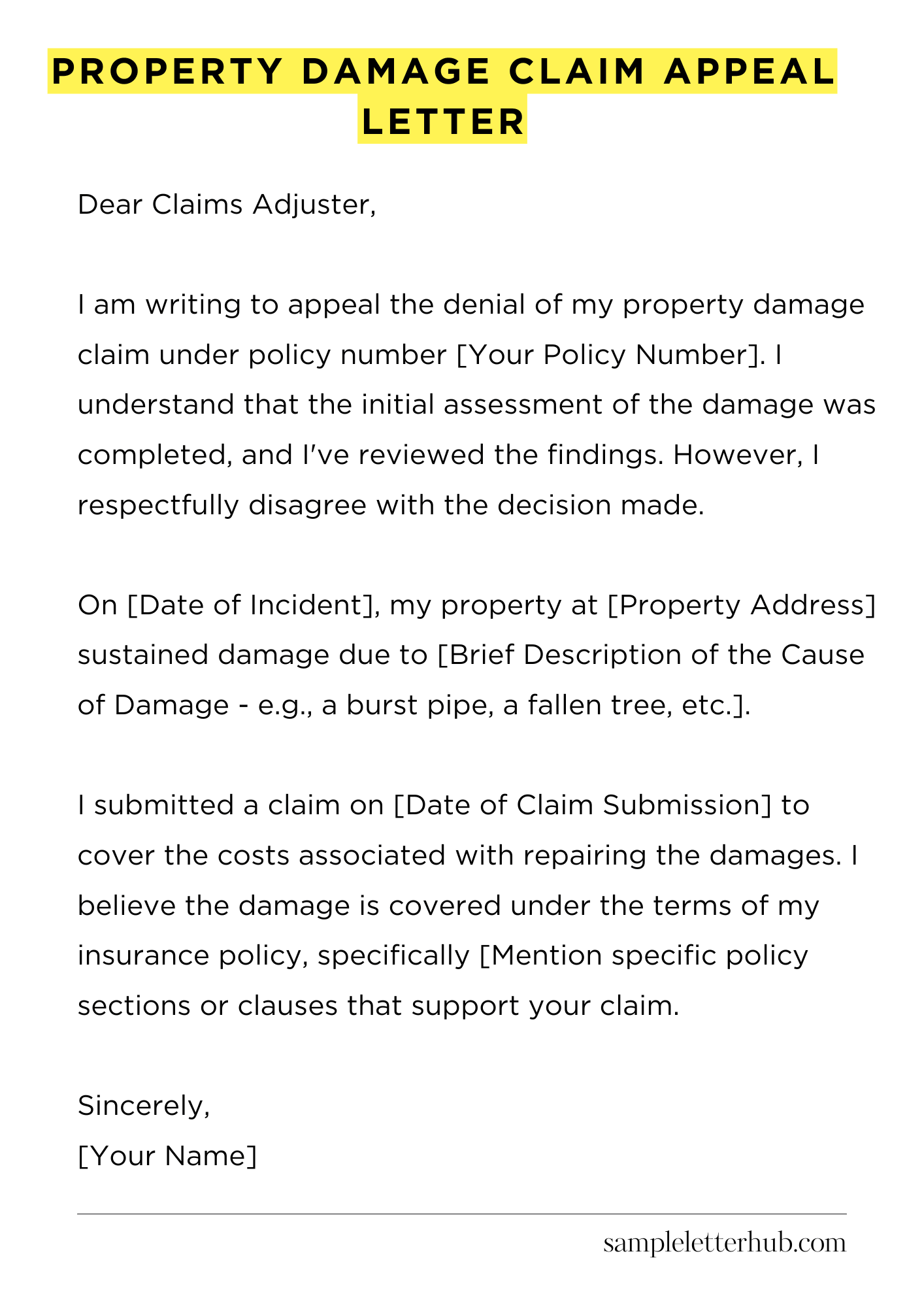
I am writing to appeal the denial of my property damage claim under policy number [Your Policy Number]. I understand that the initial assessment of the damage was completed, and I’ve reviewed the findings. However, I respectfully disagree with the decision made.
On [Date of Incident], my property at [Property Address] sustained damage due to [Brief Description of the Cause of Damage – e.g., a burst pipe, a fallen tree, etc.]. The damage included [List specific damages – e.g., water damage to the ceiling, broken windows, etc.]. You can understand this caused a great amount of distress.
I submitted a claim on [Date of Claim Submission] to cover the costs associated with repairing the damages. I believe the damage is covered under the terms of my insurance policy, specifically [Mention specific policy sections or clauses that support your claim – e.g., Section 3, regarding water damage, etc.].
The initial assessment provided by the claims adjuster seemed to have missed a few key details.
My understanding of the situation differs from the adjuster’s assessment in several ways. Specifically, [Clearly explain the points of disagreement with the denial. Be specific. Provide clear explanations.
For example: “The initial assessment stated that the water damage was caused by a pre-existing condition, however, the plumbing was recently inspected on [Date] and found to be in good working order. I have attached the inspection report from [Name of Inspection Company].”]. Consider the importance of these findings.
To support my appeal, I have included the following documentation: [List all supporting documents you are including – e.g., Photographs of the damage, Repair estimates from multiple contractors, Inspection reports, Witness statements].
I’ve also highlighted key points on these supporting documents for your convenience. I hope this helps the situation be more clear.
I kindly request that you reconsider the denial of my claim in light of the new information provided. I would appreciate it if you could review my appeal thoroughly and give it your full attention. I am confident that a reevaluation of the situation will lead to a more favorable outcome.
Thank you for your time and consideration in this matter. I look forward to your prompt response. Please let me know if you require any further information from my side.
Sincerely,
[Your Name]
How to Write Property Damage Claim Appeal Letter
Property damage can be a stressful experience, particularly when your insurance claim is initially denied or offers insufficient compensation. An appeal letter is your formal recourse, a meticulously crafted document designed to persuade the insurance provider to reconsider their decision.
Mastering the art of writing a compelling appeal letter is crucial to securing the redress you deserve.
1. Initiate with Precision: The Salutation and Subject Line
Commence your letter with a professional salutation. Use “Dear Claims Adjuster,” or if you have their name, “Dear Mr./Ms. [Last Name]”. The salutation establishes the formal tone essential for any effective appeal.
The subject line is your first opportunity to command attention, so make it clear and concise, for example: “Appeal of Claim Denial – Policy Number: [Your Policy Number].” This directly signals the letter’s purpose, ensuring it reaches the correct recipient immediately.
2. Reiterate the Circumstances: A Succinct Summary of Events
Briefly and objectively recap the salient details of the property damage incident. Provide a clear narrative of the events that precipitated the damage. This sets the stage and reminds the adjuster of the original claim.
Keep it concise, sticking to the facts. Avoid unnecessary emotional commentary or inflammatory language; this will diminish your credibility. Emphasize dates, times, and locations – concrete details are your allies.
3. Dispute the Denial: The Heart of Your Argument
This is where you directly challenge the insurance company’s rationale for denial. Precisely address each reason given in their denial letter. If the denial alleges a policy exclusion, meticulously refute the assertion.
Present evidence that supports your claim and disproves the insurer’s position. If the denial cites insufficient documentation, detail the evidence you are providing. Consider the following:
- Policy Language: Refer to the specific policy clauses and definitions.
- Expert Opinions: Include any supporting opinions or assessments from professionals, such as engineers or contractors.
- Photographic Evidence Ensure the provided photos are of high quality and relevant.
4. Assemble the Arsenal: Supporting Documentation
Documentation is your ammunition. Compile every piece of evidence supporting your claim. These could include photographs of the damage, repair estimates, invoices, police reports, and witness statements.
Each piece of documentation serves as a tangible representation of your claim, reinforcing the veracity of your account. Organize the documents methodically and refer to them explicitly within the body of your letter. It shows you have done your homework.
5. Articulate the Damages: Quantifying Your Losses
Clearly detail the financial losses resulting from the property damage. Break down the costs of repairs, replacement of damaged property, and any other associated expenses.
Use itemized lists and provide supporting documentation for each expense. This level of detail removes ambiguity and strengthens your claim. For instance, clearly demonstrate the cost of labor, materials, and other incidentals.
6. The Plea for Reconsideration: A Call to Action
Politely but firmly request the insurance company to reconsider its initial decision. Restate your expectation of a fair and equitable settlement. Reinforce your commitment to resolving this matter amicably.
Express your confidence that, after reviewing the presented evidence, the adjuster will arrive at a favorable determination. Reiterate your policy number and contact information to expedite the process.
7. The Final Flourish: Closing and Submission
Conclude with a professional closing, such as “Sincerely,” or “Respectfully,” followed by your full name, address, phone number, and email address. Proofread the entire letter meticulously before sending.
Ensure your arguments are lucid, the documentation complete, and the tone professional. Consider sending the letter via certified mail with return receipt requested. This provides proof of delivery and ensures your appeal is officially received and considered. These last steps add weight to the appeal.
FAQs about Property Damage Claim Appeal Letter
Understanding the nuances of appealing a property damage claim is crucial for a successful outcome. Here are some of the most frequently asked questions to help you navigate the process.
What is a Property Damage Claim Appeal Letter and Why is it Necessary?
A property damage claim appeal letter is a formal written document submitted to an insurance company when a claim for property damage has been denied, or when the settlement offered is deemed insufficient.
It’s a critical step in the claims process, as it allows the policyholder to challenge the insurer’s decision by providing additional information, clarifying discrepancies, or disputing the assessment of damages. Without a properly constructed appeal letter, you may not receive a fair settlement.
What Information Should I Include in My Appeal Letter?
Your appeal letter should clearly identify the claim, the reasons for your disagreement with the initial decision, and supporting evidence. This includes the claim number, policy number, date of loss, and a detailed explanation of why you are appealing.
Crucially, include any new evidence, such as additional photographs, repair estimates, witness statements, or expert reports, that weren’t originally provided. Refer specifically to the policy language and explain how it supports your claim.
What are the Common Reasons for Claim Denials or Low Settlements, and How Do I Address Them in My Appeal?
Insurance claims are often denied for reasons like policy exclusions (e.g., floods, certain types of wear and tear), lack of proof, or disputes over the extent of damage.
Address these in your letter by clearly refuting the insurer’s rationale. If it’s a policy exclusion, argue how your situation differs or falls under an exception. If there’s a lack of proof, provide more compelling evidence. If the settlement is too low, detail the costs of necessary repairs, highlighting the discrepancy between the insurer’s assessment and actual expenses.
What is the Timeline for Filing an Appeal, and What Happens if My Appeal is Denied?
The deadline to file an appeal is often stated in the initial denial letter, usually within a short timeframe (e.g., 30-60 days). It’s crucial to adhere to this deadline to preserve your rights.
If your appeal is denied, you typically have options, including a second appeal, mediation, or, as a last resort, filing a lawsuit against the insurance company. Each stage involves additional steps, and consulting a legal professional is highly recommended if the matter proceeds beyond the initial appeal.
Should I Hire an Attorney to Help with My Appeal?
While not always necessary, an attorney specializing in insurance claims can significantly increase your chances of a successful appeal. An attorney can review your policy, gather and present evidence effectively, and negotiate with the insurance company on your behalf.
They can also advise you on your legal rights and options, especially if the claim involves significant damages or complexities. If you are unsure, it’s always advisable to seek legal advice to get your appeal on the right track.
Related:
Resignation letter due to rude boss
Resignation letter moving to another state
Resignation letter due to illness of family member
Resignation letter due to study