

The PhD journey is challenging. Sometimes, it is necessary to step away. A PhD candidate resignation letter is the official document. It formally announces your withdrawal from the program. Its purpose is to inform the university of your decision. It also outlines the date of your departure.
Deciding to resign is tough. Writing the letter shouldn’t be. We understand this. We’re here to help you. We have crafted different resignation letter samples. They cover a variety of scenarios.
These examples are a great starting point. They will guide you through the process. Adapt them to fit your specific situation. Create a clear and concise letter. Make your resignation as smooth as possible.
Phd Candidate Resignation Letter
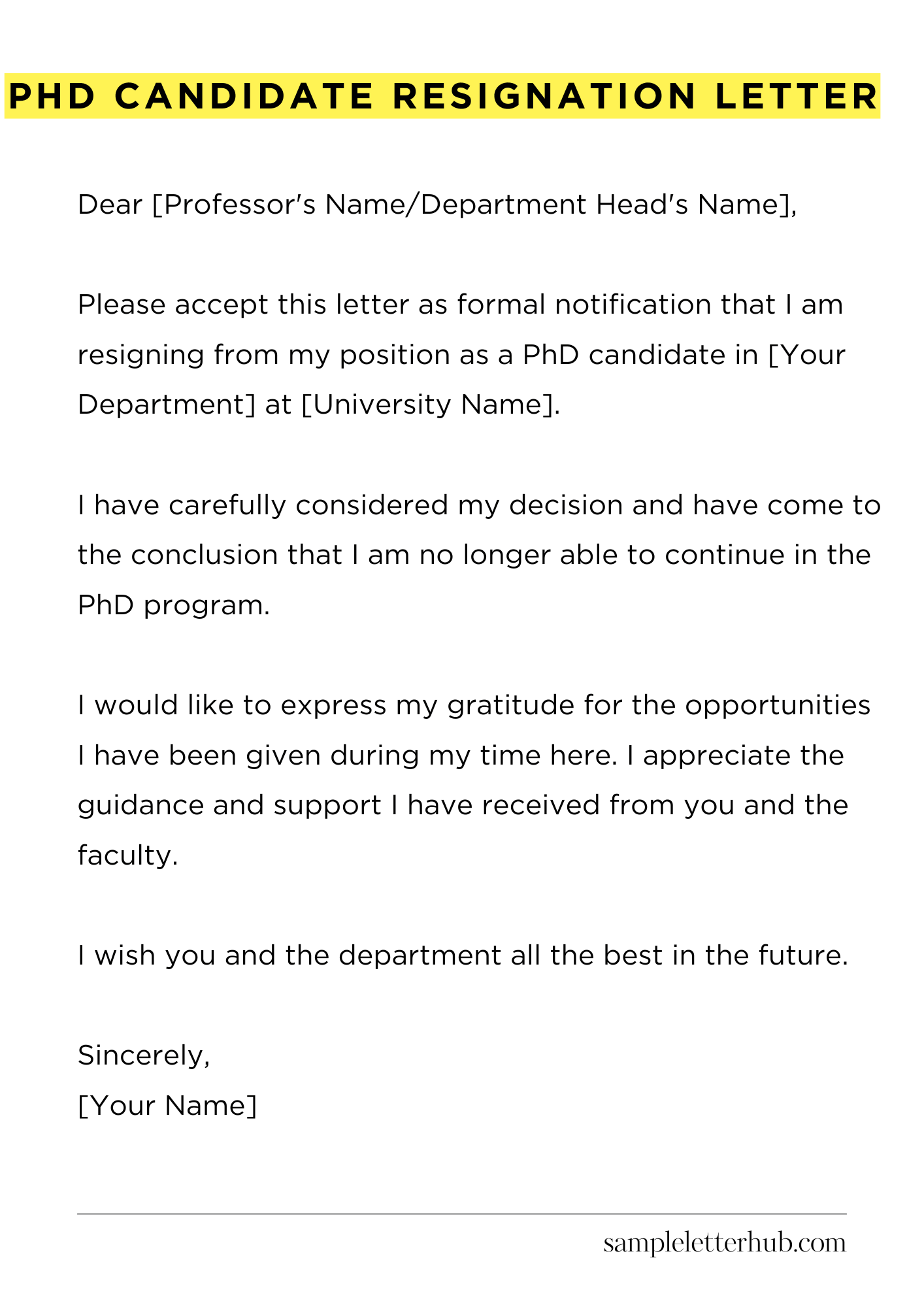
Below is a sample of a Phd Candidate Resignation Letter:
[Your Name]
[Your Address]
[Your Phone Number]
[Your Email Address]
[Date]
[Professor’s Name/Department Head’s Name]
[Professor’s Title/Department Head’s Title]
[Department Name]
[University Name]
[University Address]
Dear [Professor’s Name/Department Head’s Name],
Please accept this letter as formal notification that I am resigning from my position as a PhD candidate in [Your Department] at [University Name]. My resignation is effective [Your Last Day of Enrollment/Last Day of Work].
I have carefully considered my decision and have come to the conclusion that I am no longer able to continue in the PhD program.
I would like to express my gratitude for the opportunities I have been given during my time here. I appreciate the guidance and support I have received from you and the faculty.
I will ensure all my current responsibilities are completed to the best of my ability before my last day. I will also take steps to return any university property.
I wish you and the department all the best in the future.
Sincerely,
[Your Name]
How to Write a PhD Candidate Resignation Letter
Resigning from a PhD program is a big decision. It’s important to approach this process thoughtfully and professionally, especially when composing your resignation letter.
A well-crafted letter can help maintain a positive relationship with your supervisors and the university. Let’s delve into crafting a compelling resignation letter that reflects your decision while upholding your professional image.
1. Start with a Clear and Direct Statement
Your opening paragraph should state your intention clearly and concisely. There’s no need to beat around the bush. Get straight to the point. This is what you’re doing. This sets the tone for the entire letter. For example, you could start with: “Please accept this letter as formal notification that I am resigning from the PhD program in [Department Name] at [University Name], effective [Your Last Day].” Make sure that date is correct. Be sure that your intended departure is very well understood right away.
2. Briefly Explain Your Reason (Optional, But Recommended)
While you aren’t obligated to provide extensive details, offering a brief explanation for your resignation can be helpful. This helps your supervisor understand your decision. It also allows them to plan for the vacancy. This will allow them to prepare for your departure. Keep it professional. You do not need to over-share! You can write something like: “After careful consideration, I have decided to pursue a different career path that aligns more closely with my long-term goals.” Or, “Due to unforeseen personal circumstances, I am no longer able to dedicate the necessary time to successfully complete the program.” Keep it vague or more specific depending on what you prefer. You do not need to explain anything that you are not comfortable with.
3. Express Gratitude and Acknowledge Support
Regardless of your reasons for leaving, expressing gratitude is important. Acknowledge the support you have received from your supervisor and the department. This shows respect and maintains a positive relationship. Consider phrases like: “I am grateful for the opportunities I have been given during my time here,” or “I want to thank you, Professor [Supervisor’s Last Name], for your guidance and support throughout my studies.” You could also add: “I have learned so much.” These acknowledgements can leave a lasting positive impression.
4. Address Practical Matters and Offer Assistance
This section is crucial for showing your professionalism. Think about the practicalities of your departure. Offer to assist with any transition tasks. This includes: “I am happy to assist in any way possible to ensure a smooth transition, such as helping to prepare my research materials or facilitating the handover of ongoing projects.” Also mention any deadlines or responsibilities you need to fulfill. Mention these things! Make sure you are meeting any requirements and deadlines. This demonstrates your dedication and consideration for others.
5. Formal Closing and Contact Information
Conclude your letter with a formal closing and reiterate your contact information. A simple “Sincerely,” or “Respectfully,” is perfect. After the closing, include your full name, student ID number, and any other relevant contact details like your personal email address. This ensures that you can be easily reached for any further communication. Double-check all the information is correct. Proofread carefully. Consider having someone else read it over before you submit it. Good luck!
“`
“`html
FAQs about PhD Candidate Resignation Letter
Navigating the PhD journey can be challenging, and sometimes, resignation becomes necessary. Understanding the nuances of a resignation letter is crucial for a smooth transition. Here are some of the most frequently asked questions about this process:
What is the primary purpose of a PhD candidate resignation letter?
The primary purpose is to formally notify the university, specifically your supervisor and relevant department heads, of your decision to withdraw from the PhD program. It serves as an official record of your departure and helps to initiate the necessary administrative processes, such as ceasing financial support, closing lab access, and documenting your academic status.
What key elements should be included in a PhD candidate resignation letter?
A comprehensive resignation letter should include: your formal intent to resign, the effective date of your resignation, a brief statement of the reason for your resignation (optional, but often helpful), a statement of gratitude (if applicable), and your signature. It’s often advisable to include your student ID number and the name of your supervisor, department, and the university. You should also maintain a copy for your records.
When is the best time to submit a PhD candidate resignation letter?
The best time to submit your letter is after you have carefully considered your decision and are certain about it. Ideally, provide sufficient notice (e.g., two to four weeks) to allow for a smooth transition and administrative processing. Before submitting, it’s beneficial to discuss your decision with your supervisor or a trusted advisor to understand the implications and ensure a clear understanding of the resignation process.
Should I provide a reason for my resignation in the letter?
While not mandatory, including a concise and professional reason can be beneficial. It helps the university understand the factors influencing your decision and can potentially aid in future program improvements. Keep the reason brief and focus on the primary driver behind your choice. Common reasons might include a change in career goals, personal circumstances, or a mismatch with the research or program.
What happens after I submit my resignation letter?
After submission, the university will initiate its resignation procedures. This usually involves notifying relevant departments, confirming the effective date of your withdrawal, and processing any outstanding financial matters. You may be required to attend a meeting with your supervisor or department head. You’ll likely receive confirmation of your resignation, detailing the next steps and any final obligations, such as returning university property. It’s crucial to follow up with the relevant departments to ensure all procedures are completed.
“`