


A partner resignation letter is a formal document. It announces a partner’s decision to leave a business. Its main purpose is to officially inform the other partners of the departure. It also details the effective date of the resignation.
Writing this letter can feel tricky. We’ve got you covered. We’ll provide different templates for various situations. You’ll find examples and samples. Use them as a starting point.
Crafting your own resignation letter becomes simpler. Tailor them to fit your unique circumstances. We hope these templates will help ease the process.
Partner Resignation Letter
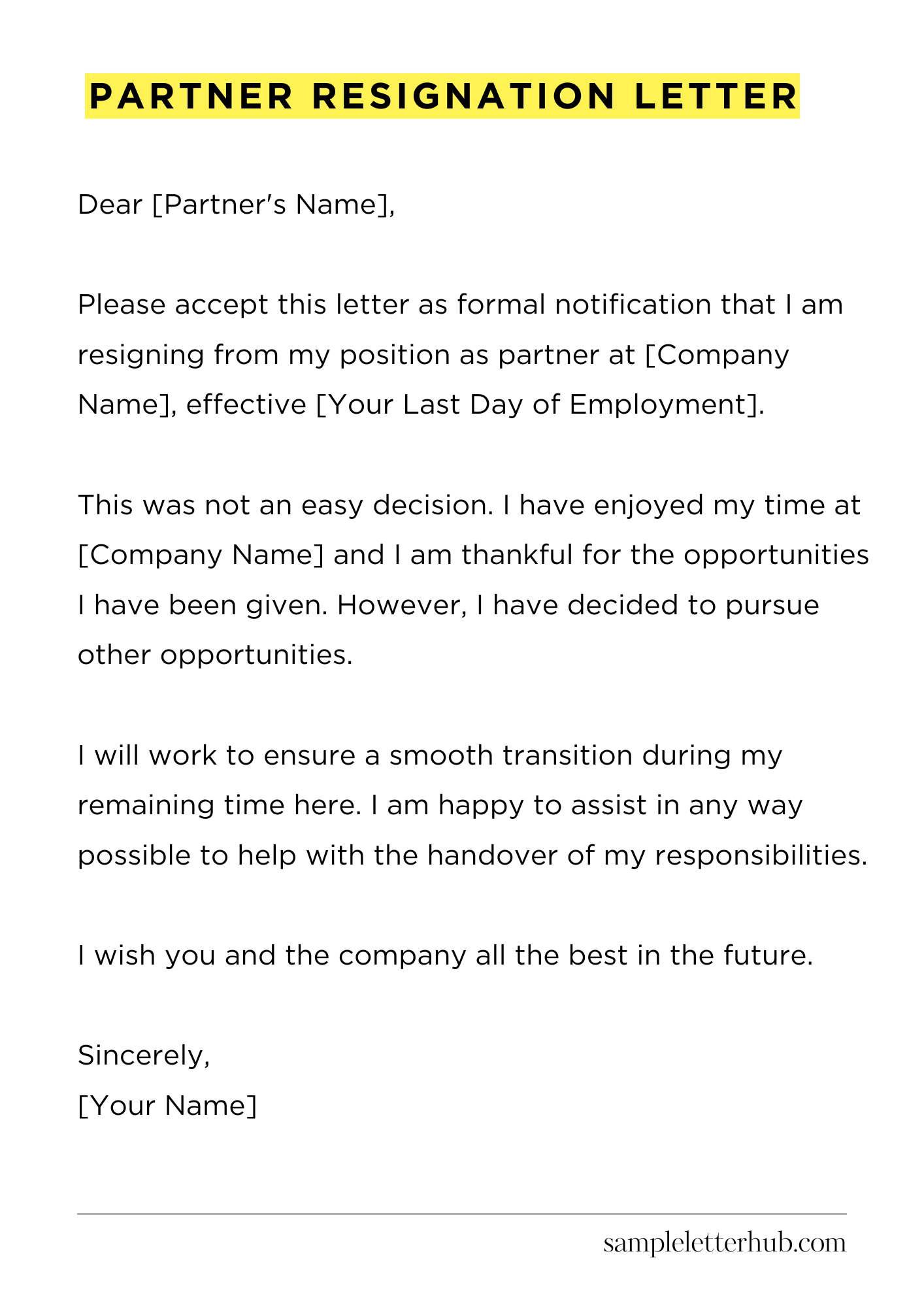
Below is a sample of a Partner Resignation Letter:
[Your Name]
[Your Address]
[Your Phone Number]
[Your Email Address]
[Date]
[Partner’s Name]
[Partner’s Title]
[Company Name]
[Company Address]
Dear [Partner’s Name],
Please accept this letter as formal notification that I am resigning from my position as partner at [Company Name], effective [Your Last Day of Employment].
This was not an easy decision. I have enjoyed my time at [Company Name] and I am thankful for the opportunities I have been given. However, I have decided to pursue other opportunities.
I will work to ensure a smooth transition during my remaining time here. I am happy to assist in any way possible to help with the handover of my responsibilities.
I wish you and the company all the best in the future.
Sincerely,
[Your Name]
How to Write a Partner Resignation Letter
Leaving a partnership is a big deal. It signifies a significant change in your professional life, and the way you handle it matters. You need to be thoughtful and professional. A well-crafted resignation letter is critical. It sets the tone for your departure and can impact your future relationships.
1. Understand the Basics: What Needs to be Included
First things first, your letter needs essential components. Begin with your full name and address, followed by the date. Then, address it to the appropriate partner, usually the managing partner or the partner you directly report to.
Always use a professional salutation like “Dear [Partner’s Name]” or “To the Partners.” Don’t forget your opening statement. It is essential. Clearly state your intention to resign from the partnership.
Your resignation letter must include the effective date of your departure. This is when your partnership officially ends. Be sure to reference the partnership agreement. Mention any specific clauses or protocols related to your departure. If there is a notice period mentioned, be sure to adhere to it.
These letters have to be professional. Include a sentence about handing over your tasks. The goal is to ensure a smooth transition. Consider expressing gratitude for the opportunity and the experiences gained during your time there. Keep it concise.
2. Crafting the Right Tone: Keep it Professional
The tone of your letter is incredibly important. You’re dealing with a professional matter. Therefore, maintain a professional and respectful tone throughout. Avoid negativity, complaints, or personal attacks. Even if you have issues, the resignation letter is not the place to air them. Stick to the facts.
Be clear, direct, and focused on your departure. Using positive language can help. Acknowledge the positive aspects of the partnership. Show that you are grateful.
Proofread carefully. Typos or grammatical errors diminish your professionalism. Review the letter multiple times before sending it. Consider having a trusted friend review it too. The best resignation letters are straightforward and clear. Maintain a positive attitude. This is your last impression.
3. Key Elements: Specifics to Mention
Besides the essentials, a good resignation letter can address certain specific elements. Briefly outline your plans for the transition. This includes who will take over your duties, and how you will help with the handover.
Mention any outstanding projects. If you have active clients, briefly explain how their transition will be handled. Be proactive. Offer to assist in any way you can, during your notice period, to ensure a smooth transition.
If you’re willing to be contacted after your departure, provide your personal contact information (e.g., email address). However, this is optional, and you should only include it if you are comfortable. Make sure it is your personal contact. It shows willingness to stay connected professionally. Expressing your sincere wishes for the partnership’s future success is also important.
4. Sample Letter: A Template to Follow
Here is a basic template to get you started:
[Your Name]
[Your Address]
[Date]

[Partner's Name or To the Partners],
[Partnership Name]

Dear [Partner's Name],

Please accept this letter as formal notification that I am resigning from my position as a partner at [Partnership Name], effective [Date of Departure].

[Optional: Briefly mention the reason for leaving if you choose, but keep it brief and professional].

I will work diligently during my notice period to ensure a seamless transition of my responsibilities and client matters. I am committed to assisting in any way possible to minimize disruption.

I am grateful for the opportunities I have been given during my time here. I wish [Partnership Name] continued success in the future.

Sincerely,

[Your Signature]
[Your Typed Name]
5. Final Steps: Before You Send It
Before hitting send, double-check everything. Is the date correct? Have you spelled names correctly? Are the contact details accurate? Once you are satisfied with your letter, get a copy for your records. Then, if appropriate, make a physical copy for your records.
Send the letter via a method that provides proof of delivery. This could be certified mail or email with a read receipt. Consider your personal communication with your partners. The resignation letter is a formal document. You may choose to have a conversation about it with your partners.
Leaving a partnership is complex. However, a well-written resignation letter demonstrates professionalism and respect. It’s a crucial step in ensuring a positive end to your association. By following these steps, you can depart with grace and integrity. Good luck!
FAQs about Partner Resignation Letter
What is a partner resignation letter, and why is it important?
A partner resignation letter is a formal document submitted by a partner in a business or professional partnership, officially announcing their departure from the firm. It is crucial because it initiates the formal process of separation, outlines the terms of the departure, and sets the stage for a smooth transition.
It’s a legally binding document that protects the departing partner and the remaining partners by clarifying expectations, responsibilities, and the division of assets or liabilities.
What key information should be included in a partner resignation letter?
A comprehensive partner resignation letter should include: the effective date of resignation, a clear statement of intent to resign, the reason for resignation (optional but can be helpful), acknowledgment of partnership agreements (e.g., mention of relevant clauses), details about the handover of responsibilities and client files.
How should the tone of a partner resignation letter be?
The tone of the resignation letter should be professional, respectful, and courteous. While it’s acceptable to express the reason for leaving, the focus should be on clarity and formality rather than negativity or resentment.
It’s essential to maintain a positive relationship, especially if the departing partner anticipates future professional interactions or referrals. Avoid inflammatory language, and keep the tone business-oriented and straightforward.
What are the legal considerations related to a partner resignation letter?
Legal considerations are paramount. Partners must carefully review the partnership agreement to understand the terms of resignation, including notice periods, financial settlements, and restrictions.
The letter should align with these clauses. Depending on the industry and the partnership structure, other legal considerations might apply, such as compliance with securities laws, intellectual property rights, and any non-compete or confidentiality agreements.
It is highly recommended to seek legal counsel to ensure the letter adheres to all applicable laws and regulations and protects the departing and remaining partners’ interests.
What is the typical process after submitting a partner resignation letter?
The typical process involves several steps. First, the letter is formally acknowledged and reviewed by the remaining partners or the management team. Next, a series of meetings may be scheduled to discuss the terms of separation, including financial settlements, the transfer of client files, and the handover of responsibilities.
A formal agreement, often drafted by legal counsel, will be drawn up to document the agreed-upon terms. Finally, the departing partner will execute the agreement, and the separation will be finalized according to the outlined terms.
During the process, proper communication and transparency among all partners are essential to minimize disruption and protect the business’s interests.
Related:
Resignation letter due to rude boss
Resignation letter moving to another state
Resignation letter due to illness of family member
Resignation letter due to study