

So, you’re stepping down from your Operations Lead role. A crucial step is writing a formal resignation letter. This letter officially communicates your departure to your employer. It helps ensure a smooth transition.
Crafting the perfect resignation letter can feel daunting. But don’t worry. This article is here to help. We’ll provide you with various templates. You’ll find examples and samples of Operations Lead resignation letters.
We’ve got you covered. Consider this your go-to guide. We make the writing process easy. Pick the perfect wording. Adapt it to fit your situation.
Operations Lead Resignation Letter
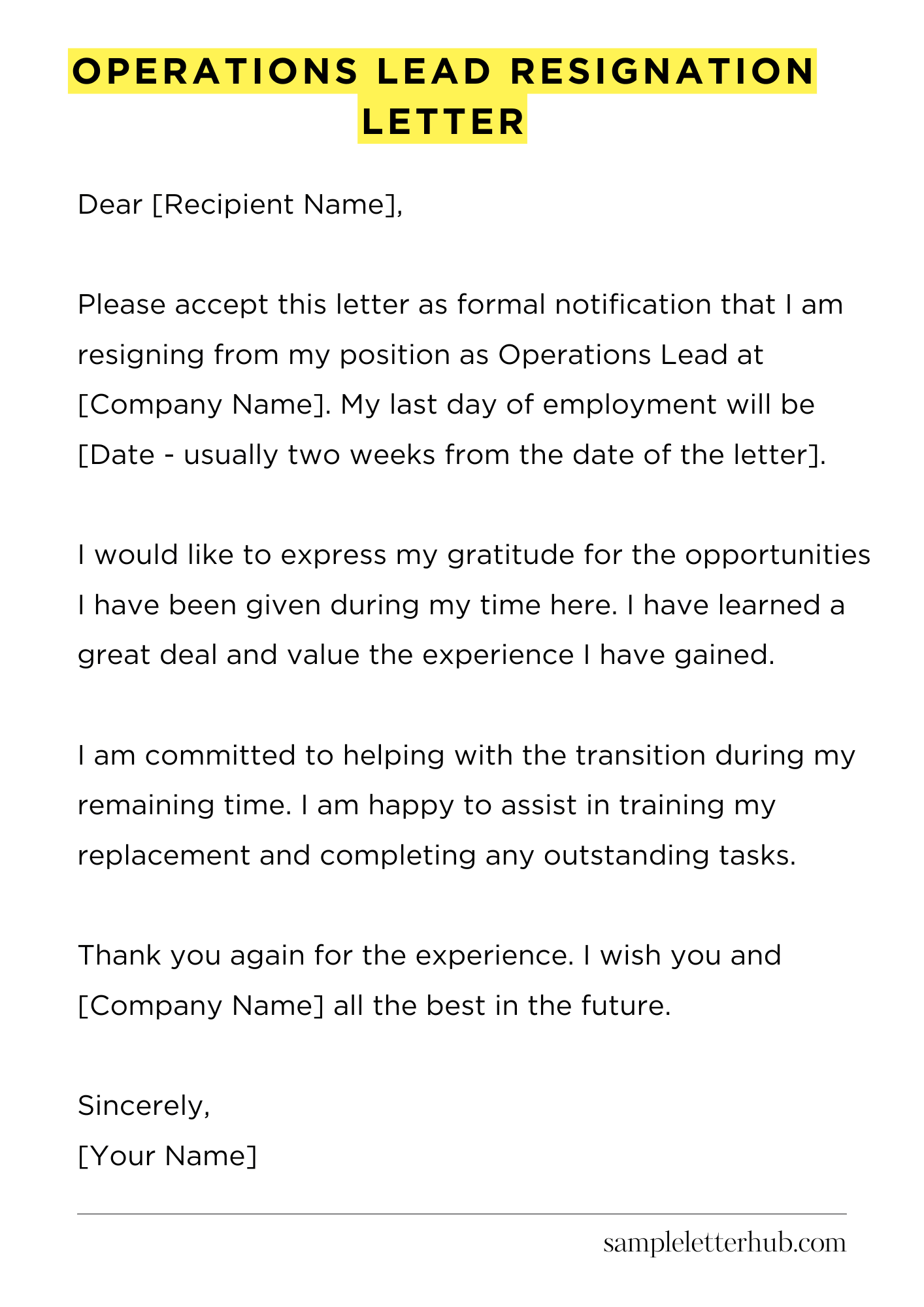
Below is a sample of a Operations Lead Resignation Letter:
[Your Name]
[Your Address]
[Your Phone Number]
[Your Email Address]
[Date]
[Recipient Name]
[Recipient Title]
[Company Name]
[Company Address]
Dear [Recipient Name],
Please accept this letter as formal notification that I am resigning from my position as Operations Lead at [Company Name]. My last day of employment will be [Date – usually two weeks from the date of the letter].
I would like to express my gratitude for the opportunities I have been given during my time here. I have learned a great deal and value the experience I have gained.
I am committed to helping with the transition during my remaining time. I am happy to assist in training my replacement and completing any outstanding tasks.
Thank you again for the experience. I wish you and [Company Name] all the best in the future.
Sincerely,
[Your Name]
How to Write Operations Lead Resignation Letter
Leaving a job is a big deal, and when you’re an Operations Lead, your departure needs to be handled with extra care.
After all, you’re in a leadership position, and your exit impacts a whole team. It’s important to be professional, respectful, and clear in your communication. This means writing a well-crafted resignation letter is absolutely essential.
1. Get the Basics Right: Format and Tone
First things first: Format. Keep it clean and easy to read. Use standard business letter format. This typically includes your address, the date, and your manager’s name and title.
Maintain a formal yet respectful tone throughout the letter. Avoid being overly emotional or negative. You want to leave a positive impression. After all, you may need a reference later. Keep the content brief and to the point.
The tone is super important. Your letter reflects your professionalism. Try to keep it factual and polite. Do not vent about frustrations or bad experiences. Focus on the positives, and express gratitude for opportunities. Maintaining a respectful tone makes the process easier for everyone.
2. The Core Elements: What to Include
Your letter should contain several key elements. Begin by clearly stating your intention to resign. Specify your last day of employment. This is crucial for a smooth transition.
Next, express your gratitude for the opportunity to work at the company. Mention any specific experiences or skills you gained if you wish.
You might offer to assist with the handover of your responsibilities. This shows integrity and consideration. Also, briefly state the reason for your resignation. You do not need to go into deep details.
Simply say you’re pursuing other opportunities. This is generally a safe and acceptable reason.
3. Writing the Body: Step-by-Step Approach
Let’s break down the body of your letter. Start with a straightforward statement of your resignation. For instance, “Please accept this letter as formal notification that I am resigning from my position as Operations Lead, effective [Your Last Day of Employment].”
See, simple. Then, express your gratitude. Something like: “I am grateful for the opportunities I have been given during my time at [Company Name].”
Next, offer assistance. “I am happy to assist with the transition of my responsibilities and am available to help train my replacement.” Finally, keep it brief: “I am pursuing other opportunities.” Or you can say “I wish you all the best and look forward to the next chapter”. Then close with a formal sign-off: “Sincerely,” or “Best regards,” followed by your name.
4. Avoiding Pitfalls: Things to Avoid
Certain things should never appear in a resignation letter. Avoid negativity, even if you are unhappy. Do not criticize your manager or the company. Do not divulge confidential information or make accusations.
This can backfire and damage your reputation. Also, do not include excessive detail about your new job. Keep it general and professional.
Avoid mentioning sensitive company information. Keep it focused on your intent to leave. Make sure to proofread your letter carefully before sending it. Errors can undermine your credibility. It may also be a good idea to seek advice if you are not sure of something.
5. Final Steps: Submitting Your Letter
Once your letter is ready, how should you submit it? Provide your letter to your immediate supervisor. It’s usually best to deliver it in person, if possible, but email is also acceptable. Be prepared for a conversation after you hand in the letter. Your manager may want to discuss your reasons for leaving.
Follow up on the details of your departure. Discuss the handover process and any outstanding tasks. Remember, you want to leave on good terms. You may need to obtain references, so this is important. After leaving, you might also want to send a thank-you note to your colleagues if you were close to them.
FAQs about Operations Lead Resignation Letter
What is the primary purpose of an Operations Lead resignation letter?
The primary purpose of an Operations Lead resignation letter is to formally notify an employer of an employee’s intent to leave their position. It serves as an official record of the resignation, providing details such as the effective date of departure and, often, a brief reason for leaving.
This letter helps facilitate a smooth transition, allowing the company to prepare for the role’s vacancy and manage workflow.
What key elements should an Operations Lead resignation letter include?
An effective Operations Lead resignation letter should include: the date of the letter, the recipient’s name and title, a clear statement of resignation, the effective date of resignation, a brief and professional expression of gratitude, and optional details like reason for leaving and offer of assistance during the transition.
The letter should be concise, respectful, and free of any negative comments about the company or colleagues.
How much notice should an Operations Lead provide when resigning?
The standard notice period for an Operations Lead is typically two to four weeks, but this can vary depending on the employment contract, company policy, and local labor laws.
It’s crucial to review the employment agreement to determine the required notice period. Providing ample notice allows sufficient time for the company to find a replacement and for a proper handover of responsibilities.
Should an Operations Lead provide a reason for resigning in the letter?
While not mandatory, including a brief reason for leaving in the resignation letter is generally acceptable. It can be as simple as stating “to pursue other opportunities” or “to focus on personal development.”
However, it is advisable to keep the reason professional and avoid dwelling on negative aspects of the job or company. If the leaving is due to negative workplace situations, it is more beneficial to handle those conversations in person.
How can an Operations Lead ensure a professional and positive resignation process?
An Operations Lead can ensure a professional and positive resignation process by: delivering the letter in person (if possible), maintaining a positive and respectful tone, offering assistance during the transition period (e.g., training a replacement, documenting processes).
Related:
Resignation letter due to rude boss
Resignation letter moving to another state
Resignation letter due to illness of family member
Resignation letter due to study