

A “Office Staff resignation letter” is a formal document. It is written by an office staff member. Its main purpose is to officially announce their departure. The letter is given to their employer. It states the employee’s last day of work.
Planning to leave your office job? Writing a resignation letter can feel tricky. Don’t worry, we’re here to help. This article provides helpful examples. You can use these samples as guides. Adapt them to fit your specific situation.
We’ve got you covered with various formats. Choose the one that suits your needs. Need something simple? We have it. Looking for a more formal approach? We have that too. Crafting your resignation letter will be easy.
Office Staff Resignation Letter
Below is a sample of a Office Staff Resignation Letter:
[Your Name/Company Name]
[Your Address]
[Your Phone Number]
[Your Email Address]
[Date]
[Employee Name]
[Employee Address]
Subject: Resignation from Office Staff Position
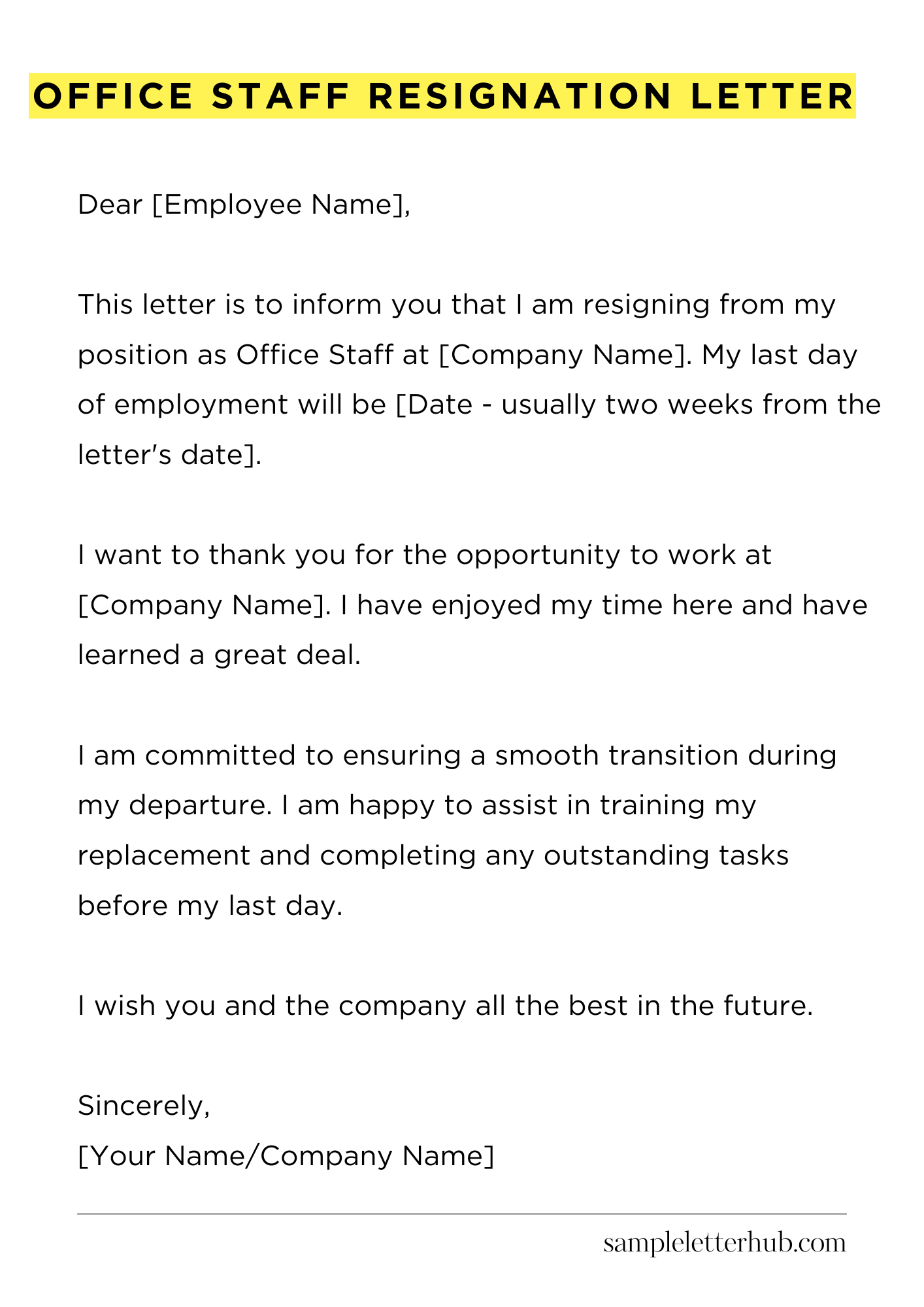
Dear [Employee Name],
This letter is to inform you that I am resigning from my position as Office Staff at [Company Name]. My last day of employment will be [Date – usually two weeks from the letter’s date].
I want to thank you for the opportunity to work at [Company Name]. I have enjoyed my time here and have learned a great deal.
I am committed to ensuring a smooth transition during my departure. I am happy to assist in training my replacement and completing any outstanding tasks before my last day.
I wish you and the company all the best in the future.
Sincerely,
[Your Name/Company Name]
How to Write Office Staff Resignation Letter
Know Your Reason and Be Sure
So, you’re thinking about moving on from your current job? Good for you! But before you dash off a letter, take a moment to be absolutely certain. Leaving a job is a big decision; do you know why you are doing this? Make sure you have thought through your reasons.
Are you chasing a better opportunity, or are you unhappy with your current situation? You could be looking at a better salary, work-life balance, or a role that is simply a better fit for you. Once you know your reasons, they will help you craft a clearer and more appropriate resignation letter.
Think hard, there might be no turning back after you submit the letter!
Keep it Concise and Professional
The core purpose of your resignation letter is to formally announce your departure. Keeping this in mind, make it short, sweet, and to the point.
No need for lengthy explanations of your feelings (unless it’s essential, which is rare). Start with a direct statement of your intent to resign, followed by your last day of employment. Be mindful that this is a professional document; maintain a respectful tone.
You may also mention a reason if you wish, but don’t dwell on it. Keep things very straightforward and business-like.
Structure is Key: What to Include
Let’s break down the essential components of your resignation letter. First, your letter should clearly state your intention to resign. Next, specify your last day of employment.
This is crucial for your employer to plan accordingly. It is professional etiquette to express gratitude for the opportunities you have received at the company. Consider including a brief mention of any contributions you made or skills you developed. Finally, offer assistance with the transition process.
Providing help in the transition process shows you are professional and courteous, and it helps maintain a positive relationship with your former employer, which can be useful down the road.
The Tone Matters: Avoid Negativity
No matter how unhappy you might be, steer clear of negativity in your resignation letter. This is not the place to air grievances or complain about your experiences.
A negative tone can reflect badly on you and potentially harm your chances of future employment opportunities. Focus on expressing your intentions, expressing gratitude, and offering assistance during the transition.
Remember, you’re leaving a role, not starting a feud.
Proofread and Get Ready
Before you send it, proofread, proofread, and proofread again! Check for any grammatical errors, spelling mistakes, and ensure the formatting is neat and professional.
You do not want any errors. After you have reviewed your letter, before submitting, make sure you know your organization’s policy on resignations. Does your contract specify a notice period? Are you expected to provide the resignation letter to your manager or to HR? Take note of any additional steps.
Once you are set, submit your letter and prepare for your next chapter!
FAQs about Office Staff Resignation Letter
What is the primary purpose of a resignation letter from an office staff member?
The primary purpose of a resignation letter is to formally notify an employer of an employee’s intent to leave their position. It serves as a written record of the resignation, the effective date of departure, and sometimes includes a brief expression of gratitude or explanation. It’s a crucial document for initiating the official separation process.
What key pieces of information must be included in a standard office staff resignation letter?
A standard resignation letter should include: the employee’s name and contact information, the date of the letter, the employer’s name and address, a clear statement of resignation, the specific last day of employment (effective date), and a professional closing with the employee’s signature. Optional elements include a brief, positive statement about the experience or a thank you.
How much notice should an office staff member typically give when resigning?
The amount of notice required typically depends on company policy or the employment contract. However, a common standard is two weeks’ notice. Providing more notice, such as a month or more, can be beneficial and demonstrates professionalism, especially for senior roles or those with significant responsibilities.
Are there any legal or contractual obligations related to a resignation letter?
Yes, depending on the employment contract and local laws. Contracts may specify the notice period and any penalties for non-compliance. Legally, the resignation letter serves as evidence of the employee’s intent and the employer’s acknowledgment. Certain industries or positions might have specific legal requirements related to handling employee departures.
What should office staff do after submitting their resignation letter?
After submitting the resignation letter, the employee should prepare for their departure by completing outstanding tasks, training a replacement (if applicable), and assisting in the transition process.
They should also discuss the process with their manager, including exit interviews, return of company property, and final pay arrangements. Maintaining a professional demeanor throughout this process is crucial.
Related:
Resignation letter due to rude boss
Resignation letter moving to another state
Resignation letter due to illness of family member
Resignation letter due to study