

A nurse resignation letter is a formal document. It informs your employer of your intention to leave your nursing position. It officially marks the end of your employment.
Writing a resignation letter can be tough. We understand it needs to be professional. It also needs to be clear and concise. This article is here to help. We provide examples and templates.
We have gathered various sample letters. You can adapt them to your specific situation. This guide simplifies the process. Writing your letter will be easy.
Nurse Resignation Letter
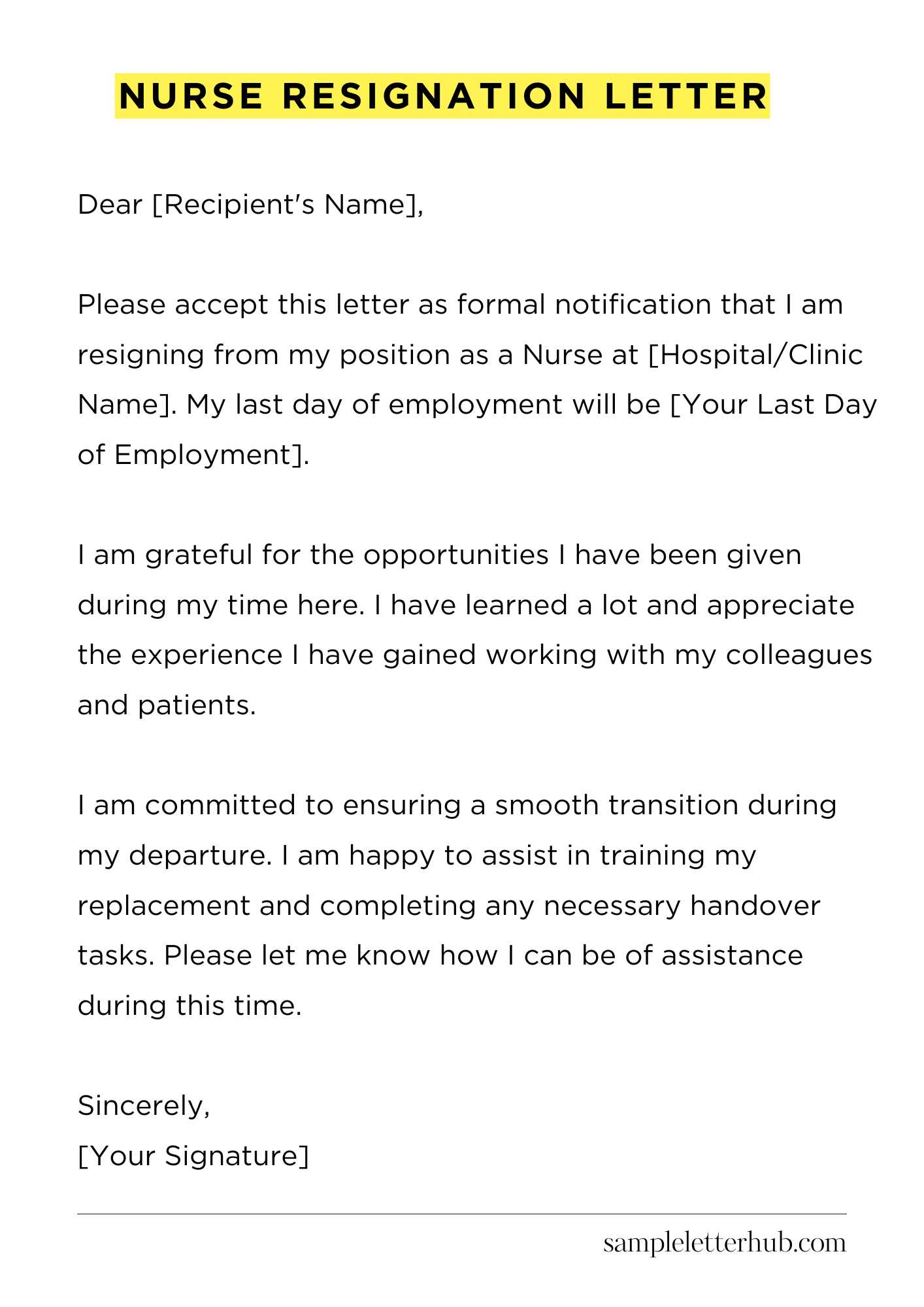
Below is a sample of a Nurse Resignation Letter:
[Your Name]
[Your Address]
[Your Phone Number]
[Your Email Address]
[Date]
[Recipient’s Name]
[Recipient’s Title]
[Hospital/Clinic Name]
[Hospital/Clinic Address]
Dear [Recipient’s Name],
Please accept this letter as formal notification that I am resigning from my position as a Nurse at [Hospital/Clinic Name]. My last day of employment will be [Your Last Day of Employment].
I am grateful for the opportunities I have been given during my time here. I have learned a lot and appreciate the experience I have gained working with my colleagues and patients.
I am committed to ensuring a smooth transition during my departure. I am happy to assist in training my replacement and completing any necessary handover tasks. Please let me know how I can be of assistance during this time.
Thank you again for the support and experiences I have received. I wish you and the hospital all the best in the future.
Sincerely,
[Your Signature]
How to Write a Nurse Resignation Letter
Leaving a nursing job is a big decision. Maybe you’re moving on to something new, seeking a better work-life balance, or simply need a change of scenery. Whatever the reason, crafting a professional and respectful resignation letter is essential.
It’s more than just a formality; it’s a reflection of your character and can impact future opportunities. This guide will help you navigate this process with grace and clarity.
1. Know Your Essentials: The Core Components
Every effective nurse resignation letter includes a few key elements. First, you’ll want to include your name, address, and contact information. Then, the date of the letter should be clear.
Directly address your letter to your supervisor or the appropriate person, like the Nurse Manager or Director of Nursing. Be sure to state your intention to resign from your position, the date your resignation will be effective, and your job title.
Consider this: Clarity is your friend. Keeping it concise and professional is always the way to go.
2. The Body of Your Letter: Key Details Matter
This is where you flesh out the essential information. Clearly state your intent to resign, as mentioned before. However, briefly thank your employer for the opportunity to work there. If appropriate, you could mention something specific that you have learned or experienced during your time there. Keep this brief; this is not the time for a lengthy narrative.
Furthermore, and very importantly, consider offering assistance with the transition. Express your willingness to help with training a replacement or completing ongoing tasks. This simple gesture demonstrates professionalism and leaves a positive impression.
3. Formatting and Tone: Maintaining Professionalism
The layout and the language you use in your resignation letter are crucial. Use a professional font like Times New Roman or Arial, and keep the text size easy to read. Single-space the body of your letter with a space between each paragraph. Maintain a polite and respectful tone throughout.
Avoid any negativity or complaints about your job or employer. Even if you had a negative experience, keep it positive. Think of it as a bridge, not a battleground. End your letter with a formal closing, such as “Sincerely” or “Respectfully,” followed by your full name and signature (if submitting a physical letter).
4. Timing and Delivery: Important Considerations
Find out your employer’s policy on how far in advance you should submit a resignation. Usually, nurses are expected to give at least two weeks’ notice, but some hospitals or clinics may require more. Be sure to check your employment contract or the employee handbook.
Deliver your letter directly to your supervisor or the designated person. It’s often best to hand it in personally, but in some circumstances, email might be acceptable. Make sure you have a copy for your records.
5. Proofreading and Final Thoughts: Always Double-Check
Before submitting your letter, carefully proofread it for any grammatical errors or typos. These small details can damage your overall message. Ask a trusted colleague or friend to review your letter as well; a fresh pair of eyes can often catch mistakes you may have missed. Ensure that all the information is accurate and that it completely reflects your intentions.
Resigning from a nursing position is a milestone, therefore, writing a thoughtful, professional letter will help you leave on good terms and protect your professional reputation. Think of it as a vital part of your career journey.
FAQs about Nurse resignation letter
What are the essential elements to include in a nurse resignation letter?
A comprehensive nurse resignation letter should include your formal resignation, stating your last day of employment. It’s crucial to express gratitude for the opportunities and experiences gained. Briefly mention the reason for your departure, if you choose to. Include a statement of your willingness to assist with the transition and proper contact information.
How much notice should a nurse give when resigning?
The standard recommendation is to provide at least two weeks’ notice. However, this can vary based on your employment contract, local regulations, and the specific policies of the healthcare facility. Review your contract to be certain of what is required, and consider giving more time if possible, to allow ample time for the transition.
Can a nurse’s resignation letter impact future employment opportunities?
While a well-written resignation letter usually does not have a negative impact, how you leave can be important. Ensure your letter is professional and positive. Maintain a cooperative attitude during your transition. Your former employer may be contacted for references; therefore, a good relationship with them will be beneficial. Resigning respectfully and professionally is key.
What are some reasons a nurse might include in their resignation letter?
Common reasons include pursuing new career opportunities, relocation, personal or family reasons, or further education. While you are not obligated to disclose the full details, providing a brief, professional explanation can be helpful. Avoid negative comments about your current employer or colleagues. If needed, a generic reason such as “pursuing other opportunities” is acceptable.
How should a nurse’s resignation letter be submitted?
Generally, it’s best to submit your resignation letter in writing, either on paper or via email, depending on your employer’s policy. Address it to your direct supervisor or the appropriate authority within the organization. Keep a copy for your records. Consider a follow-up conversation to ensure that your resignation is acknowledged and to clarify any details regarding your departure.
Related:
Resignation letter due to rude boss
Resignation letter moving to another state
Resignation letter due to illness of family member
Resignation letter due to study