

A Non-Executive Director resignation letter is a formal document. It is written by a director. They are resigning from their position on a company’s board. The letter officially communicates their decision. It also outlines the reason for leaving.
We understand that writing these letters can be tricky. Don’t worry, we’re here to help. We’ll share several templates. You can use them to craft your own resignation letter. Need a starting point? We have you covered.
Our aim is to make things easy. These samples are adaptable. You can modify them to fit your specific situation. Consider them your helpful guides. Writing that letter just got a whole lot simpler.
Non Executive Director Resignation Letter
Below is a sample of a Non Executive Director Resignation Letter:
[Your Name/Address]
[Your Email]
[Your Phone Number]
[Date]
[Name of Chairman/Board]
[Company Name]
[Company Address]
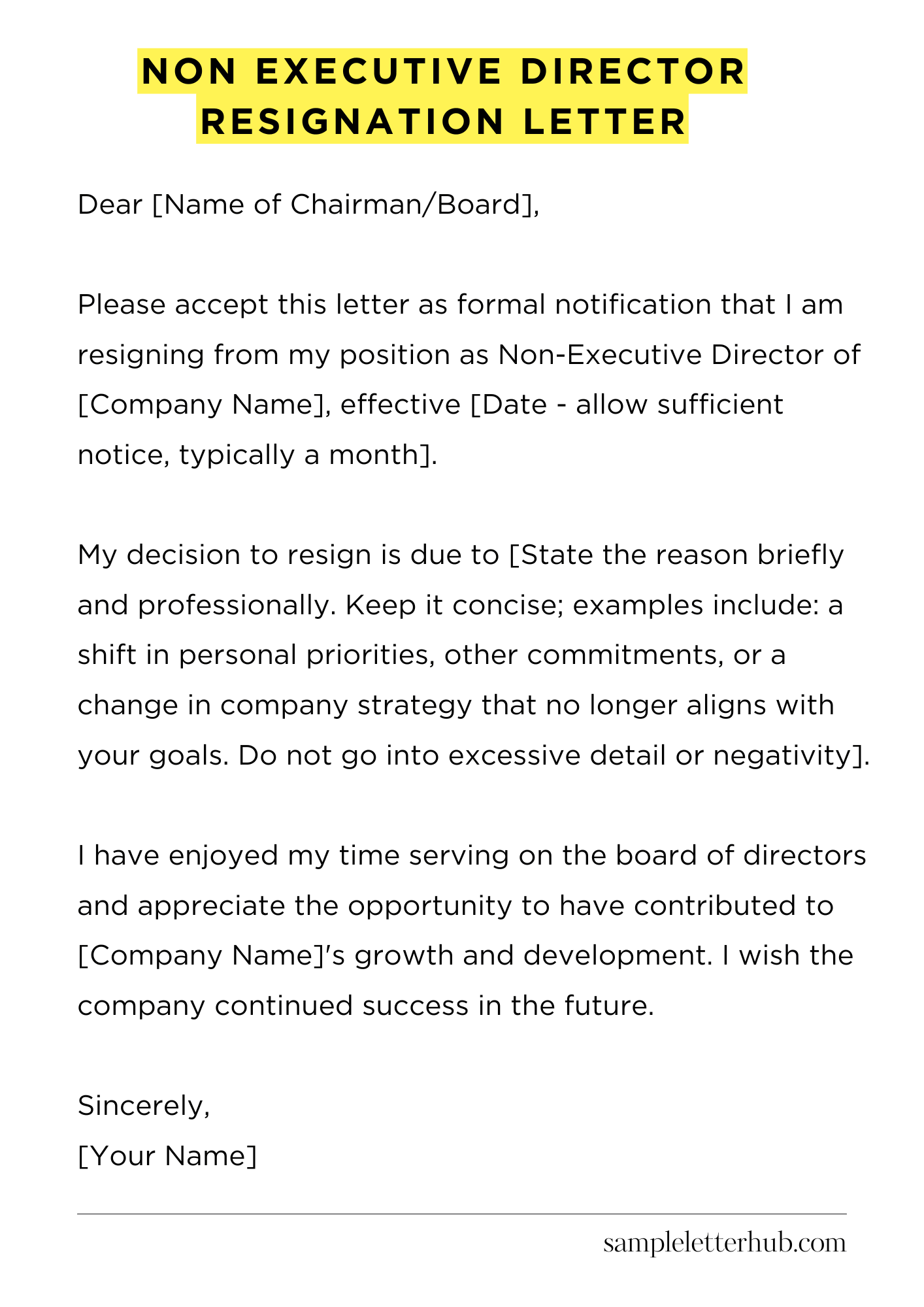
Dear [Name of Chairman/Board],
Please accept this letter as formal notification that I am resigning from my position as Non-Executive Director of [Company Name], effective [Date – allow sufficient notice, typically a month].
My decision to resign is due to [State the reason briefly and professionally. Keep it concise; examples include: a shift in personal priorities, other commitments, or a change in company strategy that no longer aligns with your goals. Do not go into excessive detail or negativity].
I have enjoyed my time serving on the board of directors and appreciate the opportunity to have contributed to [Company Name]’s growth and development. I wish the company continued success in the future.
I am happy to assist with the handover process in any way I can to ensure a smooth transition. Please let me know if you require any further information or assistance from me.
Sincerely,
[Your Name]
How to Write a Non-Executive Director Resignation Letter
Resigning from a Non-Executive Director (NED) position is a significant step. You’ve likely put in time and effort, and the company has relied on your expertise. It is vital to handle this process with professionalism and clarity. This letter serves as your formal notice, so make sure you get it right!
1. Getting Started: The Basic Structure
Let’s start with the basics. Your resignation letter needs a clear and concise structure. This makes it easy for the recipient to understand your intentions. Begin with your contact information, followed by the date. Then, address the letter to the appropriate person, usually the Chairman or the Board of Directors.
A simple structure works well. Briefly state your intention to resign, the effective date of your resignation, and a brief thank you. Keep it brief. Keep it polite. Remember, this letter is a legal document, and clarity is key. Avoid excessive emotional language.
2. Essential Elements: What to Include
Okay, now for the meaty part: the content itself. Start with a straightforward statement of your resignation. For instance, “Please accept this letter as formal notification that I am resigning from my position as a Non-Executive Director of [Company Name].”
Next, clearly state the effective date of your resignation. This date is extremely important. It’s the date on which your responsibilities officially end. Ensure this date aligns with your employment agreement or any agreed-upon notice period.
Also, consider adding a brief thank-you. Acknowledge your time served, and express your appreciation. Briefly mention the opportunity to work there.
It’s also generally good practice to mention the reason for your resignation, if you have any. This isn’t always necessary. Consider adding it based on the work environment. Avoid unnecessary details or negativity.
3. Choosing Your Words: Tone and Language
Your tone is crucial. Maintain a professional and respectful tone throughout the letter. The language you use should be clear, concise, and professional. Avoid slang, jargon, or overly casual language.
If you have any remaining tasks, you can include a brief mention of your willingness to assist with the handover process. This demonstrates your commitment and professionalism. This is very important. Offer support during the transition. This is important too. And offer a final thank you to the company.
4. Specific Situations: Addressing Challenges
Every situation is different. Maybe there is a challenge or a problem. If you are resigning due to a specific issue, it is a good idea to consider your options. Carefully consider whether or not to include the information in your letter. You might be required to state the reason.
Keep your language neutral. In some cases, you may have legal obligations. Consult with your solicitor if you are unsure.
5. Final Steps: Proofreading and Delivery
Before you send your letter, proofread it meticulously. Check for any grammatical errors, spelling mistakes, or typos. It is very important. Ask someone else to review it too, if possible. A second set of eyes can often catch errors that you might miss.
Your letter should be delivered in an appropriate format. Email is common. Use a formal and professional subject line. Consider sending a hard copy via registered mail for your records. Keep a copy of your letter for your records. This is vital.
FAQs about Non-Executive Director Resignation Letter
What is the primary purpose of a Non-Executive Director resignation letter?
The primary purpose of a Non-Executive Director (NED) resignation letter is to formally communicate the decision to step down from the board of directors. It serves as a written record of the resignation, providing clarity and legal documentation. It also facilitates the handover process and allows the company to plan for a replacement.
What key information should be included in a Non-Executive Director resignation letter?
A comprehensive resignation letter should include: the date of the letter, the name of the recipient (usually the Chairman or Company Secretary), a clear statement of resignation, the effective date of resignation, a brief reason for resigning (if desired), a note of appreciation (if applicable), and your signature.
It’s often advisable to include any necessary details related to outstanding obligations or any handover that needs to be done. It should comply with the company’s internal guidelines.
How much notice should a Non-Executive Director give when resigning?
The required notice period for a Non-Executive Director’s resignation is typically specified in their service agreement or the company’s articles of association.
This can vary, but common notice periods range from one to three months. It is crucial to review these documents before submitting the resignation letter to ensure compliance with the company’s specific requirements.
Is it necessary to provide a reason for resigning in the letter?
While not always mandatory, including a reason for resigning in the letter is often considered good practice. This can help the company understand the circumstances surrounding the departure.
The reason can be as simple as “due to personal reasons” or “to pursue other opportunities,” or it might offer more detail related to the company’s performance or strategy. However, the level of detail provided is at the discretion of the resigning director.
What happens after submitting a Non-Executive Director resignation letter?
After submitting the resignation letter, the company will typically acknowledge receipt and initiate the necessary steps to formalize the resignation. This includes updating company records, removing the director from relevant committees, and potentially arranging for a replacement.
There may also be a formal announcement to shareholders and stakeholders. The departing director may be required to assist in the handover process.
Related:
Resignation letter due to rude boss
Resignation letter moving to another state
Resignation letter due to illness of family member
Resignation letter due to study