

A “Meteorologist resignation letter” is a formal document. It is written by a meteorologist. The purpose is to officially inform an employer of their departure. This signals the end of their employment.
Leaving a job can be challenging. Crafting the perfect resignation letter is key. We understand this. We’re here to help!
We’ve compiled several templates for you. These are examples. Use them as inspiration. Adapt them to fit your specific needs. Writing your own letter just got easier!
Meteorologist Resignation Letter
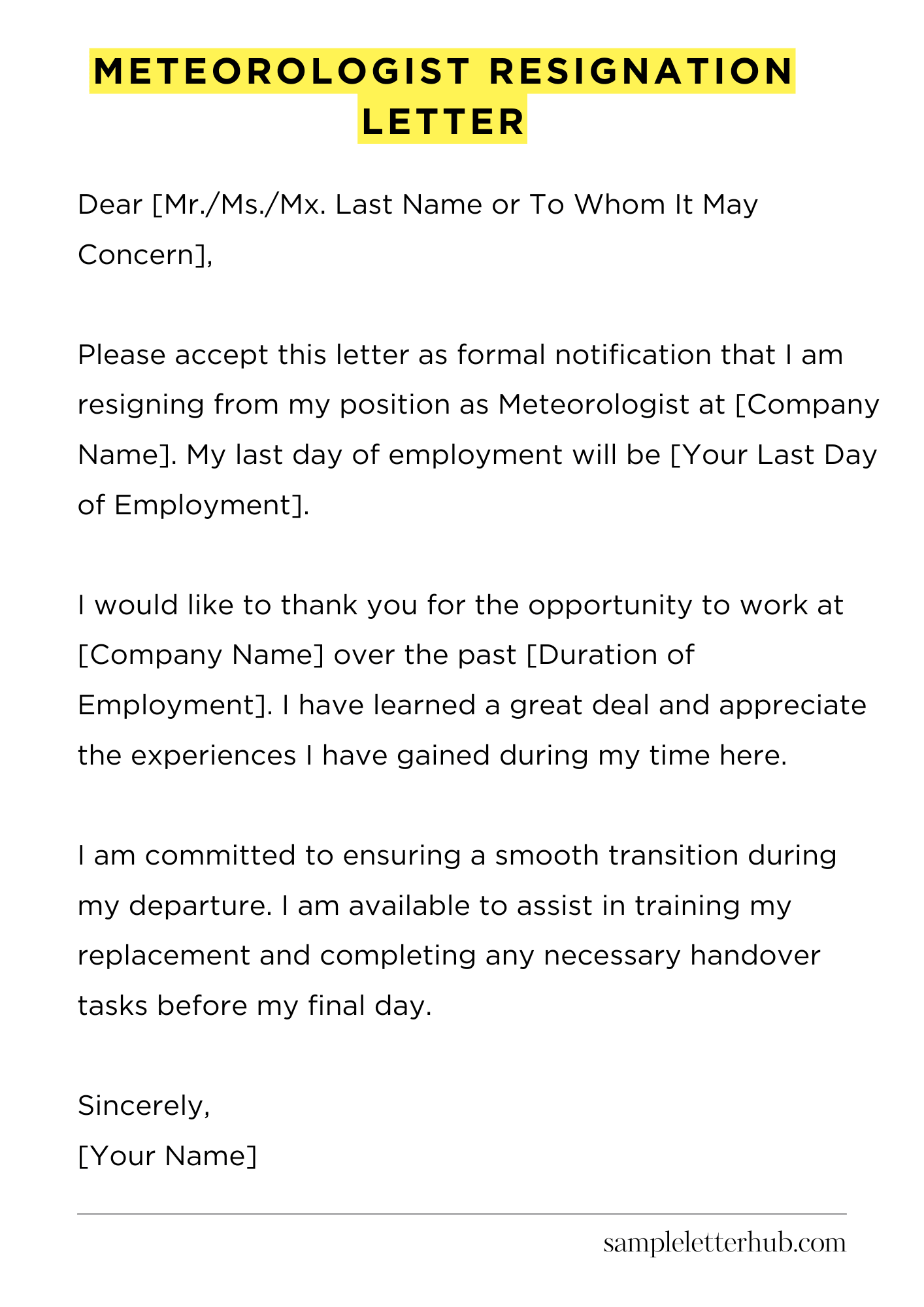
Below is a sample of a Meteorologist Resignation Letter:
[Your Name]
[Your Address]
[Your Phone Number]
[Your Email Address]
[Date]
[Recipient Name] (If known, otherwise use title)
[Recipient Title]
[Company Name]
[Company Address]
Dear [Mr./Ms./Mx. Last Name or To Whom It May Concern],
Please accept this letter as formal notification that I am resigning from my position as Meteorologist at [Company Name]. My last day of employment will be [Your Last Day of Employment].
I would like to thank you for the opportunity to work at [Company Name] over the past [Duration of Employment]. I have learned a great deal and appreciate the experiences I have gained during my time here.
I am committed to ensuring a smooth transition during my departure. I am available to assist in training my replacement and completing any necessary handover tasks before my final day.
I wish [Company Name] all the best in the future.
Sincerely,
[Your Name]
How to Write a Meteorologist Resignation Letter
So, you’re looking to move on from your meteorology gig. Congratulations! Writing a resignation letter is a crucial step in the process, and it needs to be handled professionally. It’s your official goodbye, and you want to leave a good impression. Let’s break down how to craft a stellar letter.
1. Keep it Concise and Clear
Brevity is key. A resignation letter isn’t the place for a novel. Get straight to the point. The first paragraph should clearly state your intention to resign and the effective date of your departure. Avoid any rambling. The hiring manager is busy. Make it easy for them to understand. You are leaving on this date and that is all they need to know initially.
Example: “Please accept this letter as formal notification that I am resigning from my position as Meteorologist at [Company Name], effective November 10, 2024.”
2. Express Gratitude (Always)
Even if the job wasn’t your dream, show appreciation. A brief acknowledgment of your time at the company, and any positive experiences you had, goes a long way.
This demonstrates professionalism and leaves the door open for future opportunities. This is not about being fake; it’s about good manners and building relationships. Think about something specific you enjoyed.
Example: “I am grateful for the opportunities I have been given during my [Number] years at [Company Name]. I especially appreciate the experience I have gained working with the team on forecasting severe weather events.”
3. Provide Necessary Information
Make the transition as smooth as possible for your former employer. This might include offering to assist with the handover of your responsibilities. Outline your plans for handing over projects. You could offer to train your replacement. This shows you are considerate. Also, check your employment contract for specific details regarding notice periods.
Example: “I am committed to ensuring a smooth transition during my departure. I am happy to assist in training my replacement and transferring my current projects before my last day. Please let me know how I can be of assistance.”
4. Keep it Positive (Even if You’re Not)
This isn’t the place to air grievances. Avoid negative comments about the job, colleagues, or management. Focus on the positive aspects of your departure. Keep the tone friendly and professional.
Remember that this letter is a reflection of your character. Badmouthing can quickly burn bridges. You never know when you might cross paths with these people again. Therefore, it’s wise to maintain a positive outlook.
Example: “I am excited about pursuing new opportunities that align with my evolving career goals.” (Instead of: “I’m leaving because I can’t stand the long hours.”)
5. Finalize and Proofread Meticulously
Before you hit “send,” review everything. Proofread carefully for any spelling or grammatical errors. Ensure your contact information is up-to-date. Make sure the letter is well-formatted and easy to read. A well-written, error-free letter is a sign of respect and professionalism.
A sloppy letter can undermine your credibility. Get a second pair of eyes to read over it. This simple step can help you avoid making a last-minute mistake.
Finally, print a copy for your records. Best of luck in your next endeavor!
FAQs about Meteorologist resignation letter
Why is it important to write a formal resignation letter as a meteorologist?
A formal resignation letter is crucial for several reasons. It officially documents your departure, ensuring a clear record for both you and your employer. It also allows you to express your gratitude, maintain a professional relationship, and potentially secure positive references in the future.
Moreover, a well-written letter can help avoid misunderstandings and facilitate a smooth transition for your colleagues and the organization.
What key elements should a meteorologist include in their resignation letter?
A comprehensive resignation letter should include the following: a clear statement of resignation, your intended last day of employment, a brief expression of gratitude for the opportunity, mention of any assistance you are willing to provide during the transition period, and your contact information. It’s often beneficial to keep the tone positive and professional.
How much notice should a meteorologist give when resigning?
The standard notice period is typically two weeks, although this can vary based on your employment contract or industry norms. Always review your contract to determine the required notice period. Providing ample notice allows your employer to find a replacement and helps minimize disruption.
Is it necessary to provide a reason for resignation in a meteorologist’s letter?
Providing a reason is usually optional, and you are not obligated to disclose the details. If you choose to, keep the explanation brief and positive, focusing on your future plans or career goals. Avoid negative comments about your current employer or colleagues. Focusing on the positives can help you maintain good relations with your employer.
Can a meteorologist’s resignation letter be tailored to specific situations, such as leaving for a new job or retirement?
Yes, your resignation letter can be tailored to your specific circumstances. If you’re leaving for a new opportunity, briefly mention it without going into excessive detail. For retirement, you can express your satisfaction with your career and your readiness for this new chapter. Customize your letter to reflect your personal situation while maintaining professionalism.
Related:
Resignation letter due to rude boss
Resignation letter moving to another state
Resignation letter due to illness of family member
Resignation letter due to study