


A member resignation letter is a formal document. It notifies an organization of your departure. The purpose is simple: to officially communicate your decision to leave. This letter ensures a clear record of your resignation.
Do you need to resign from a club, committee, or association? Writing the letter might seem tricky. Don’t worry, we’ve got you covered. We’ll provide a variety of ready-to-use templates.
These examples offer various formats. You can adapt them to your specific situation. Our goal is to make the process easy. Get ready to craft a professional resignation with ease!
Member Resignation Letter
Below is a sample of a Member Resignation Letter:
[Your Name]
[Your Address]
[Your Phone Number]
[Your Email Address]
[Date]
[Name of Organization]
[Address of Organization]
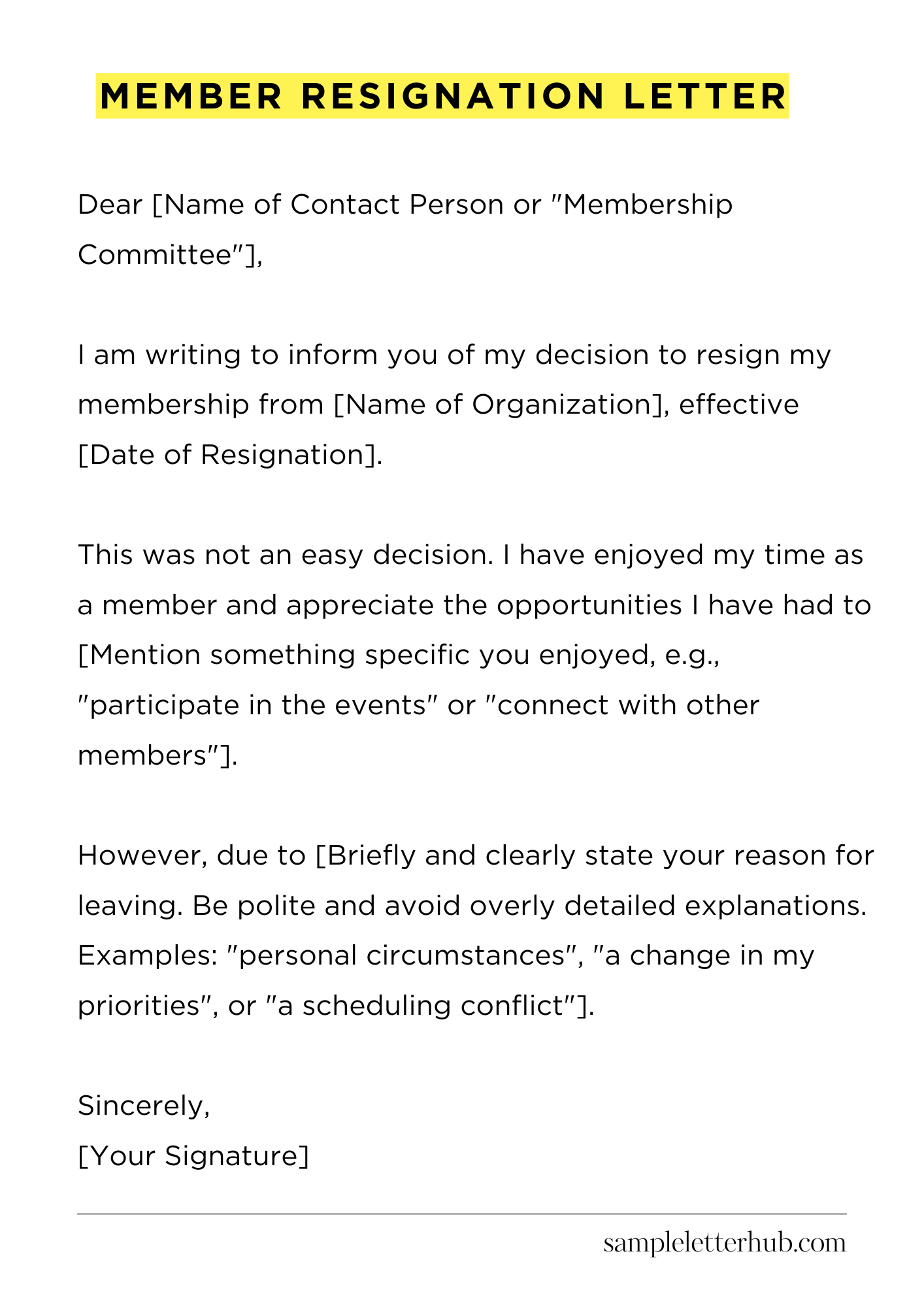
Dear [Name of Contact Person or “Membership Committee”],
I am writing to inform you of my decision to resign my membership from [Name of Organization], effective [Date of Resignation].
This was not an easy decision. I have enjoyed my time as a member and appreciate the opportunities I have had to [Mention something specific you enjoyed, e.g., “participate in the events” or “connect with other members”].
However, due to [Briefly and clearly state your reason for leaving. Be polite and avoid overly detailed explanations. Examples: “personal circumstances”, “a change in my priorities”, or “a scheduling conflict”], I am no longer able to dedicate the time required to be an active member.
I would like to thank you for the experiences and support I have received during my membership. I wish the organization continued success in the future.
Sincerely,
[Your Signature]
How to Write a Member Resignation Letter
Why a Resignation Letter Matters
Resigning from a membership, whether it’s a club, association, or professional organization, can sometimes feel like a simple formality. However, a well-crafted resignation letter is far more important than you might think.
It serves as a crucial piece of documentation. It formally communicates your departure and provides a clear record for both you and the organization.
Think of it as a bridge, ensuring a clean break and potentially leaving the door open for future involvement. Moreover, a professional resignation letter demonstrates respect and courtesy towards the group you’re leaving.
Essential Elements: What to Include
So, what exactly *should* you put in this important letter? There are a few core elements you simply can’t leave out. First, state your intention to resign.
Make this crystal clear, using direct language. Second, specify the effective date of your resignation. This is the day your membership officially ends. Be sure to double-check any bylaws or rules regarding notice periods. Third, consider a brief expression of gratitude. A simple “Thank you for the opportunity to be a member” goes a long way.
If you have been part of the member for a long time, consider including a specific positive memory or experience. Finally, include your full name and contact information. This ensures the organization can officially process your resignation and reach you if needed.
Crafting the Right Tone
The tone of your letter is just as important as the content. Aim for professionalism and politeness. Avoid negativity or personal grievances, even if you had a less-than-positive experience.
Focus on your decision to resign and keep it concise. Remember, the goal is to depart on good terms. Stick to the facts and maintain a respectful demeanor. Avoid overly emotional language, even if you are feeling very strongly about the situation. A calm, respectful tone will always serve you better.
Formatting and Delivery Tips
Presentation matters. Keep your resignation letter clean and easy to read. Use a standard business letter format. Choose a readable font, like Times New Roman or Arial, and use a reasonable font size (12 points is standard).
Make sure your letter is well-spaced. Address the letter to the appropriate person or committee, as outlined in your group’s guidelines or bylaws. Proofread carefully before sending your letter.
Errors can make your letter look sloppy. Finally, consider how you will deliver the letter. Email is a common and efficient method, but some organizations may require a physical copy. Always follow the organization’s preferred method.
Beyond the Basics: Optional Additions
While the core elements are essential, you can optionally include a few extra details. If you’re willing, briefly explain the reason for your resignation.
This doesn’t have to be a detailed explanation; a simple “due to time constraints” or “to pursue other opportunities” is often sufficient. If you are comfortable, you can also offer to assist with the transition. Maybe you can offer to help train your replacement, if the situation is applicable.
Finally, if you genuinely enjoyed your time as a member, consider expressing your willingness to stay in touch or potentially rejoin in the future. Just make sure whatever you add aligns with your desired outcome. Keep it positive and professional.
FAQs about Member resignation letter
What is the primary purpose of a member resignation letter?
The primary purpose of a member resignation letter is to formally communicate a member’s intention to leave an organization or group.
It serves as an official notification, providing a clear record of the resignation and its effective date. This letter ensures transparency and allows the organization to initiate the necessary procedures for the member’s departure, such as updating records and possibly selecting a replacement.
What key information should be included in a member resignation letter?
A well-crafted member resignation letter typically includes the member’s full name, the official position or title held within the organization (if applicable), a clear and concise statement of resignation, the intended effective date of resignation, and a brief expression of gratitude or any closing remarks.
Some members also choose to briefly explain their reason for leaving, though this is often optional. Contact information may be added to facilitate any follow-up communication.
How should the effective date of resignation be determined?
The effective date of resignation should be determined based on the organization’s bylaws, policies, or any contractual agreements. It should also consider any practical requirements, such as a notice period. Generally, it is best to provide reasonable notice to allow for a smooth transition.
Consider the time required to complete any outstanding tasks, return property, and potentially train a replacement. Refer to any existing guidelines before deciding on the date.
Is it necessary to provide a reason for resignation in the letter?
Providing a reason for resignation is generally optional. While not required, some members may choose to briefly explain their departure to maintain a positive relationship with the organization.
This reason should remain concise and professional, focusing on the future rather than dwelling on any issues. However, if the resignation is due to a specific grievance, it may be appropriate to address it formally through a separate channel.
What is the proper format for delivering a member resignation letter?
The proper format for delivering a member resignation letter can depend on organizational guidelines. Typically, a formal letter format is used, which includes a date, the recipient’s name and title, the sender’s name, and a professional closing.
The letter can be delivered via email, postal mail, or hand-delivered, depending on the preferred method of communication within the organization. Consider keeping a copy for your records.
Related:
Resignation letter due to rude boss
Resignation letter moving to another state
Resignation letter due to illness of family member
Resignation letter due to study