


Ever had a medical claim denied? It happens. A medical claim denial appeal letter is your response. Its purpose is to challenge the denial. You are seeking reconsideration of your medical claim. You want your healthcare covered.
We get it; writing can be tough. Drafting a medical claim denial appeal letter can be daunting. So, we’ve got you covered. We’re sharing templates! You’ll find medical claim denial appeal letter examples here. These samples will help you. They simplify the process of writing appeal letters.
Use these sample letters as your guide. Customize them to fit your situation. Get your medical bills paid. Fight for your healthcare rights. Your journey to understanding medical claim denial appeal letters starts now!
[Your Name]
[Your Address]
[Your Phone Number]
[Your Email Address]
[Date]
[Insurance Company Name]
[Insurance Company Address]
Subject: Appeal for Denial of Medical Claim – [Claim Number] – [Patient Name]
Dear [Claims Department/Reviewer Name],
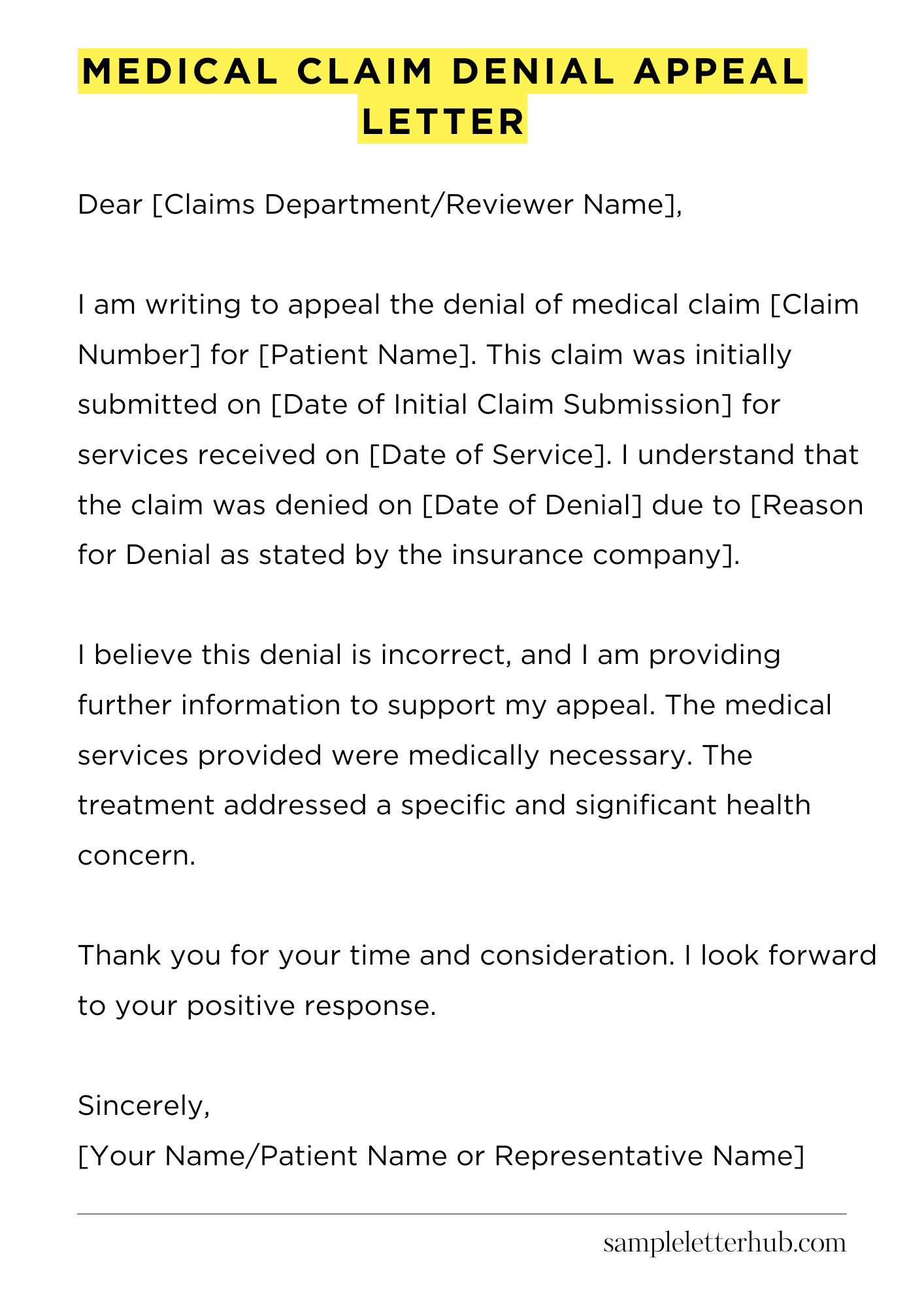
I am writing to appeal the denial of medical claim [Claim Number] for [Patient Name]. This claim was initially submitted on [Date of Initial Claim Submission] for services received on [Date of Service]. I understand that the claim was denied on [Date of Denial] due to [Reason for Denial as stated by the insurance company].
I believe this denial is incorrect, and I am providing further information to support my appeal. The medical services provided were medically necessary. The treatment addressed a specific and significant health concern. Detailed documentation from [Doctor’s Name/Provider Name] supports this claim.
[Doctor’s Name/Provider Name]’s notes clearly indicate the medical necessity of the procedures performed. These procedures were crucial for the patient’s well-being. The treatment aligned with accepted medical standards and practices.
Attached, you will find copies of the following documents: [List of Documents Attached, e.g., Doctor’s notes, lab results, itemized bill, etc.]. This additional information provides further clarification of the situation. It validates the need for the services provided.
I kindly request that you review this appeal and the supporting documentation. I hope that the initial decision can be reconsidered. Please overturn the denial of this claim.
Thank you for your time and consideration. I look forward to your positive response.
Sincerely,
[Your Name/Patient Name or Representative Name]
How to Write a Medical Claim Denial Appeal Letter
Receiving a denial for a medical claim can be disheartening. However, you often have the right to challenge this decision. Crafting a compelling medical claim denial appeal letter is the first, crucial step. This guide provides a comprehensive, step-by-step approach to navigate this process successfully.
1. Understanding the Denial: A Forensic Analysis
Before you even put pen to paper (or fingers to keyboard), you must fully comprehend the insurer’s rationale. Scrutinize the denial notice meticulously. It should elucidate the reason(s) your claim was rejected.
Identify the specific policy provisions cited, as well as any supporting documentation used. This detailed analysis forms the bedrock of your appeal. Did they cite lack of medical necessity? Improper coding? Missing documentation? Understanding these specifics is paramount for a successful outcome.
2. Gathering Your Ammunition: Assembling Supporting Documentation
Once you understand the denial, the next stage is to gather the relevant ammunition. This is a crucial element for a winning appeal. This means collecting all the documentation that refutes the insurer’s objections. This might include:
- Detailed medical records from your physician.
- Specific medical reports or diagnostic imaging results.
- Letters of medical necessity from your doctor, explicitly stating why the procedure or service was crucial.
- Supporting medical literature or guidelines validating the treatment.
- Any prior authorization approvals, if applicable.
Organize everything methodically. A well-organized packet significantly improves your chances.
3. Structuring Your Letter: The Architecture of Persuasion
Your appeal letter’s structure is a roadmap to its effectiveness. A clear, concise structure ensures the reader (the insurance company representative) readily grasps your argument. Start with a professional salutation.
Then, in the introductory paragraph, clearly state your purpose: to appeal the denial. Immediately identify the claim in question (date of service, claim number, patient’s name, etc.).
The body should then address the denial reason(s) individually. For each, present your counter-argument with supporting evidence. Conclude with a clear request for reconsideration and a reiteration of the supporting documentation.
4. Articulating Your Case: The Power of Prose
The language you employ significantly influences the outcome. Maintain a professional and respectful tone throughout. Avoid inflammatory language or accusatory statements, even if you are frustrated.
Your letter should be calm and reasoned. Be direct and avoid unnecessary jargon or flowery prose. Clearly state each point with strong, supportive evidence.
Use concise and easy-to-understand sentences. Focus on the facts and the medical necessity of the treatment.
5. Presenting Your Evidence: Documentation and Formatting
Your supporting documentation is not just a collection of papers; it’s an extension of your argument. Clearly reference each piece of evidence within your letter.
For example, “As demonstrated in Dr. Smith’s letter of medical necessity (Exhibit A),…” This allows the reviewer to easily locate and verify your claims. Include copies of all supporting documentation (NEVER the originals), and clearly label each exhibit. Format your letter professionally, with clear headings and margins.
6. Complying with Deadlines: The Time Factor
Insurance companies impose strict deadlines for appeal submissions. Missing these deadlines can result in the automatic denial of your appeal, regardless of the merits of your case.
Carefully review the denial notice for the appeal deadline. Make sure to adhere to it meticulously. It is sometimes prudent to send your appeal via certified mail with return receipt requested. This provides proof of delivery and ensures you have documentation of the submission date.
7. What Happens Next: Following Up and Seeking Assistance
After submitting your appeal, the insurance company will review it and make a decision. The timeframe for this review varies but is usually stated in their denial letter or policy documents. If the appeal is denied, understand your options.
You may have the ability to seek external review or an independent review. Consult with your physician or healthcare provider for guidance. Consider seeking assistance from a patient advocate or healthcare attorney. Do not be afraid to seek external support to protect your rights.
FAQs about Medical Claim Denial Appeal Letter
What is a medical claim denial appeal letter and why is it important?
A medical claim denial appeal letter is a formal document you submit to your insurance company when they have refused to pay for a medical service or treatment you received.
It’s crucial because it’s your primary avenue for contesting the denial and potentially obtaining coverage for necessary medical care. Without appealing, you are likely responsible for the full cost of the denied service.
What information should be included in a medical claim denial appeal letter?
A comprehensive appeal letter typically includes the patient’s and provider’s information, the date of service, the denied claim details, the reason for the denial provided by the insurer, a clear explanation of why the denial is incorrect (including supporting medical documentation like medical records, physician letters, or relevant research).
What are the common reasons for medical claim denials, and how do I address them in an appeal letter?
Common denial reasons include lack of medical necessity, pre-authorization issues, coding errors, experimental treatment, and exclusions in the insurance policy.
To address these, you’ll need to provide evidence that contradicts the insurer’s reason.
This might involve obtaining a letter from your doctor explaining the medical necessity, submitting corrected coding information, demonstrating that the treatment is not experimental (based on medical literature or expert opinions), or clarifying that the service is actually covered under your plan.
What is the timeframe for submitting a medical claim denial appeal letter?
The deadline for submitting an appeal is usually specified in the denial letter from your insurance company. This timeframe can vary, so it’s essential to read the denial letter carefully.
Typically, you have a limited window, often 60-180 days from the date of the denial notice, to file your appeal. Missing the deadline may result in the denial being upheld.
What happens after I submit a medical claim denial appeal letter?
Once you submit your appeal, the insurance company will review your case. They may request additional information, consult with medical professionals, and examine the details of your insurance policy.
The insurer will then make a decision (uphold the denial or reverse it). You will receive notification of their decision. If your appeal is denied, you may have further appeal options, such as an internal review or an external review by an independent third party, depending on your state and insurance plan.
Related:
Resignation letter due to rude boss
Resignation letter moving to another state
Resignation letter due to illness of family member
Resignation letter due to study