


Sometimes, students need to leave their master’s thesis program. A Master Thesis Student resignation letter is the official document. Its main purpose is to formally notify the university. It states the student’s decision to withdraw.
It can be difficult to start such a letter. We will make it easier for you. This article provides various templates. You’ll find different examples. They cover a range of situations.
These samples will guide your writing. You can adapt them to your specific needs. Create a professional and clear resignation letter with ease. Your departure from the program becomes much less stressful.
Master Thesis Student Resignation Letter
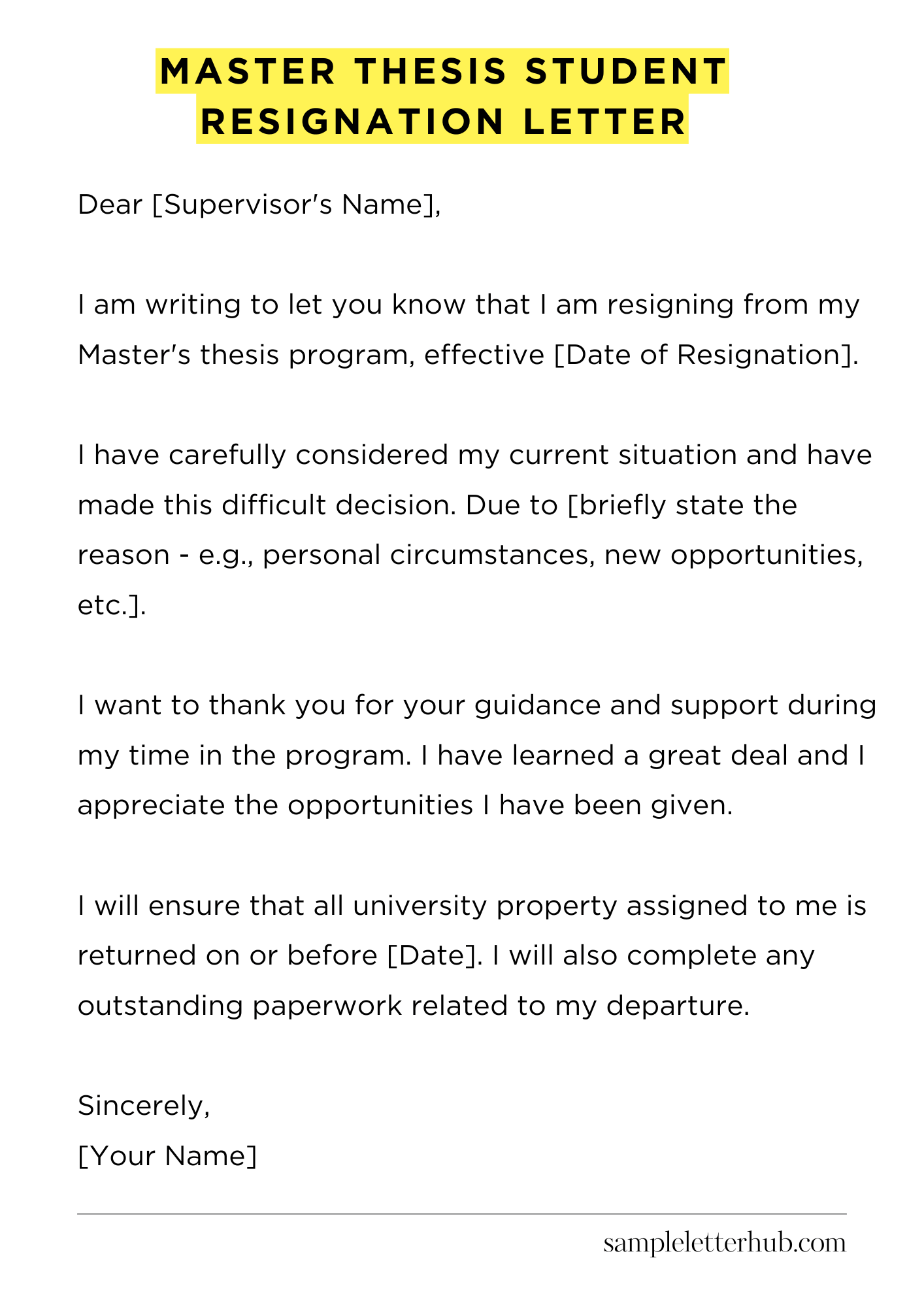
Below is a sample of a Master Thesis Student Resignation Letter:
[Your Name]
[Your Address]
[Your Phone Number]
[Your Email Address]
[Date]
[Supervisor’s Name]
[Supervisor’s Title]
[Department of…]
[University Name]
[University Address]
Dear [Supervisor’s Name],
I am writing to let you know that I am resigning from my Master’s thesis program, effective [Date of Resignation].
I have carefully considered my current situation and have made this difficult decision. Due to [briefly state the reason – e.g., personal circumstances, new opportunities, etc.], I am no longer able to dedicate the required time and effort to successfully complete the thesis.
I want to thank you for your guidance and support during my time in the program. I have learned a great deal and I appreciate the opportunities I have been given.
I will ensure that all university property assigned to me is returned on or before [Date]. I will also complete any outstanding paperwork related to my departure.
I wish you and the department all the best in the future.
Sincerely,
[Your Name]
How to Write a Master Thesis Student Resignation Letter
Why Resigning Requires a Letter
So, you’ve made a big decision. You’re leaving your Master’s thesis program. It’s not an easy call, but it’s your prerogative. Now you’ll need to formally inform your department.
A well-crafted resignation letter is more than just a formality; it’s a professional courtesy. It documents your decision, provides a clear record, and sets the stage for a smooth departure.
Think about it: a well-written letter avoids misunderstandings. It keeps things professional, and believe me, you want to maintain a positive relationship with your university.
Good writing is always key.
Essential Elements of Your Resignation Letter
Let’s get down to the basics. Your letter should include specific pieces of information. Begin with a clear statement of your intention to resign from the Master’s thesis program.
Mention the specific date your resignation takes effect. This is critical. Next, include your student ID and the program name. Consider adding a brief, professional reason for your resignation. Keep it concise. Focus on your future, not the past.
Don’t be afraid to be straightforward.
Crafting the Right Tone and Structure
Tone matters significantly. Maintain a polite and professional tone throughout the letter. Avoid negativity or blame. Acknowledge your supervisors and the department staff. Express gratitude for the opportunities you’ve been given. Structure is just as crucial. Start with a formal salutation, like “Dear [Supervisor’s Name]” or “To Whom It May Concern”.
State your purpose clearly in the first paragraph. Provide the necessary details mentioned above. Conclude with a brief thank you and an expression of goodwill.
Proofread carefully!
What to Avoid in Your Resignation Letter
Some things are better left unsaid. Refrain from lengthy explanations or justifications for your decision. Keep it brief. Avoid making accusatory statements or criticizing the program or individuals. Stick to the facts. Don’t burn bridges. Also, don’t include confidential information. If you’re unsure about what is considered confidential, it’s best to leave it out.
Staying professional is a must.
Finalizing and Delivering Your Letter
Before sending, review your letter carefully. Check for any grammatical errors or typos. Ensure the tone is appropriate. Once you are satisfied, print the letter and sign it.
Consider asking someone to review it before you submit it. Make sure you know the correct address to send the letter. Submit the letter in the way the university requires. Follow all given protocols. Keep a copy for your records. This is vital.
Your future starts now!
FAQs about Master Thesis Student resignation letter
Why is it necessary to write a resignation letter as a Master’s thesis student?
Writing a resignation letter is crucial because it formally communicates your decision to withdraw from your Master’s thesis program to the relevant authorities (e.g., your supervisor, department head, or university administration). It serves as a record of your departure, ensuring a clean separation and outlining the effective date of your withdrawal.
This letter initiates the official process, which is necessary for closing your enrollment in the program and, depending on university policy, can impact potential future enrollments. It also allows you to express your reasons (if you choose to) and maintain a professional record.
What key information should be included in a Master’s thesis student resignation letter?
A comprehensive resignation letter should include: your full name and student ID, the date of the letter, the name and title of the recipient (e.g., your supervisor, department head), a clear statement of your intention to resign from the Master’s thesis program, the effective date of your resignation, the title of your thesis or the area of study.
How should the reasons for resignation be addressed in the letter?
When addressing the reasons for your resignation, maintain professionalism and a positive tone. You are not required to provide a detailed explanation, but a concise statement can be beneficial.
If you are comfortable, you can briefly mention your reasons, such as personal circumstances, a change in career goals, health reasons, or challenges with the research. Keep it brief and avoid negativity.
If you are resigning due to issues with the supervisor or program, consider framing them constructively, focusing on the lack of resources to complete the study or an inability to continue due to external factors.
What is the proper format and tone for a Master’s thesis student resignation letter?
The letter should follow a standard business letter format. Start with your contact information, followed by the date, and the recipient’s information. Use a formal and respectful tone throughout the letter. The language should be clear, concise, and professional. Avoid slang or overly emotional language.
Proofread carefully for any grammatical errors or typos before submitting the letter. Address your supervisor or the appropriate authority respectfully and use a polite closing such as “Sincerely” or “Respectfully”.
What are the potential consequences of not submitting a resignation letter?
Not submitting a formal resignation letter can lead to several complications. Your enrollment status may remain active, potentially resulting in continued tuition fees or other obligations. You may also face administrative delays or difficulties in obtaining transcripts, official documents, or future enrollment in other programs.
Furthermore, a lack of official withdrawal may create problems for the university in their records, leading to misunderstandings, or potential future denial of admission. It’s essential to follow the formal withdrawal process to ensure a clean exit from the program.
Related:
Resignation letter due to rude boss
Resignation letter moving to another state
Resignation letter due to illness of family member
Resignation letter due to study