

A Manager Finance resignation letter is a formal document. It is written by a finance manager. Its main purpose is to inform their employer of their decision to leave. The letter officially states the resignation and the planned last day of employment.
Thinking of moving on to a new opportunity? You’re in the right place! We understand how tricky it can be to craft the perfect resignation letter. That’s why we’ve compiled a helpful collection for you.
We’re sharing ready-to-use templates and examples. Need a letter to send? Browse through our samples. Customize them to fit your specific situation. This guide makes writing your letter easier than ever.
Manager Finance Resignation Letter
Below is a sample of a Manager Finance Resignation Letter:
[Your Name]
[Your Address]
[Your Phone Number]
[Your Email Address]
[Date]
[Manager’s Name]
[Manager’s Title]
[Company Name]
[Company Address]
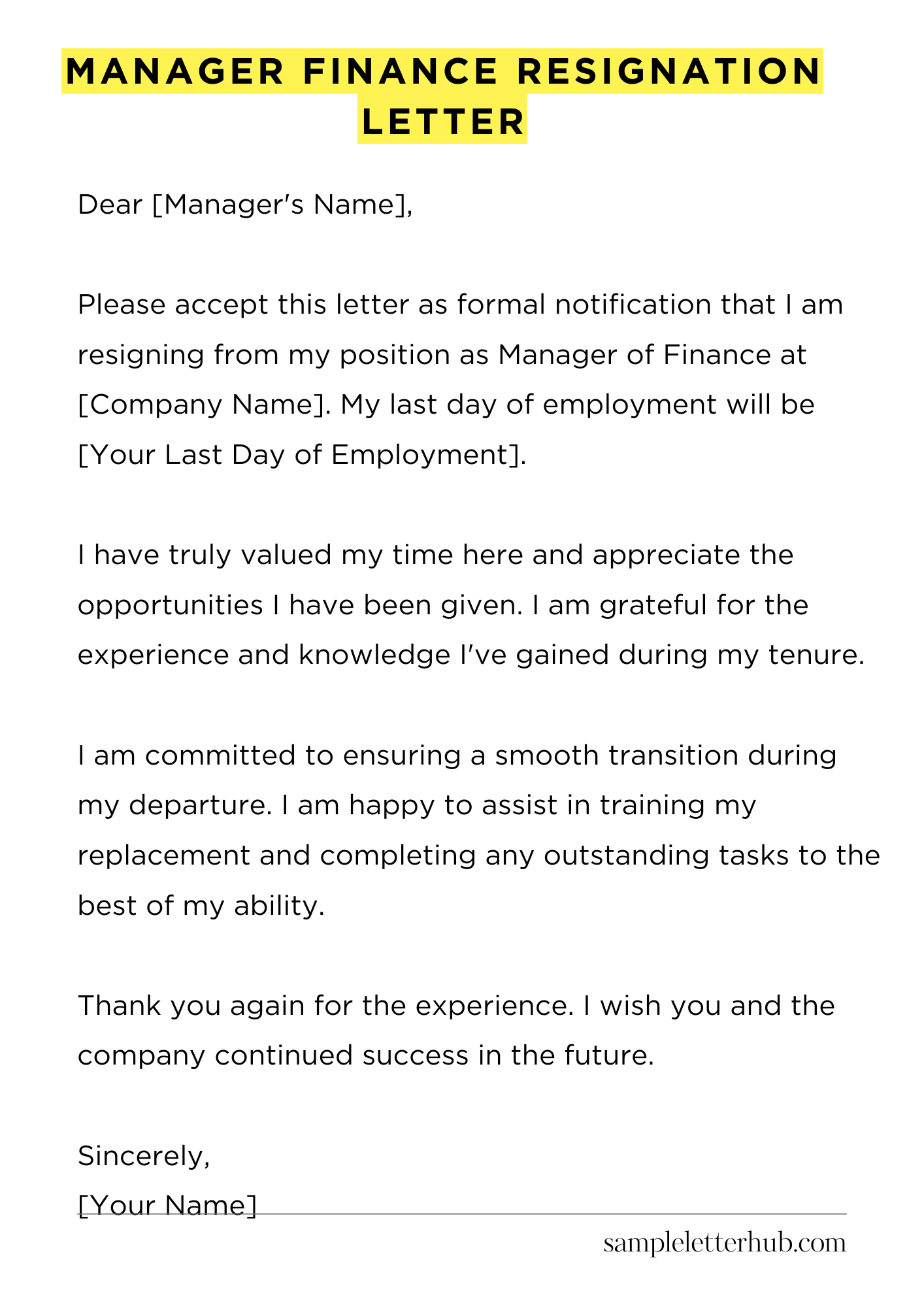
Dear [Manager’s Name],
Please accept this letter as formal notification that I am resigning from my position as Manager of Finance at [Company Name]. My last day of employment will be [Your Last Day of Employment].
I have truly valued my time here and appreciate the opportunities I have been given. I am grateful for the experience and knowledge I’ve gained during my tenure.
I am committed to ensuring a smooth transition during my departure. I am happy to assist in training my replacement and completing any outstanding tasks to the best of my ability.
Thank you again for the experience. I wish you and the company continued success in the future.
Sincerely,
[Your Name]
How to Write a Manager Finance Resignation Letter
Resigning from a Manager Finance position is a significant career move. It requires thoughtful consideration and a professional approach. Your resignation letter is a critical piece of communication during this transition. It’s your final official statement, so you want to make a positive lasting impression. Here’s how to craft a resignation letter that is clear, concise, and professional.
1. Format and Structure: Your Blueprint for Success
The structure of your letter matters. A well-formatted letter looks polished and shows respect. Start with your contact information. Include your name, address, phone number, and email.
Then, add the date. Next, address the letter to your direct supervisor or the appropriate HR representative, using their correct title. Keep it formal. The body should be divided into a few clear paragraphs.
2. The Core Elements: What to Include
Your letter must clearly state your intention to resign. Specify your last day of employment. This is crucial for payroll and handover purposes. Briefly express your gratitude for the opportunity and experience you’ve gained. Mention any specific projects or achievements you’re proud of. Keep this section positive.
Avoid negative comments about your current employer or colleagues. Offer assistance with the transition. Propose help with training a replacement or completing ongoing tasks. This highlights your professionalism. Finally, end the letter with a professional closing like “Sincerely” or “Regards,” and your full name. Don’t forget to sign the letter.
3. Content and Tone: Maintain Professionalism
The tone of your letter should remain professional, even if you are leaving due to dissatisfaction. Be polite and respectful. Avoid overly emotional language or grievances.
Keep your language clear and direct. Use proper grammar and spelling. Your goal is to leave on good terms. Stick to the facts. Provide only the necessary information. Refrain from revealing details about your new role or company. This can be viewed as unprofessional.
4. Customization and Details: Making it Your Own
While the basic structure is standard, personalize your letter. Mention specific skills or contributions you have made during your tenure. This adds a personal touch. If you are comfortable, you can briefly explain your reason for leaving, but this is optional. Keep it brief.
For example, you might say you are pursuing a new opportunity that aligns better with your career goals. Tailor the language to reflect your relationship with your supervisor and the company culture. Proofread everything carefully before you send it! Errors are easily avoided.
5. Delivery and Follow-Up: The Final Steps
Deliver your letter to your supervisor or the designated HR representative. Follow company protocol. This might involve a face-to-face meeting or simply an email. Be prepared to answer questions about your resignation. Maintain a positive attitude throughout this process. Be gracious and thank them for the opportunity.
After you’ve submitted your letter, be prepared to assist with any handover tasks. Ensure a smooth transition for your successor. Your professional conduct during this period will leave a lasting positive impression.
FAQs about Manager Finance resignation letter
How much notice should a Manager of Finance give in their resignation letter?
The standard notice period for a Manager of Finance typically aligns with their employment contract or local labor laws. Commonly, this period ranges from two weeks to one month. Review your employment agreement or consult with your HR department to confirm the specific notice requirements.
What key information must be included in a Manager of Finance resignation letter?
A well-structured resignation letter for a Manager of Finance should include: a formal declaration of resignation, the effective date of your departure, a concise and professional statement regarding the reason for leaving (if desired), expressions of gratitude for the opportunity, and an offer to assist with the transition. It’s also important to confirm handover plans, and contact information.
Should a Manager of Finance explain the reason for resignation in the letter?
While not mandatory, briefly stating your reason for resigning in the letter is often considered polite and can help maintain positive relationships. Focus on a brief statement, such as seeking new career challenges, or personal circumstances without going into excessive detail. Your reasons can influence the tone you set in your letter.
How should a Manager of Finance handle confidential information in a resignation letter?
When drafting your letter, avoid disclosing any confidential financial information, trade secrets, or any sensitive company data. Confirm your commitment to upholding confidentiality agreements, and emphasize your willingness to assist in a smooth handover and transition of your duties.
What is the best way to deliver a Manager of Finance resignation letter?
The most professional approach is to deliver your resignation letter in writing. Typically, this involves submitting a physical copy or sending it via email to your direct supervisor and possibly to the Human Resources department. It’s also advisable to schedule a meeting with your supervisor to discuss your resignation in person before formally submitting the letter.
Related:
Resignation letter due to rude boss
Resignation letter moving to another state
Resignation letter due to illness of family member
Resignation letter due to study