

Dealing with an insurance claim can be a headache. Sometimes, insurance companies deny or undervalue your claim. A “Letter to Escalate Insurance Claim Dispute” is your formal way of fighting back. Its main purpose is to push your claim to a higher level. It seeks a review of the initial decision.
This article is your guide to crafting the perfect escalation letter. We will provide you with templates, examples, and samples. Need to dispute a denied claim? Or maybe the settlement offer is too low? We’ve got you covered. This is the only place you need to come when you need to write a letter to escalate insurance claim dispute.
Our aim is to make the process easy. No more guesswork! You’ll find templates for various situations. These help you write a powerful letter. This ensures the insurance company takes your claim seriously. Get ready to advocate for your rights!
[Your Name/Your Company Name]
[Your Address]
[Your Phone Number]
[Your Email Address]
[Date]
[Insurance Company Name]
[Insurance Company Address]
Subject: Escalation of Claim Dispute – Policy Number [Your Policy Number] – Claim Number [Your Claim Number]
Dear Claims Department,
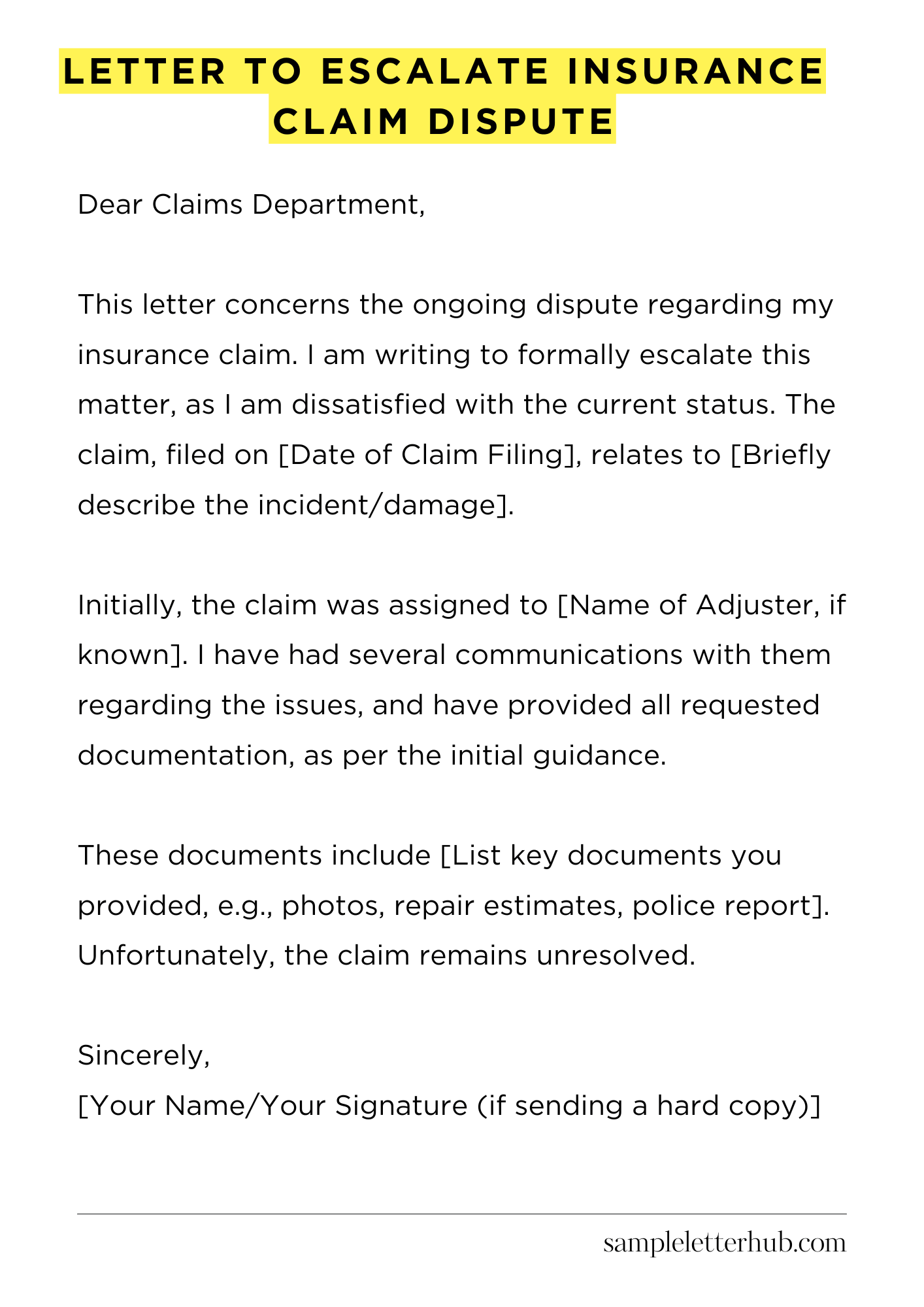
This letter concerns the ongoing dispute regarding my insurance claim. I am writing to formally escalate this matter, as I am dissatisfied with the current status. The claim, filed on [Date of Claim Filing], relates to [Briefly describe the incident/damage].
Initially, the claim was assigned to [Name of Adjuster, if known]. I have had several communications with them regarding the issues, and have provided all requested documentation, as per the initial guidance.
These documents include [List key documents you provided, e.g., photos, repair estimates, police report]. Unfortunately, the claim remains unresolved.
The primary point of contention appears to be [Clearly and concisely state the specific reason for the dispute]. I believe this assessment is incorrect. This disagreement has led to significant delays in [Explain the impact of the delay, e.g., repairing my property, receiving necessary medical care]. This has caused much stress.
I am now requesting a review of my claim by a senior claims adjuster. I want a fair and equitable resolution to this matter. I am hopeful we can swiftly reach an agreement.
I am available to discuss this further at your earliest convenience. Please contact me at your earliest convenience. I look forward to your prompt response and a resolution to this matter.
Sincerely,
[Your Name/Your Signature (if sending a hard copy)]
How to Write Letter to Escalate Insurance Claim Dispute
Navigating the labyrinthine world of insurance claims can feel like traversing a bureaucratic maze. Often, initial claim denials or insufficient settlements necessitate further action.
Escalating your dispute with a well-crafted letter is a crucial step towards achieving a favorable resolution. This guide provides a comprehensive framework for constructing a persuasive and impactful appeal.
1. Commence with Cogent Correspondence
Your opening gambit sets the tone. Begin by explicitly stating the purpose of your letter: to formally dispute a specific insurance claim. Immediately reference the claim number, policy number, and the date of the denial or unsatisfactory settlement. Succinctly detail the issue; clarity is paramount.
Avoid ambiguous language, opting instead for direct, professional prose. This initial framework will establish your seriousness and intent.
2. Explicate the Grievance Concisely
The core of your argument resides in a well-defined explanation of the grounds for your dispute. Articulate the precise reasons why you disagree with the insurer’s decision.
This section demands meticulous attention to detail. Refer to your policy’s terms and conditions, highlighting the specific clauses that support your claim. Cite pertinent evidence, such as medical records, repair estimates, or witness statements, meticulously referencing each document. Ensure your narrative is logical and easily understood.
3. Assemble Robust Evidentiary Ammunition
Documentation constitutes the bedrock of a compelling appeal. Compile all relevant supporting materials. This may include copies of your policy, the insurer’s denial letter, any correspondence exchanged, receipts, photographs, and expert opinions.
Organize these documents meticulously and number them sequentially, referencing them directly within your letter. The more cogent the documentation, the stronger your case will become.
4. Demarcate the Desired Amelioration
Clearly articulate the outcome you seek. Are you requesting a reevaluation of the claim? Do you want a specific amount of compensation? State your desired resolution with precision. Leaving your expectations undefined undermines the effectiveness of your appeal.
This provides a clear benchmark for the insurer and establishes your definitive objectives. This will lead to a faster resolution.
5. Propound a Timely Response Mandate
Setting a reasonable deadline for a response is a critical element. Indicate a specific timeframe within which you expect the insurer to address your concerns and provide a revised decision.
This reinforces the urgency of the matter and encourages a prompt response. Provide a definite date. This demonstrates your commitment and fosters a sense of accountability on the insurer’s part.
6. Compose a Professional and Respectful Outro
Conclude your letter with a professional and respectful closing. Reiterate your contact information for easy access. Express your expectation for a fair and timely resolution.
Refrain from accusatory language or threats; remain focused on the facts and the merits of your case. A polite yet firm tone will always produce better results. Remember your demeanor. End with a professional signature.
7. Dispatch, and Diligently Document
Send your letter via certified mail with return receipt requested. This provides proof of delivery and ensures a paper trail. Maintain a comprehensive record of all correspondence, including copies of your letter, the insurer’s responses, and any supporting documentation.
Document all communications, including dates, times, and the names of individuals with whom you spoke. This meticulous record-keeping is invaluable if further action becomes necessary. Keeping records is key for your next course of action.
FAQs about Letter to Escalate Insurance Claim Dispute
What is a letter to escalate an insurance claim dispute, and why is it necessary?
A letter to escalate an insurance claim dispute is a formal written communication used to challenge an insurance company’s decision regarding a claim. It’s necessary when you’re dissatisfied with the initial claim denial, the amount offered, or the handling of your claim.
This letter serves as a formal complaint, bringing the issue to a higher level within the insurance company or potentially setting the stage for external dispute resolution.
What key information should be included in a letter to escalate an insurance claim dispute?
A well-crafted escalation letter should include: your policy number, claim number, date of the incident, a clear description of the dispute, specific reasons why you disagree with the insurance company’s decision (citing policy language, evidence, and relevant facts), copies of supporting documentation.
To whom should the letter be addressed when escalating an insurance claim dispute?
The letter should be addressed to the specific department or individual designated by the insurance company for handling claim disputes. This information may be found in the denial letter, the insurance policy, or on the insurer’s website. If no specific contact is provided, it’s often advisable to address the letter to the Claims Manager or a similar high-level representative within the company.
What supporting documentation should I include with my escalation letter?
Include all relevant documentation that supports your claim and contradicts the insurance company’s decision. This might include the original claim submission, police reports, photographs, repair estimates, medical records, witness statements, and any other evidence that bolsters your case. Make copies of all documents and keep the originals for your records.
What are the next steps if my escalation letter is unsuccessful?
If your escalation letter doesn’t resolve the dispute, your next steps might include filing a complaint with your state’s insurance department, exploring alternative dispute resolution methods such as mediation or arbitration, or, as a final resort, pursuing legal action. Reviewing your policy for specific procedures for appeals and dispute resolution is also important.
Related:
Resignation letter due to rude boss
Resignation letter moving to another state
Resignation letter due to illness of family member
Resignation letter due to study