

A “Letter To Airline For Complaint About Passenger Behavior” is a formal complaint. It addresses unacceptable actions of a fellow passenger during a flight. You might need this letter after witnessing disruptive or offensive behavior. This could include anything from verbal abuse to physical altercations.
This article provides ready-to-use letter templates. We aim to simplify the process of writing your complaint. These samples will help you clearly communicate your experience.
We offer various examples to suit different situations. Use these templates to craft your own impactful letter. Let’s ensure airlines address passenger misconduct effectively.
Letter To Airline For Complaint About Passenger Behavior
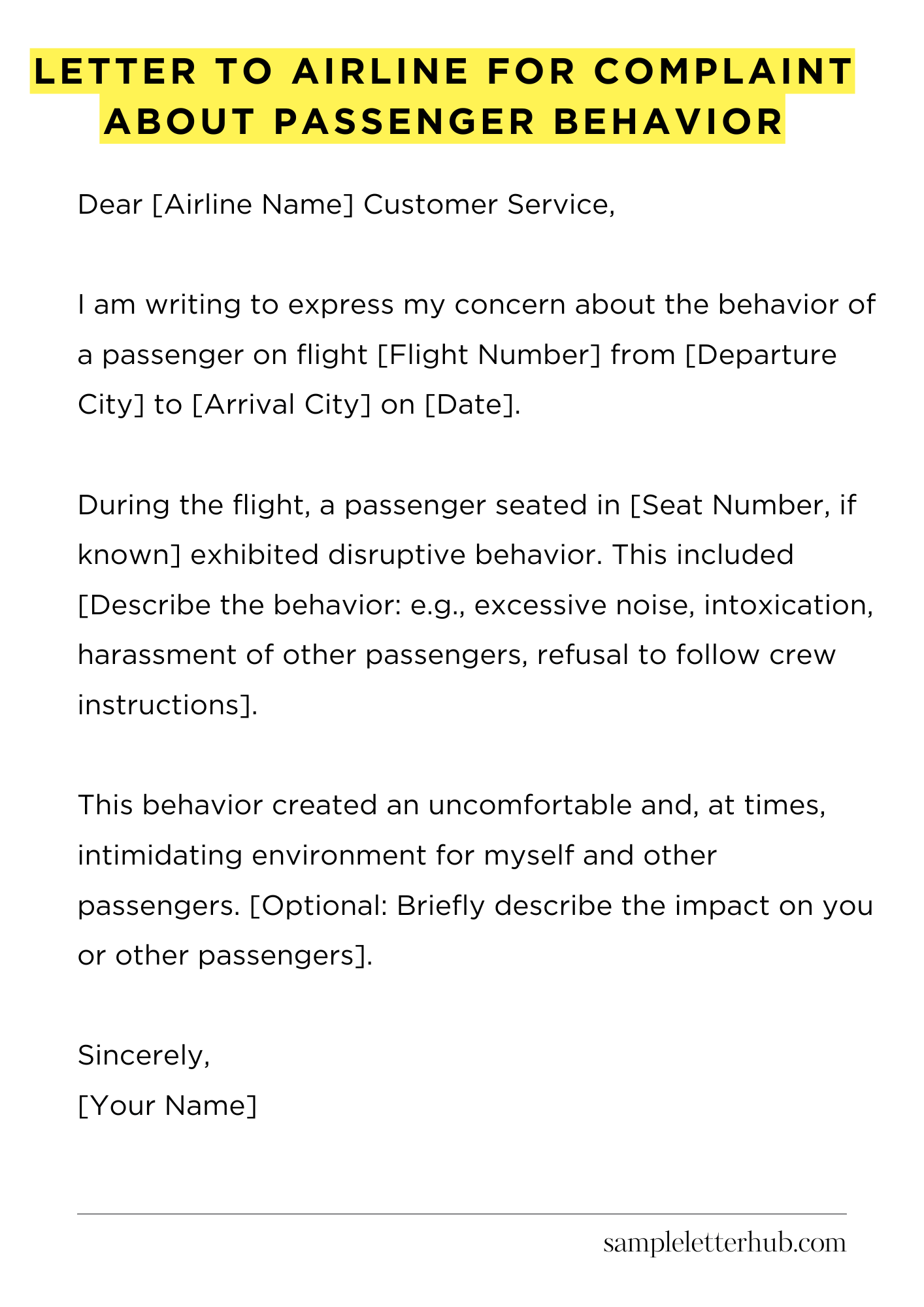
Dear [Airline Name] Customer Service,
I am writing to express my concern about the behavior of a passenger on flight [Flight Number] from [Departure City] to [Arrival City] on [Date].
During the flight, a passenger seated in [Seat Number, if known] exhibited disruptive behavior. This included [Describe the behavior: e.g., excessive noise, intoxication, harassment of other passengers, refusal to follow crew instructions].
This behavior created an uncomfortable and, at times, intimidating environment for myself and other passengers. [Optional: Briefly describe the impact on you or other passengers].
I request that you investigate this matter and take appropriate action. Ensuring passenger safety and comfort should be a priority.
Thank you for your time and attention to this issue.
Sincerely,
[Your Name]
How to Write Letter To Airline For Complaint About Passenger Behavior
1. Crafting a Compelling Subject Line
The subject line is your initial gambit. It should be concise, yet indicative of the letter’s purpose. Avoid ambiguity; instead, opt for something explicit, such as:
- Complaint Regarding Disruptive Passenger on Flight [Flight Number]
- Formal Grievance: Unacceptable Conduct on Flight [Flight Number]
- Incident Report: Passenger Misbehavior on Flight [Flight Number] – [Date]
2. The Salutation: Addressing the Right Authority
Begin with a formal salutation. If you know the specific person to whom you’re writing, use their name. Otherwise, a generic but respectful greeting will suffice:
- Dear Customer Relations Manager,
- To Whom It May Concern,
- Dear [Airline Name] Customer Service,
3. Laying the Groundwork: Introduction & Flight Details
Immediately state the purpose of your letter and provide pertinent flight details. Clarity is paramount here.
- Clearly state you are lodging a complaint.
- Specify the airline, flight number, and date of travel.
- Include your booking reference or ticket number for easy retrieval of your record.
4. Detailing the Transgression: A Narrative of Events
This is the crux of your complaint. Provide a chronological account of the passenger’s disruptive behavior. Be specific and avoid hyperbole.
- Describe the passenger’s actions with factual accuracy.
- Include specific examples of the disruptive behavior (e.g., excessive noise, intoxication, harassment).
- Note the duration and frequency of the incidents.
- Mention any attempts made by you or flight attendants to mitigate the situation.
5. Articulating the Impact: Consequences of the Misconduct
Explain how the passenger’s behavior affected you and other passengers. This adds weight to your complaint.
- Describe the emotional distress or inconvenience caused by the passenger’s actions.
- Mention any physical discomfort or safety concerns that arose.
- If other passengers were affected, allude to the broader disruption.
6. Expressing Expectations: Desired Resolution
Clearly state what outcome you seek from the airline. Be reasonable and specific.
- Specify whether you are seeking an apology, compensation, or assurance that the airline will take action to prevent similar incidents in the future.
- If seeking compensation, provide a justifiable rationale for the amount requested.
- Indicate your willingness to provide further information or cooperate with an investigation.
7. Closing Remarks: Professional Courtesy
End the letter with a professional closing and your contact information.
- Use a formal closing, such as “Sincerely,” or “Respectfully,”
- Include your full name, address, phone number, and email address.
- Thank the airline for their time and consideration.
Frequently Asked Questions: Passenger Behavior Complaints
This section provides answers to common questions regarding submitting complaints to airlines about disruptive or inappropriate passenger behavior. Understanding the process can help ensure your concerns are properly addressed.
1. What specific types of passenger behavior warrant a formal complaint?
Complaints are typically warranted for behavior that violates airline policy, federal regulations, or disrupts the safety and comfort of other passengers, such as intoxication, harassment, or refusal to follow crew instructions.
2. How should I document the incident when preparing my complaint letter?
Document the date, time, flight number, seat number, and a detailed, objective account of the incident, including specific actions and any witnesses present. Photos or videos, if available and permitted, can also be helpful.
3. Where should I send my complaint letter to ensure it reaches the appropriate department?
Consult the airline’s website for their specific complaint procedures or customer service contact information. Many airlines have dedicated online forms or email addresses for passenger complaints.
4. What information should I include in my complaint letter to the airline?
Include your name, contact information, flight details, a clear description of the incident, and the resolution you are seeking, such as an apology or compensation.
5. What is the typical timeframe for an airline to respond to a passenger complaint?
Response times vary by airline, but you can generally expect a reply within 30 days. Follow up if you do not receive a response within a reasonable timeframe.
Related:
Resignation letter due to rude boss
Resignation letter moving to another state
Resignation letter due to illness of family member
Resignation letter due to study