


Dealing with a hit-and-run can be overwhelming. A letter of explanation for a hit-and-run incident is a written statement. It is a crucial document. You’ll use it to explain the hit-and-run to your insurance company or the police. It helps them understand what happened in the accident. It allows you to explain your side of the story.
Writing this letter can feel tricky. Don’t worry, you are not alone. We’ve got you covered. This article offers helpful resources. We’ll share letter of explanation samples and templates. They will guide you through the process. Use them to craft your own letter for a hit-and-run.
We understand the stress. Our goal is to make it easy. We’ve designed a sample letter for hit-and-run to make the process smoother. Get ready to write a clear and effective letter. Let’s get started.
[Your Name]
[Your Address]
[Your Phone Number]
[Your Email Address]
[Date]
[Police Department/Recipient Name]
[Address of Police Department/Recipient]
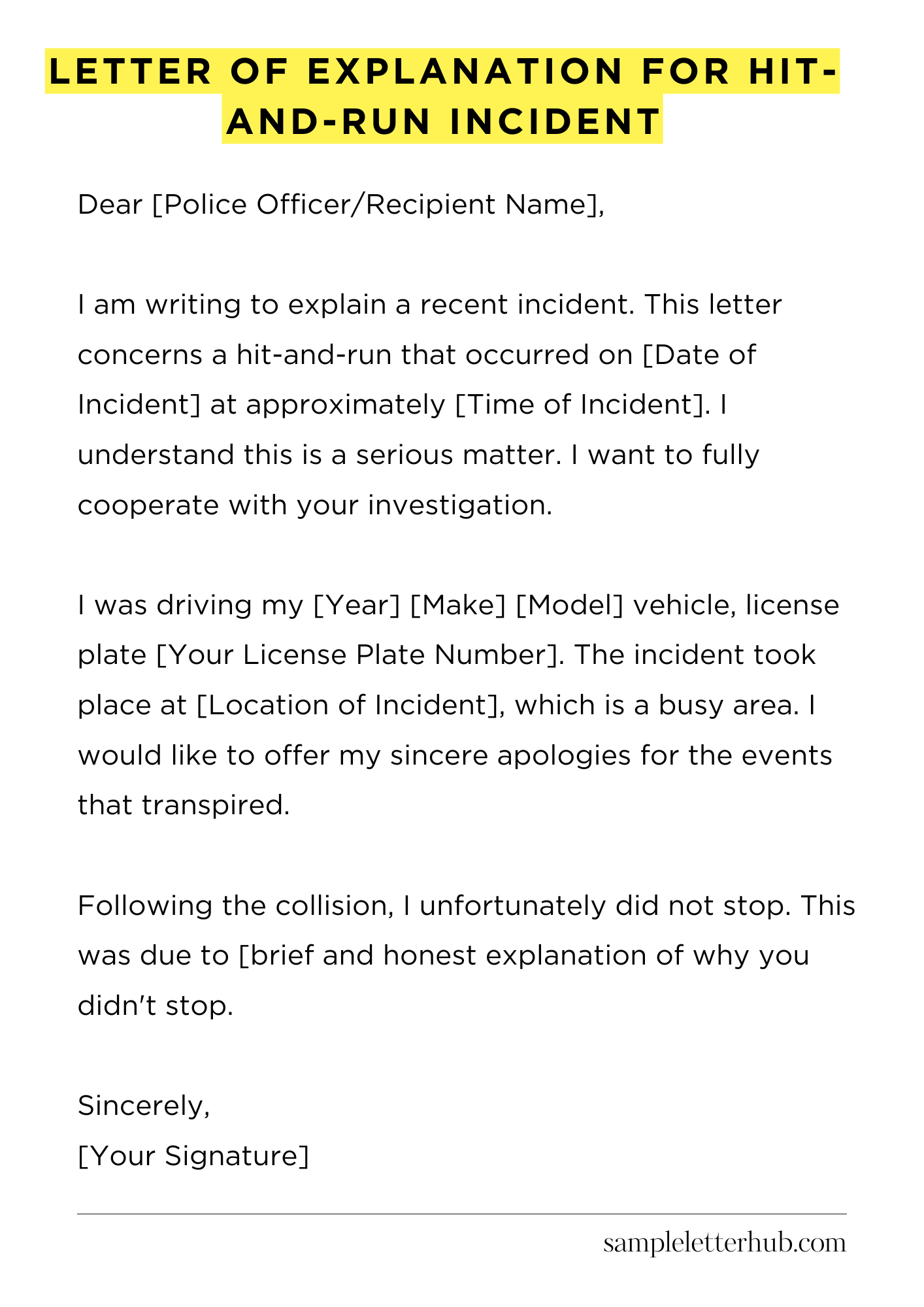
Dear [Police Officer/Recipient Name],
I am writing to explain a recent incident. This letter concerns a hit-and-run that occurred on [Date of Incident] at approximately [Time of Incident]. I understand this is a serious matter. I want to fully cooperate with your investigation.
I was driving my [Year] [Make] [Model] vehicle, license plate [Your License Plate Number]. The incident took place at [Location of Incident], which is a busy area. I would like to offer my sincere apologies for the events that transpired. I was involved in a collision with another vehicle.
Following the collision, I unfortunately did not stop. This was due to [brief and honest explanation of why you didn’t stop. Examples: panic, shock, misunderstanding, other immediate pressing issue. Keep it concise, do not offer excuses or try to justify your actions, just state the reason]. I deeply regret this decision. It was a mistake.
I understand that leaving the scene of an accident is against the law. I am now fully aware of the legal and moral obligations that come with being involved in a car accident. I should have stopped, exchanged information, and ensured the other driver was alright.
I want to express my remorse for any inconvenience or distress this incident may have caused to the other driver or anyone else involved. I would like to take full responsibility for my actions.
I am ready to cooperate with the police to resolve this matter. I am prepared to provide any additional information. I will be available to answer any further questions.
I am also ready to cover the costs for the damages. I look forward to hearing from you soon.
Sincerely,
[Your Signature]
How to Write Letter of Explanation for Hit-and-Run Incident
1. Commence with a Cogent Introduction
The initiation of your missive is paramount. It’s your first opportunity to establish the tone and purpose of your communication. Begin by clearly stating that this letter serves as an explanation regarding a hit-and-run incident.
Precisely identify the date, time, and location of the event. Succinctness is key; avoid unnecessary preamble. This introductory paragraph must immediately convey the essence of the matter. You need to provide the context of the situation right away.
2. Narrate the Conundrum – The Factual Recount
This section demands a meticulous and unemotional recollection of the events. Describe what transpired in a chronologically coherent manner. Mention the prevailing weather conditions, traffic patterns, and any pertinent details that might have influenced the incident.
Be as objective as possible. Include any observations regarding the vehicle that fled the scene; a detailed description is invaluable. Detail all the aspects of the hit-and-run without embellishment.
3. Account for the Exodus – Justifying Your Departure
Now, explain why you left the scene. Did you believe there was no damage? Perhaps you were unaware of the contact? This is where you justify your actions.
If there were extenuating circumstances, like a medical emergency or threats to your safety, clearly articulate them. Substantiate your claims with any supporting evidence if possible. Remember, candor is crucial. Omission of pertinent facts can undermine your credibility.
4. Embrace Honesty – Acknowledging the Omission
If you have realized that you inadvertently omitted reporting the accident to the relevant authorities, address this directly. Explain the reasons for this oversight.
Perhaps you were in shock or were hindered by factors outside your control. Offer a sincere expression of remorse for the lapse in reporting. This acknowledgment, coupled with genuine contrition, can significantly impact the recipient’s perception.
5. Present Supporting Evidences – Corroborating Your Narrative
This step involves furnishing any corroborative documentation. This can include pictures of the damage to your vehicle, witness statements, or any medical records.
The more evidence you offer, the more robust your explanation becomes. Ensure the evidence’s authenticity and relevance. Consider the impact of the material that you present.
6. Demonstrate Your Remorse – Conveying Sincerity
Expressing genuine remorse is a crucial element. This demonstrates your understanding of the gravity of the situation and your willingness to take responsibility.
Apologize for any inconvenience, distress, or damage caused. Use sincere and heartfelt language. This showcases your humanity. The lack of genuine contrition will create a poor impression.
7. Conclude with a Resolute Affirmation
Conclude your letter by reaffirming your willingness to cooperate fully with any investigation. Provide your contact information and any other details required by the recipient.
Reiterate your commitment to rectifying the situation. End on a positive note, indicating your understanding of the situation and your readiness to address any further queries. This is to ensure a proactive approach.
FAQs about Letter of Explanation for Hit-and-Run Incident
What is a Letter of Explanation for a Hit-and-Run Incident?
A Letter of Explanation for a Hit-and-Run Incident is a formal written document that you provide to your insurance company or law enforcement detailing the circumstances surrounding a hit-and-run incident you were involved in.
It serves as your account of what happened, clarifying events and providing information to support your claim or report. It’s crucial for your insurance claim and potential legal proceedings.
What Information Should I Include in My Letter of Explanation?
Your letter should include the date, time, and location of the incident; a clear description of the events, including the actions of the other vehicle (if any) and yourself; details of any witnesses and their contact information; a description of the damage to your vehicle; and any injuries sustained.
It’s also important to include any actions you took immediately following the incident, such as contacting the police or documenting the scene.
Why is a Letter of Explanation Important?
The letter serves multiple purposes. It provides a formal record of the incident for insurance purposes, helping to determine fault and coverage. It can also be a crucial piece of evidence in a police investigation.
Providing a comprehensive and accurate letter can help expedite the claims process, protect your rights, and potentially help you avoid being wrongly accused of any wrongdoing.
What if I Don’t Know the Other Vehicle’s Information?
If you were unable to obtain the other vehicle’s information, such as the license plate number, make, or model, be sure to state this clearly in your letter.
Explain what efforts you made to gather this information, and be as detailed as possible about any observations you did make, such as the color of the car, any distinctive features, or the direction it traveled. Provide this information to law enforcement too.
How Should I Format and Submit My Letter of Explanation?
Format your letter in a clear, concise, and professional manner. Use proper grammar and spelling. Start with a clear heading indicating the purpose of the letter. Include your full name, address, and contact information.
Date the letter. Submit the letter to your insurance company or law enforcement agency as instructed. Always keep a copy of the letter for your records.
Related:
Resignation letter due to rude boss
Resignation letter moving to another state
Resignation letter due to illness of family member
Resignation letter due to study