

Sometimes, you need to leave your job. A legal resignation letter is the formal document. It officially informs your employer of your departure. This letter protects both you and your employer. It clarifies your last day of work. It helps avoid misunderstandings.
Crafting the perfect legal resignation letter can seem tricky. Don’t worry, we’ve got you covered. We’ll provide you with various templates. You can use these templates as a starting point. Choose the one that suits your situation best.
Need to keep things simple? Looking for something more detailed? We’ll share examples. These samples are designed to make the process easy. Writing your letter will be a breeze.
Legal Resignation Letter
Below is a sample of a Legal Resignation Letter:
[Your Name]
[Your Address]
[Your Phone Number]
[Your Email Address]
[Date]
[Employer’s Name]
[Employer’s Title]
[Company Name]
[Company Address]
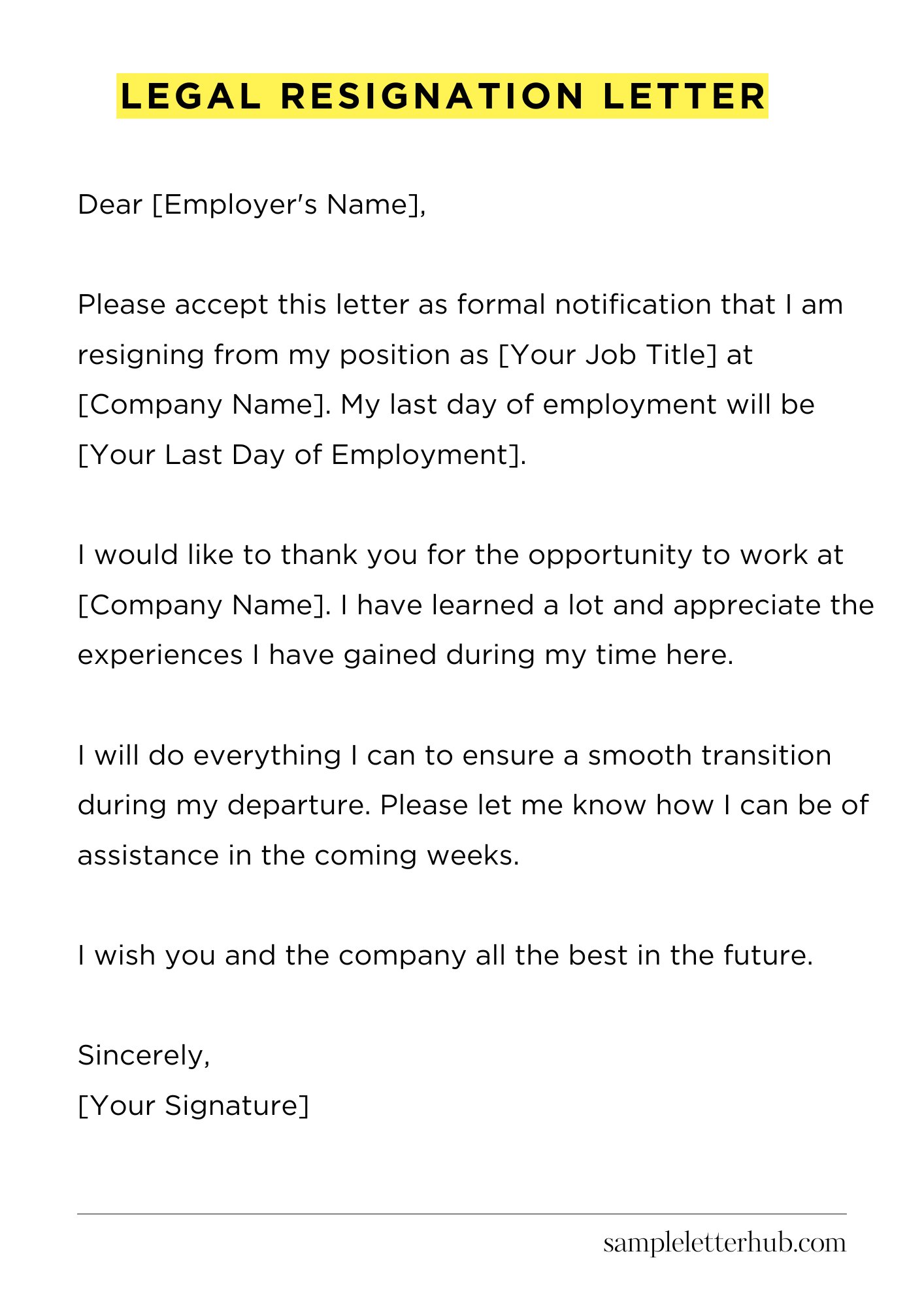
Dear [Employer’s Name],
Please accept this letter as formal notification that I am resigning from my position as [Your Job Title] at [Company Name]. My last day of employment will be [Your Last Day of Employment].
I would like to thank you for the opportunity to work at [Company Name]. I have learned a lot and appreciate the experiences I have gained during my time here.
I will do everything I can to ensure a smooth transition during my departure. Please let me know how I can be of assistance in the coming weeks.
I wish you and the company all the best in the future.
Sincerely,
[Your Signature]
How to Write a Legal Resignation Letter
Why a Resignation Letter Matters
Leaving a job is a big step. You’ve probably thought a lot about it before making the decision. But the way you exit is just as important as the reasons you leave.
A well-written legal resignation letter serves several crucial purposes. First and foremost, it’s a formal and official notification to your employer. It creates a written record of your departure. This can be critical for legal and administrative reasons. This letter protects you.
A properly drafted letter also helps to clarify the end of your employment. It sets the groundwork for a smooth transition. Consider it your last professional act in your current role. A thoughtful and professional resignation letter is the way to do it right.
Essential Elements to Include
So, what should you include in your resignation letter? Think of it like a recipe; miss a key ingredient, and the whole thing falls apart. First, you absolutely must state your intention to resign.
That’s the most basic element. Then, specify your last day of employment clearly. Double-check your employment contract or company policies for the required notice period. Adhere to it precisely.
Include your official title and employee ID. Also, express gratitude for the opportunities you’ve been given. Keep it brief. You don’t have to write a novel. Finally, end by offering your assistance with the transition. Be sure to provide your contact information (phone and email). Make sure these are the same contact information listed on the letterhead.
Structuring Your Letter Properly
The structure of your letter matters too. Start with your contact information. Then, the date. Next, address your letter to the appropriate person, usually your direct supervisor or Human Resources. Use a professional tone throughout. Avoid slang, personal attacks, or negativity. Get straight to the point.
The body of your letter should be concise and easy to read. Use short, clear paragraphs. Proofread it carefully before sending it. Errors can undermine your professionalism. Keep a copy for your records, too. A well-structured letter is a sign of respect and professionalism.
Legal Considerations and Avoiding Pitfalls
There are some legal things to think about when writing your letter. Review your employment contract thoroughly. Be aware of any non-compete clauses or confidentiality agreements. These agreements could impact your future job prospects. Consult with a legal professional if you have any questions or concerns about these things.
Avoid including reasons for your departure, unless you’re prepared for a potentially negative response. Stick to the facts. Don’t make accusations or disparage your employer or colleagues. Keep it simple and keep it clear, and keep it legal!
Finalizing and Sending Your Letter
Before you hit “send”, a final check is vital. Proofread your letter again. Ensure you have the correct name, title, and date. Get feedback from someone else, like a friend or family member, to give it a fresh look. Check the formatting.
Deliver the letter according to company policy. Usually, you’ll provide a hard copy or email it to the HR department. Follow the process for a smooth exit. Following these steps helps show that you can depart with grace and integrity. It is important for your professional reputation.
FAQs about Legal Resignation Letter
What is the primary purpose of a legal resignation letter?
The primary purpose of a legal resignation letter is to formally and legally communicate an employee’s intent to leave their position. It serves as official documentation, protecting both the employee and the employer. For the employee, it provides proof of resignation and the date of departure.
For the employer, it starts the process of filling the position and clarifies the terms of separation.
What essential information must be included in a legal resignation letter?
A legal resignation letter must include the employee’s name, the date of the letter, a clear statement of resignation, the effective date of resignation, and the employee’s signature. It’s also advisable to include the employee’s job title and contact information for future communication.
Any additional details, such as a thank you or a brief explanation, are optional, but the core elements are essential for legal validity.
How much notice should I give in my legal resignation letter?
The amount of notice you should give is usually specified in your employment contract or company policy. Common notice periods are two weeks, one month, or longer for more senior positions.
Failing to provide the required notice can have consequences, such as the forfeiture of unused vacation time or potential legal issues. Always consult your employment agreement or company handbook.
Can I include the reasons for my resignation in a legal resignation letter?
You can include the reasons for your resignation, but it’s generally not required. While it might feel beneficial to explain your departure, doing so can sometimes create unnecessary conflict or open up potential legal issues.
If you choose to include a reason, keep it concise and professional. Focus on moving forward and avoid negative comments or accusations.
What should I do after submitting my legal resignation letter?
After submitting your legal resignation letter, follow up with your manager or HR department to confirm receipt and discuss any necessary handover procedures or exit interviews.
Ensure you complete all required paperwork, return company property, and clarify the terms of your final paycheck and benefits. Maintain a professional demeanor throughout the process and prepare for your departure.
Related:
Resignation letter due to rude boss
Resignation letter moving to another state
Resignation letter due to illness of family member
Resignation letter due to study