

So, you’re a Junior Art Director ready to move on. A resignation letter is your official goodbye. It formally communicates your departure to your employer. The letter states your last day of employment. It’s a crucial step in ending your job professionally.
Need help crafting your own resignation? We’ve got you covered. We’ll explore various letter templates. You’ll find different examples tailored for different situations. Use these samples as your starting point. Make writing your letter a breeze.
Whether you’re moving on to new opportunities or just seeking a change, we will share samples for your convenience. Get ready to write a letter that says it all. You’ll find everything from basic to more detailed options. Let’s make this process simple and stress-free.
Junior Art Director Resignation Letter
Below is a sample of a Junior Art Director Resignation Letter:
[Your Name]
[Your Address]
[Your Phone Number]
[Your Email Address]
[Date]
[Hiring Manager Name] (If known, otherwise use title)
[Hiring Manager Title]
[Company Name]
[Company Address]
Dear [Mr./Ms./Mx. Last Name],
Please accept this letter as formal notification that I am resigning from my position as Junior Art Director at [Company Name], effective two weeks from today, [Your Last Day of Employment].
I am grateful for the opportunities I have been given during my time here. I have learned a great deal and appreciate the experience I have gained.
I am committed to ensuring a smooth transition. I am happy to assist in training my replacement and completing any outstanding projects to the best of my ability before my departure.
I wish you and [Company Name] all the best in the future.
Sincerely,
[Your Signature]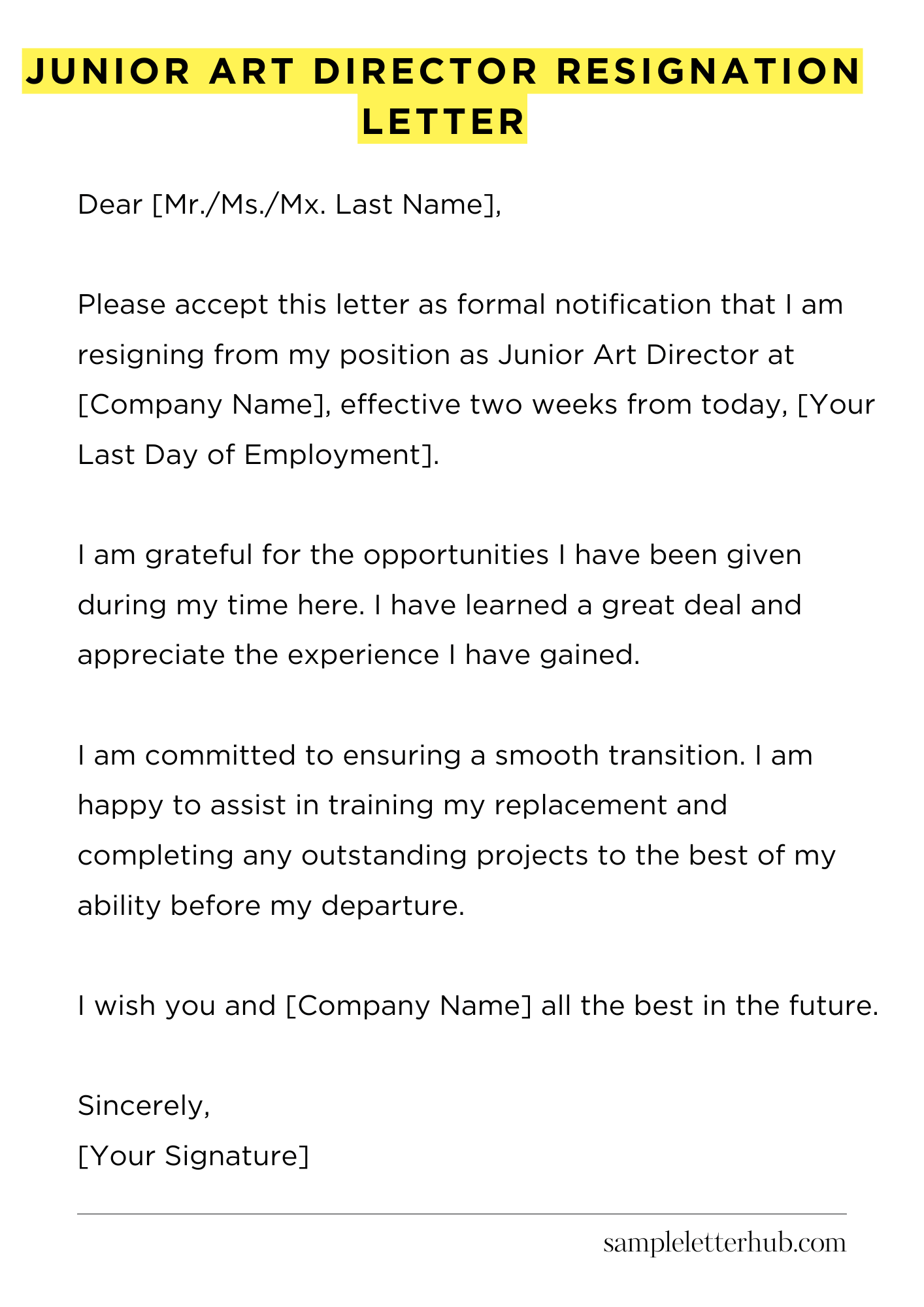
How to Write a Junior Art Director Resignation Letter
1. Why Resign? Reasons and Considerations
So, you’re thinking of moving on. That’s a big step! Before you even think about putting pen to paper (or fingers to keyboard), take a moment to consider *why* you’re resigning from your Junior Art Director role. There are several reasons this could happen.
Perhaps you’ve found a better opportunity. Maybe the work environment isn’t a good fit. Or, it could be a combination of several factors. Whatever your reasoning, clarity is key.
Firstly, reflect on your experience in the role. What went well? What didn’t? What are your future career goals? Having answers to these questions will help you tailor your resignation letter. Consider the professional tone you want to achieve.
Finally, remember that you are a professional, and you want to leave on good terms. Leaving a company with a positive impression is always a smart move. Think of the future and how your current workplace experience may open future doors for you.
2. Essential Elements: What to Include
Now, let’s talk about the actual letter. What must you include? Your resignation letter should be concise, professional, and clear.
Start with the date and your contact information. Then, address the letter to your immediate supervisor. Next, make your intentions clear by stating that you’re resigning from your position as Junior Art Director. It is important to know the date your resignation will be effective.
Usually, you need to provide a minimum of two weeks’ notice. Be sure to confirm your last day of employment.
Keep your language formal. Acknowledge your time with the company, but avoid lengthy explanations. Briefly, you can mention your reasons for leaving if you want to. Keep it professional. Express your gratitude for the opportunity to work there.
Offer assistance with the transition. This shows consideration and professionalism. Provide a closing statement and your signature. That is it. You are done.
3. Crafting the Perfect Opening and Closing
The opening and closing are super important. They set the tone for the entire letter.
Your opening should be direct and clear. State your intention to resign. Avoid any beating around the bush. For example, “Please accept this letter as formal notification that I am resigning from my position as Junior Art Director at [Company Name], effective [Date].”
Your closing should be equally professional. Express your gratitude for the opportunity. Thank your employer for the experience you gained. Offer your assistance in the transition process.
Finally, reiterate your contact information, if necessary. For instance, “Thank you for the opportunities I have been given. I am happy to assist with the transition of my duties. I can be reached at [Your Email Address] or [Your Phone Number]. I wish you and the company all the best.”
4. Dos and Don’ts: Avoiding Common Pitfalls
There are some things you should absolutely avoid when writing your resignation letter.
Firstly, don’t burn bridges. Avoid negativity or making disparaging comments about your employer, colleagues, or the company. Keep the tone positive and professional. Do not use slang or jargon.
Secondly, keep it concise. Do not ramble. Get to the point. Proofread your letter carefully for any typos or grammatical errors. Make sure the letter flows and reads well.
Thirdly, don’t overshare. The resignation letter isn’t the place for an extended explanation of your personal grievances. If your supervisor asks for more information during your exit interview, that is where you can be more open.
5. Sample Resignation Letter Template
Here’s a basic template to get you started. Remember to personalize it to fit your situation!
        [Your Name]
        [Your Address]
        [Your Phone Number]
        [Your Email Address]

        [Date]

        [Supervisor’s Name]
        [Supervisor’s Title]
        [Company Name]
        [Company Address]

        Dear [Supervisor’s Name],

        Please accept this letter as formal notification that I am resigning from my position as Junior Art Director at [Company Name], effective [Date].

        [Optional: Briefly, you can mention your reasons for leaving.]

        I am grateful for the opportunities I’ve been given during my time here. I am happy to assist in the transition of my duties.

        I wish you and the company all the best in the future.

        Sincerely,

        [Your Signature]
        [Your Typed Name]
This is it. You have completed the first step in your next big adventure.
FAQs about Junior Art Director resignation letter
How do I start my Junior Art Director resignation letter?
Start your resignation letter by clearly stating your intention to resign from your position as Junior Art Director. Include your name, the date, and the specific date of your last day of employment. Be direct and concise in this initial statement.
What should I include in the body of my Junior Art Director resignation letter?
In the body, briefly express your gratitude for the opportunity to work at the company and any specific experiences or skills you’ve gained.
While you don’t need to go into excessive detail, acknowledging positive aspects can leave a favorable impression. Keep the tone professional, focusing on the future and your departure. If applicable, you can mention any specific projects you’d like to help transition or complete before leaving.
Should I provide a reason for my resignation in the letter?
Providing a reason for your resignation is optional. You’re not legally or ethically obligated to disclose your reasons. If you choose to, keep it brief and positive.
You could mention “pursuing other opportunities,” “seeking career growth,” or a similar general statement. Avoid negativity or complaints. If you have specific concerns, address them separately with your supervisor or HR, not in your formal resignation letter.
How do I end my Junior Art Director resignation letter?
Conclude your letter by reiterating your last day of employment and expressing your willingness to assist with the transition. Offer to help train a replacement or complete any ongoing projects. End with a polite closing, such as “Sincerely,” or “Respectfully,” followed by your full name and signature (if submitting a physical copy).
What are some important things to avoid in my Junior Art Director resignation letter?
Avoid negativity, complaints, or personal attacks. Refrain from burning bridges or making disparaging remarks about the company or its employees. Do not include excessive detail about your reasons for leaving.
Maintain a professional and respectful tone throughout the letter. Do not include any sensitive or confidential information belonging to the company.
Related:
Resignation letter due to rude boss
Resignation letter moving to another state
Resignation letter due to illness of family member
Resignation letter due to study