


Dealing with an insurance company denial can be frustrating. An insurance claim appeal letter is your tool to fight back. It’s a formal request. You’re asking the insurer to review their decision. The goal? To get your denied claim approved and paid. This is particularly important for health insurance claims, but applies to many types of insurance like car or home insurance.
We understand navigating this process can be tough. That’s why we’re here to help. This article provides insurance claim appeal letter samples. These examples will act as a guide. They give you a starting point for any appeal letter. We’ve got templates ready to go. You can easily customize them for your specific situation.
Our goal is to make it easy. We want you to confidently write your appeal letter. Whether it’s a denied health insurance claim or any other insurance claim, we provide you with templates to make it easier for you to appeal your insurance denial. Let’s get started.
[Your Name]
[Your Address]
[Your Phone Number]
[Your Email Address]
[Date]
[Insurance Company Name]
[Insurance Company Address]
Subject: Appeal for Claim [Claim Number] – [Policy Number]
Dear [Claims Adjuster Name or “Claims Department”],
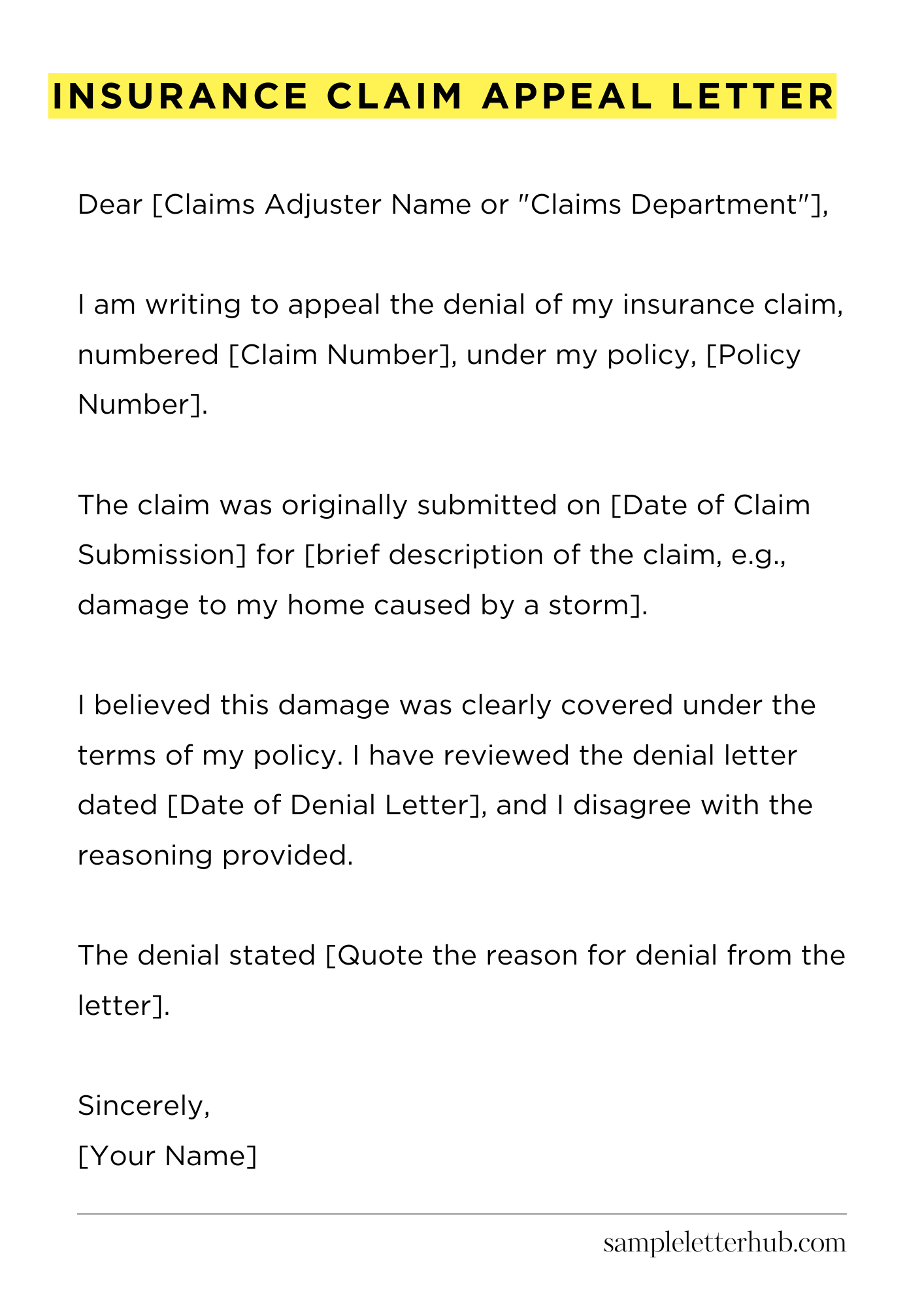
I am writing to appeal the denial of my insurance claim, numbered [Claim Number], under my policy, [Policy Number]. This letter provides additional information supporting my initial claim.
The claim was originally submitted on [Date of Claim Submission] for [brief description of the claim, e.g., damage to my home caused by a storm]. I believed this damage was clearly covered under the terms of my policy. I have reviewed the denial letter dated [Date of Denial Letter], and I disagree with the reasoning provided.
The denial stated [Quote the reason for denial from the letter]. However, I believe that [Explain why you disagree with the denial reason. Provide specific details and evidence.
For example: “The policy states coverage for wind damage, and the photographs I submitted clearly show evidence of high winds causing the damage to the roof.”]. Attached to this letter are [List the documents you are including, e.g., “photographs of the damage,” “repair estimates,” “police report”].
These documents further substantiate the nature and extent of the damage. They also demonstrate the validity of my claim. I believe the evidence clearly supports coverage under my policy.
I kindly request that you reconsider the decision to deny my claim. I would appreciate it if you could review the attached documentation carefully. Please provide a revised decision as soon as possible. A positive outcome would be greatly appreciated.
Thank you for your time and attention to this matter. I look forward to your prompt response.
Sincerely,
[Your Name]
How to Write an Insurance Claim Appeal Letter
Denied an insurance claim? Don’t despair! You have the right to appeal the decision. This comprehensive guide will equip you with the knowledge to craft a compelling insurance claim appeal letter that may overturn the initial denial.
1. Commence with a Cogent Introduction
Your opening paragraph is paramount. It’s the moment to make a forceful impression. Start by unequivocally stating your purpose: to appeal the denial of a specific claim. Include vital identifying information, like your policy number, claim number, and the date of the original denial letter. Maintain a formal yet firm tone. Don’t be afraid to clearly mention what you want from them.
2. Deliberate Recapitulation of the Facts
Now, meticulously outline the pertinent facts surrounding your claim. Briefly and objectively describe the incident, accident, or situation that gave rise to your claim.
Ensure your chronicle is accurate, detailed, and readily understandable. Reference any supporting documentation you previously submitted with your initial claim. Omission of important facts will be a detriment to your cause.
3. Deconstruct the Grounds for Denial
Carefully analyze the denial letter. What specific reasons did the insurance company provide for rejecting your claim? Identify each point of contention and address it individually.
This shows them you have reviewed their decision. Do not get sidetracked by irrelevant issues. Acknowledge and refute each reason with precision.
4. Assemble Irrefutable Evidence
This is where your appeal gains significant momentum. Gather all supporting documentation that bolsters your case. This may encompass medical records, expert opinions, witness statements, photographs, repair estimates, and any other evidence that substantiates your claim. This is a critical stage.
Organize your documents and clearly reference them within your letter. Provide copies, never the originals, unless specifically requested.
5. Articulate Persuasive Arguments
This is where you make your case. Clearly articulate the reasons why the denial is erroneous. Present your arguments in a logical and persuasive manner.
Support each argument with the evidence you’ve assembled. Refer to the specific clauses in your insurance policy that support your claim. Explain how the circumstances of your claim align with the policy’s terms. Never assume; explicitly state your points.
6. Request a Favorable Determination
In a concise and assertive manner, state exactly what you are requesting from the insurance company. Whether it’s a reconsideration of their decision, payment of the original claim, or a partial settlement, be explicit. Set a reasonable deadline for their response. Reiterate your contact information for ease of communication. This should be a direct request.
7. Conclude with a Resolute Closing
End your letter with a strong and professional closing. Reiterate your commitment to resolving this matter fairly and efficiently. Express your willingness to cooperate further, but also signal your readiness to pursue all available avenues, if necessary. Thank the reader for their time and consideration.
Sign your letter and consider sending it via certified mail with a return receipt requested. This provides proof of delivery and acknowledgement of receipt.
FAQs about Insurance Claim Appeal Letter
What is the purpose of an insurance claim appeal letter?
The primary purpose of an insurance claim appeal letter is to formally request a reconsideration of a denied insurance claim. It serves as a documented effort to present additional information, evidence, or arguments to support the original claim and convince the insurance company to reverse its decision.
What information should be included in an insurance claim appeal letter?
A well-structured appeal letter should include: the policyholder’s information, the claim information (claim number, date of service, etc.), a clear explanation of why the claim was initially denied, the specific reasons for disagreeing with the denial (citing policy provisions if applicable), any new supporting evidence (medical records, bills, etc.)
What are the common reasons for insurance claim denials that often require an appeal?
Common reasons include: lack of medical necessity, pre-existing conditions, experimental treatments, failure to obtain prior authorization, coding errors, policy exclusions, and incomplete documentation. Each reason requires a specific, tailored response in the appeal letter.
What is the deadline for submitting an insurance claim appeal letter?
Deadlines for appealing a denied insurance claim vary depending on the insurance provider and the type of insurance. It is crucial to review the denial letter, which will specify the appeal deadline. Missing the deadline will likely result in the loss of the right to appeal.
How should I submit my insurance claim appeal letter?
Submit the appeal letter according to the instructions provided by the insurance company. This usually involves mailing the letter to a specified address or submitting it electronically through an online portal. Always retain a copy of the letter and any supporting documentation, along with proof of submission (e.g., certified mail receipt or electronic confirmation).
Related:
Resignation letter due to rude boss
Resignation letter moving to another state
Resignation letter due to illness of family member
Resignation letter due to study