

An installer resignation letter is a formal document. It is written by an installer employee. Its purpose is to officially announce their departure from a job. This letter informs the employer of the last day of work.
Planning to quit your installer job? This can be stressful. We’re here to help make it a little easier. We’ve compiled various templates. They will serve as examples for your own letter.
These samples provide clear structures. They are easy to adapt. You can customize them for your specific situation. This will help you write a professional resignation letter.
Installer Resignation Letter
Below is a sample of a Installer Resignation Letter:
[Your Name]
[Your Address]
[Your Phone Number]
[Your Email Address]
[Date]
[Employer’s Name]
[Company Name]
[Company Address]
Dear [Employer’s Name],
Please accept this letter as formal notification that I am resigning from my position as Installer at [Company Name]. My last day of employment will be [Your Last Day of Employment].
I would like to express my gratitude for the opportunities I have been given during my time here. I have learned a lot and appreciate the experience I’ve gained.
I am committed to ensuring a smooth transition during my departure. I am happy to assist in training my replacement and completing any outstanding projects to the best of my ability before my last day.
Thank you again for the experience. I wish you and [Company Name] all the best in the future.
Sincerely,
[Your Signature]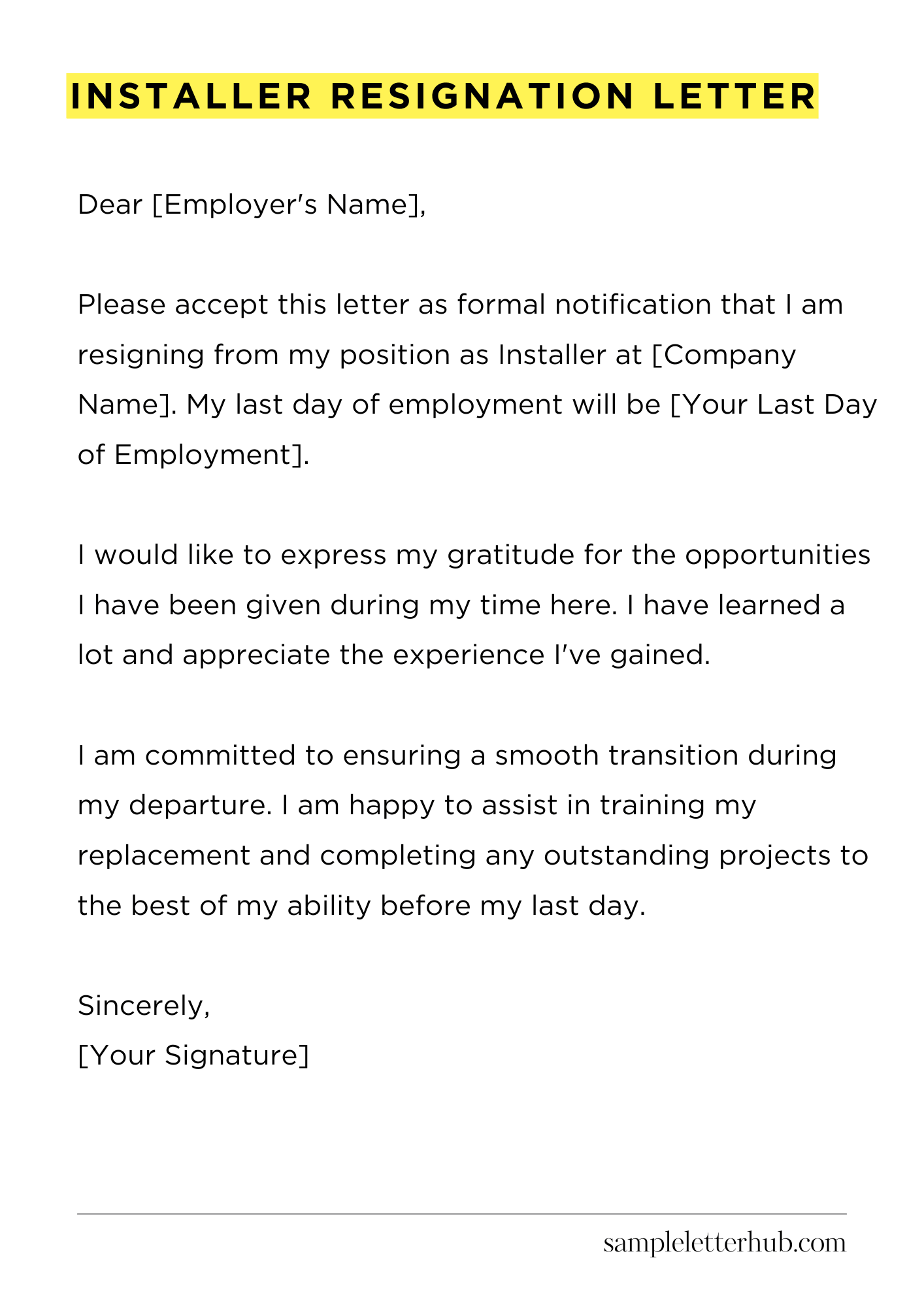
How to Write an Installer Resignation Letter
Understanding the Basics
So, you’re moving on from your installer role. Congratulations! The first step is to write a resignation letter. This is a crucial document. It’s not just a formality; it’s a professional courtesy and a record of your departure.
You want to make a good impression, even as you leave. Keep it clear, concise, and professional. Think of this letter as a bridge – you want to leave a bridge intact, not burn it. This is important, trust me.
What to Include: The Essential Elements
Several components are non-negotiable. First, you’ll need the date. This establishes when the letter was written. Next, clearly state your intent to resign from your position. Include your job title.
You should also state your last day of employment. This is critical for payroll and final settlements. Beyond these basics, express gratitude for the opportunity. You were there, you gained experience, and you acknowledge that.
Formatting: Making it Look Good
Presentation matters. Your letter should be properly formatted. Use a professional business letter format. Start with your contact information (name, address, phone number, email) and the recipient’s information (name, title, company address).
Use a standard font like Times New Roman or Arial in a readable size (12-point is typical). Keep your paragraphs short and easy to digest. Proofread, proofread, proofread! A letter riddled with errors is a surefire way to make a bad impression.
Writing the Body: Crafting the Message
The body of your letter is where the details live. Start with a polite opening. Then, clearly state your resignation and your last day. Express gratitude for the opportunity to work there. You can briefly mention any positive experiences or skills you gained. However, avoid lengthy details about why you’re leaving.
It is a Resignation Letter, and it should not turn into a rant. Be positive, thank the management for the opportunity and end it with a professional closing, such as “Sincerely” or “Best Regards.”
Final Touches and Tips
Before you send it, review everything. Ensure all the information is accurate and that there are no grammatical errors. Keep a copy for your records. Consider sending the letter via certified mail or getting confirmation that it was received. If possible, deliver the letter in person to your direct supervisor.
This is often seen as a respectful gesture. And remember, keep your tone positive and professional throughout the entire process. This will help you in your professional journey. You got this!
FAQs about Installer Resignation Letter
What is the primary purpose of an installer resignation letter?
The primary purpose of an installer resignation letter is to formally notify an employer of an employee’s intent to leave their position as an installer. It serves as an official record of the resignation, providing details such as the employee’s name, job title, the effective date of resignation, and often a brief statement regarding the reason for leaving.
This letter initiates the formal process of an employee’s departure from the company.
What key information should be included in an installer resignation letter?
A well-crafted installer resignation letter should include essential information such as the employee’s full name, job title, the date the letter is written, the intended last day of employment (the effective date of resignation), and a clear and concise statement of resignation.
It’s also customary, although not always required, to include a brief, professional expression of gratitude to the employer or supervisor and may provide a reason for leaving. Contact information such as address and email is helpful.
How much notice should an installer give when resigning?
The amount of notice an installer should give depends on the company policy and any employment contracts. Typically, providing a two-week notice is considered standard practice in many industries, including installation. However, the employment contract or company handbook may specify a different notice period.
It’s crucial for the installer to review these documents to understand the specific requirements. Always aim to comply with any contractual obligations, as this can affect references and eligibility for future employment.
Can an installer’s resignation letter be used as a reference?
Generally, a resignation letter itself is not typically used as a primary reference document. However, the details provided in the letter, such as the dates of employment and job title, might be used to verify information during a reference check. Moreover, a well-written, professional resignation letter can reflect positively on the installer.
If the installer maintains a good relationship with their employer, the employer could possibly use some points from the letter to provide a positive reference.
What are some common reasons for resigning from an installer position?
Installers may resign for various reasons. Some common ones include better job opportunities (higher salary, different location, improved benefits), dissatisfaction with the current job (poor management, lack of growth, difficult working conditions), a change in career goals, personal reasons (relocation, health, family), or pursuing further education or training.
The specific reasons can vary depending on individual circumstances and career aspirations.
Related:
Resignation letter due to rude boss
Resignation letter moving to another state
Resignation letter due to illness of family member
Resignation letter due to study