


An Installation Technician resignation letter is a formal document. It is written by an Installation Technician. The purpose is to officially inform an employer of their intention to leave their job. It marks the end of employment.
Are you an Installation Technician? Do you need to resign? Writing a resignation letter can feel tricky. We’ve got you covered. We’re sharing templates and examples. These samples will help you. They will guide you.
This article offers easy-to-use samples. You can adapt them to your specific situation. This will help you express your reasons clearly. Make your resignation process simple. Create your own perfect letter.
Installation Technician Resignation Letter
Below is a sample of a Installation Technician Resignation Letter:
[Your Name]
[Your Address]
[Your Phone Number]
[Your Email Address]
[Date]
[Employer’s Name]
[Company Name]
[Company Address]
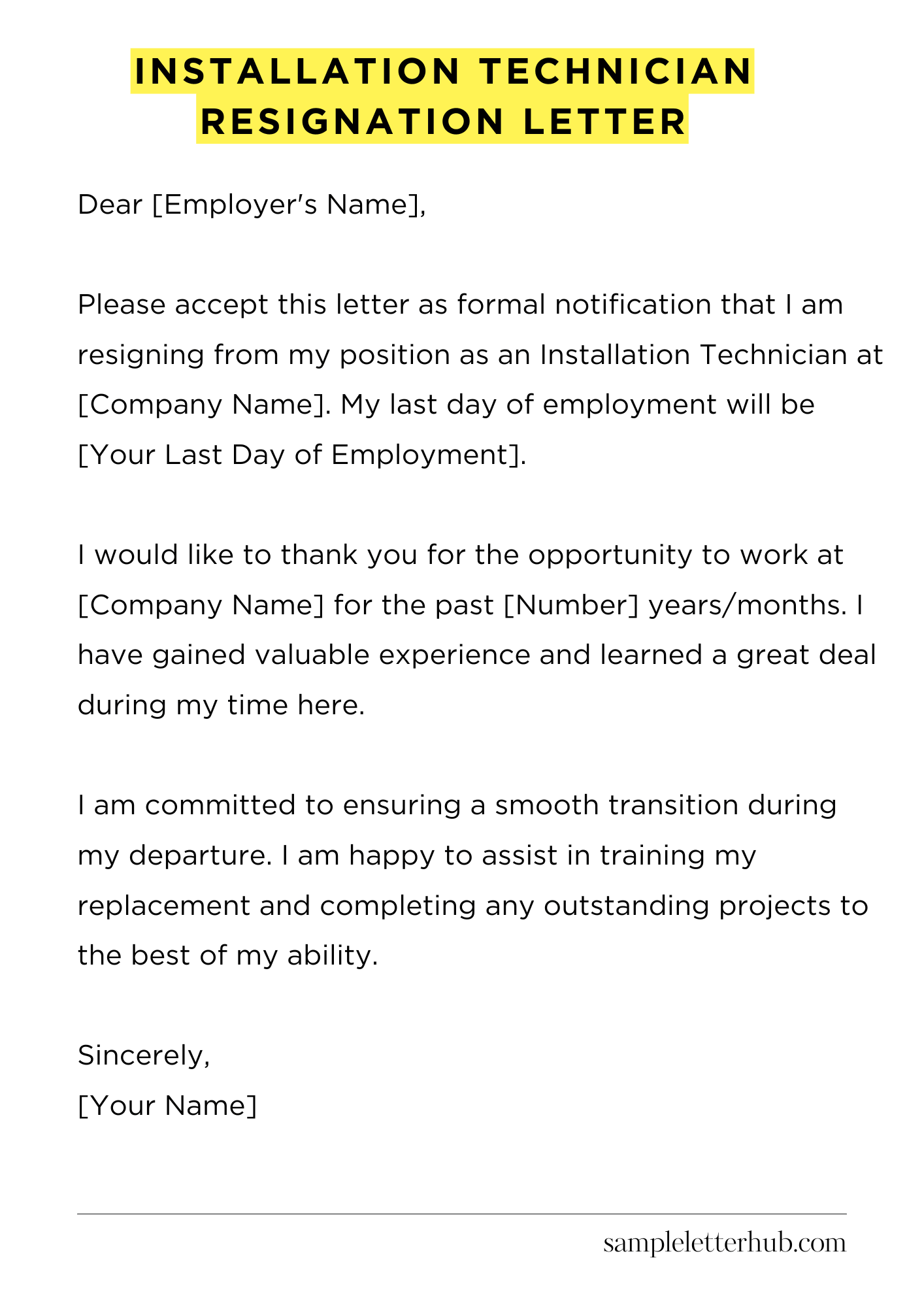
Dear [Employer’s Name],
Please accept this letter as formal notification that I am resigning from my position as an Installation Technician at [Company Name]. My last day of employment will be [Your Last Day of Employment].
I would like to thank you for the opportunity to work at [Company Name] for the past [Number] years/months. I have gained valuable experience and learned a great deal during my time here.
I am committed to ensuring a smooth transition during my departure. I am happy to assist in training my replacement and completing any outstanding projects to the best of my ability.
I wish [Company Name] continued success in the future.
Sincerely,
[Your Name]
How to Write an Installation Technician Resignation Letter
So, you’ve decided to move on from your role as an Installation Technician. Congratulations on taking the next step! Whether you’re chasing a new opportunity, seeking a better work-life balance, or simply ready for a change, the process begins with a crucial document: your resignation letter.
Let’s face it; a well-crafted letter can leave a positive lasting impression. It can also pave the way for a smooth transition. Here’s a guide to help you craft a professional and effective resignation letter, specifically tailored for an Installation Technician.
1. Essential Information and Formatting
First things first, keep it simple. Your letter should be easy to read and understand. Start with the date. Use the standard business letter format. Include your full name, address, and contact information. Then, address the letter to your direct supervisor or the appropriate HR representative.
You’ll also want to include the company’s name and address. Your goal is to be professional, not overly verbose. Be direct and state your intention to resign. Clearly state your last day of employment. This is paramount, so the company can plan for your departure.
For example: “Please accept this letter as formal notification that I am resigning from my position as an Installation Technician, effective [Your Last Day of Employment].” The rest of the letter will build upon this essential foundation.
2. Expressing Gratitude and Professionalism
Even if you’re not thrilled about leaving, it’s always wise to express your gratitude. Acknowledge the experience you’ve gained and the opportunities you’ve been given. A simple thank you can go a long way. Consider mentioning any specific positive experiences or skills you’ve developed during your time with the company.
This shows you’re not just abandoning ship; you’re recognizing the value you’ve received. Keep your tone positive and avoid any negativity. Resist the urge to air any grievances in your resignation letter. Instead, focus on the future. Remember, you might need a reference from this company later on.
Example: “I am grateful for the opportunities I have been given to develop my skills as an Installation Technician during my time here. I have learned a great deal and appreciate the experience.”
3. Providing Support During the Transition
Show willingness to assist with the transition. Offer your help in training your replacement or completing any pending projects. This demonstrates professionalism and a commitment to ensuring a smooth handover. It also highlights your dedication to the company. Be reasonable with your offer; you’re not obligated to work for free.
Be specific about the support you can provide. Your offer may be limited. If you have any ongoing projects, offer to document your work or provide a handover report. This shows you’re thinking beyond your last day.
Example: “I am happy to assist in training my replacement or completing any outstanding projects to ensure a seamless transition. I am available to provide documentation and guidance as needed.”
4. Keeping it Concise and Avoiding Negativity
Keep your resignation letter concise and to the point. Long, rambling letters are often ineffective. Avoid any negative comments about your colleagues, the company, or your reasons for leaving.
Remember that this letter is a permanent record. It is vital to maintain a professional tone throughout. Focus on the positives and avoid any unnecessary drama. Resist the temptation to vent or complain. Your letter is a reflection of you; make it a positive one.
For example: Avoid phrases like, “I’m leaving because I hate my job.” Instead, focus on your future goals. A simple sentence like, “I’m pursuing a new opportunity that aligns with my career goals,” is sufficient.
5. Review and Proofread Before Sending
Always review and proofread your letter carefully before sending it. Check for any grammatical errors, spelling mistakes, or typos. This small step shows attention to detail. Ensure that your letter is clear, concise, and professional. Ask a friend or colleague to read it over for a second opinion.
This helps to catch anything you may have missed. Once you’re satisfied, print it out (if you’re submitting a physical copy) and sign it. If submitting electronically, double-check that the formatting is correct and that it’s attached to the email correctly. This final check is crucial for a polished, professional finish.
Good luck with your new endeavors!
FAQs about Installation Technician resignation letter
How do I start my Installation Technician resignation letter?
Begin your resignation letter with a clear and concise statement of your intent to resign, including the date of your last day of employment. Be professional and direct in your opening.
What key information should be included in an Installation Technician resignation letter?
Your resignation letter should include your official resignation, the date of your last day of employment, a brief expression of gratitude for the opportunity to work at the company, and, optionally, a reason for your resignation (though this is not always required).
Is it necessary to provide a reason for resigning in my letter?
While not strictly necessary, providing a brief, professional reason for your resignation can be helpful. It could be for a better opportunity, personal reasons, or career advancement. Keep it concise and positive.
Should I offer to help with the transition of my responsibilities in my resignation letter?
Offering to assist with the transition of your responsibilities is highly recommended. This demonstrates professionalism and a commitment to ensuring a smooth handover of your duties. Specify how you can help, such as training a replacement or completing ongoing projects.
How should I end my Installation Technician resignation letter?
Conclude your letter by expressing gratitude for the experience and wishing the company and your colleagues well. Include your contact information (optional) for future communication. End with a professional closing, such as “Sincerely” or “Best regards,” followed by your name and signature.
Related:
Resignation letter due to rude boss
Resignation letter moving to another state
Resignation letter due to illness of family member
Resignation letter due to study