

A Human Resources Administrator resignation letter is a formal document. It informs your employer that you’re leaving your job. The letter states your official last day of employment. It’s an important step in the resignation process.
Need to resign from your HR Administrator role? We’ve got you covered. Writing a resignation letter can feel tricky. We’ll share some helpful examples. These samples will guide your writing. They will make the process much easier.
We have templates and various options. You’ll find different formats. Choose the best one for your situation. These letters are adaptable and ready to use. Craft your perfect goodbye with ease.
Human Resources Administrator Resignation Letter
Below is a sample of a Human Resources Administrator Resignation Letter:
[Your Name]
[Your Address]
[Your Phone Number]
[Your Email Address]
[Date]
[Recipient Name] (If known, otherwise use title)
Human Resources Department
[Company Name]
[Company Address]
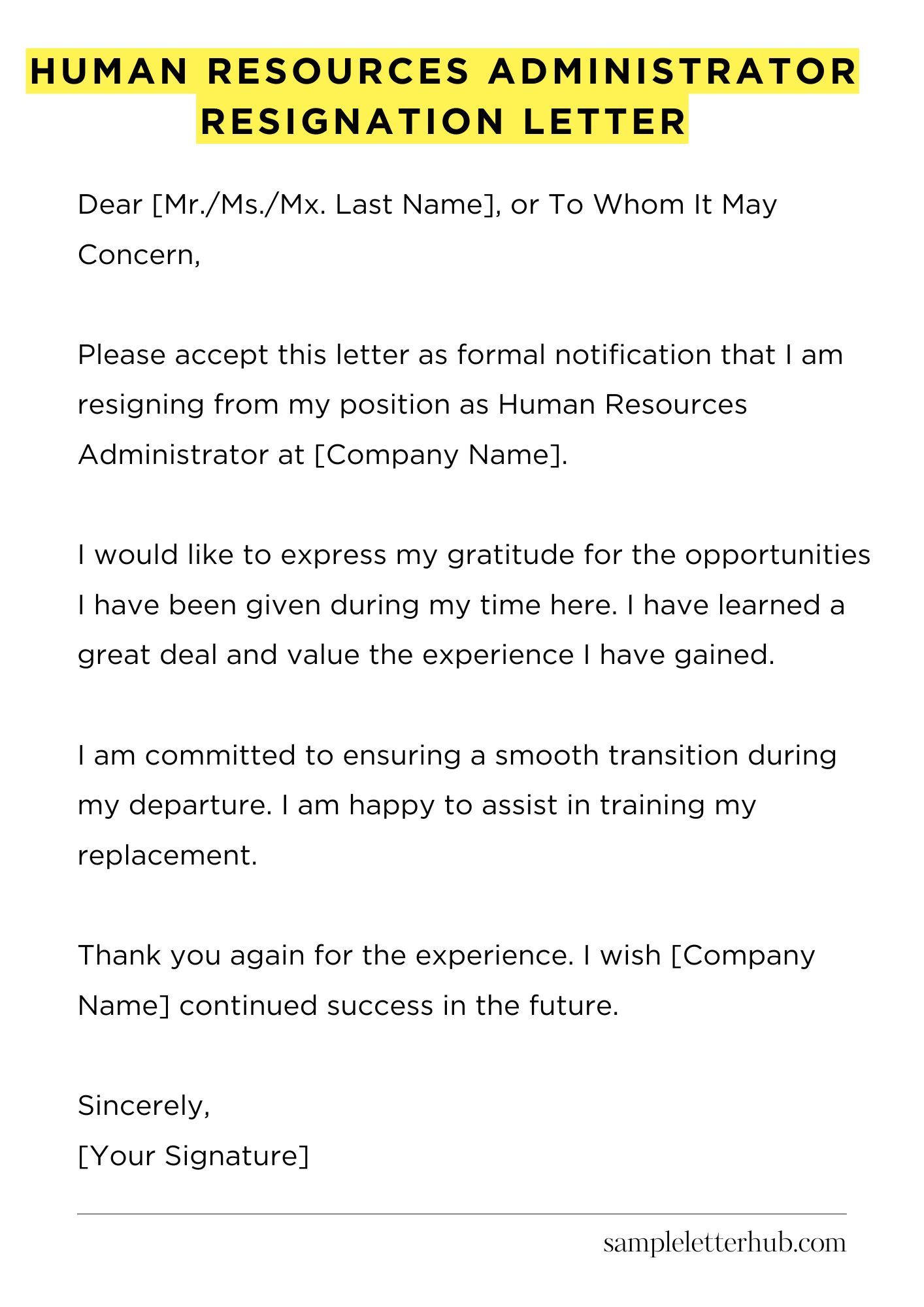
Dear [Mr./Ms./Mx. Last Name], or To Whom It May Concern,
Please accept this letter as formal notification that I am resigning from my position as Human Resources Administrator at [Company Name]. My last day of employment will be [Your Last Day of Employment].
I would like to express my gratitude for the opportunities I have been given during my time here. I have learned a great deal and value the experience I have gained.
I am committed to ensuring a smooth transition during my departure. I am happy to assist in training my replacement and completing any outstanding tasks to the best of my ability.
Thank you again for the experience. I wish [Company Name] continued success in the future.
Sincerely,
[Your Signature]
How to Write a Human Resources Administrator Resignation Letter
1. Starting Strong: The Essentials
Resigning from any job, especially one in Human Resources, requires a professional approach. Your resignation letter is your formal departure notice, so it’s crucial to get it right.
Begin with a clear statement of your intention to resign. Keep it straightforward and concise. State your position, and the date your resignation takes effect. Think of this as the foundation upon which your whole letter rests. A good start avoids any ambiguity.
Always include the current date at the top, followed by the recipient’s name (typically your direct supervisor or the HR Director) and their title. This detail shows respect for their position and acknowledges the proper channels.
2. Briefly Explaining Your Departure
You don’t need to over-explain the reasons for leaving. It is generally not required, nor is it beneficial, to provide extensive details about why you’re moving on. Keep it brief. You might simply state that you are pursuing another opportunity, or that you’ve made a career change. This keeps the focus on the task at hand.
Some people choose to omit an explanation entirely; that is acceptable too. Remember, you don’t need to air any grievances here.
Maintain a neutral and positive tone. Even if you’re leaving due to dissatisfaction, it’s wiser to avoid negativity.
3. Offering Assistance During the Transition
A crucial element of a strong resignation letter is a generous offer of assistance. Your goal is to leave a positive lasting impression. Include a statement expressing your willingness to help with the transition period.
What you do here can vary. You can offer to help train your replacement, complete any outstanding tasks, or transfer knowledge to others in the department. This shows professionalism and consideration.
Specific examples of ways to help are usually best. Think about your current responsibilities and how you can ensure a smooth handover.
4. Expressing Gratitude and Professionalism
Expressing gratitude is always a good idea. Acknowledge the opportunity you had while working at the company. Thank your employer for the experience and the skills you’ve gained. If you’ve enjoyed your time with the organization, state it directly. This reinforces a positive image.
Keep your language formal and polite throughout the letter. A professional tone is critical to ensure that your departure reflects positively on you and leaves a good impression.
5. Finalizing and Reviewing
Before sending, review your letter carefully. Proofread for any grammatical errors or typos. Ensure the tone is appropriate, and that all the necessary information is included. You may even ask a colleague or friend to read it over as a second set of eyes. Remember, this letter is a reflection of you.
Finally, sign your letter. Type your full name, followed by your signature on the hard copy. Keep a copy for your records. Good luck!
FAQs about Human Resources Administrator resignation letter
Understanding the nuances of crafting a resignation letter as a Human Resources Administrator is crucial for a smooth transition. The following are the most frequently asked questions on this topic.
What essential information should be included in a Human Resources Administrator resignation letter?
A Human Resources Administrator resignation letter should include: a formal declaration of your resignation, the effective date of your departure, a concise statement of gratitude for the opportunity, and any necessary information regarding the handover of responsibilities.
It’s also wise to include your contact information for future correspondence. The letter should be professional, brief, and focus on the practical aspects of your leaving.
How far in advance should a Human Resources Administrator submit their resignation letter?
The standard practice is to provide at least two weeks’ notice, as this allows the company sufficient time to find a replacement and ensure a smooth transition of your duties. However, the exact timeframe may be stipulated in your employment contract or company policy. Always refer to your employment agreement for specific requirements.
Should I provide a reason for leaving in my Human Resources Administrator resignation letter?
While not mandatory, you may choose to briefly state your reason for leaving, but it is not required. If you choose to do so, keep it brief and professional. Some common reasons include pursuing a new opportunity, relocation, or personal reasons. Avoid negative comments about the company or colleagues, maintaining a positive and professional tone throughout.
What is the proper format for a Human Resources Administrator resignation letter?
The format of your letter should be professional. Begin with a formal salutation, followed by the body of the letter, which includes the essential information mentioned above.
End with a professional closing, such as “Sincerely” or “Respectfully,” and your full name. Ensure your letter is free of grammatical errors and is printed on standard paper, or submitted digitally if the company prefers.
What should be done after submitting the Human Resources Administrator resignation letter?
After submitting your letter, expect to be contacted by your supervisor or HR department to discuss your departure. Be prepared to discuss your transition plan, including the handover of your responsibilities, and to answer any questions. Maintain a professional demeanor throughout this process, focusing on ensuring a seamless transition and a positive final impression.
Related:
Resignation letter due to rude boss
Resignation letter moving to another state
Resignation letter due to illness of family member
Resignation letter due to study