

An HSE Manager resignation letter is a formal document. Its purpose is to officially inform an employer about an HSE Manager’s decision to leave a job. The letter starts the process of ending employment. It should be professional and clear.
Need to resign from your HSE Manager role? Writing the perfect letter can feel tricky. Don’t worry, we’re here to help. We’ll share examples and templates. These will guide you through the process.
This article has you covered. We’ve compiled various sample letters. You can adapt them to your specific situation. Consider it your handy guide to crafting a clear and effective resignation.
Hse Manager Resignation Letter
Below is a sample of a Hse Manager Resignation Letter:
[Your Name]
[Your Address]
[Your Phone Number]
[Your Email Address]
[Date]
[Hiring Manager Name] (If known, otherwise use title)
[Hiring Manager Title]
[Company Name]
[Company Address]
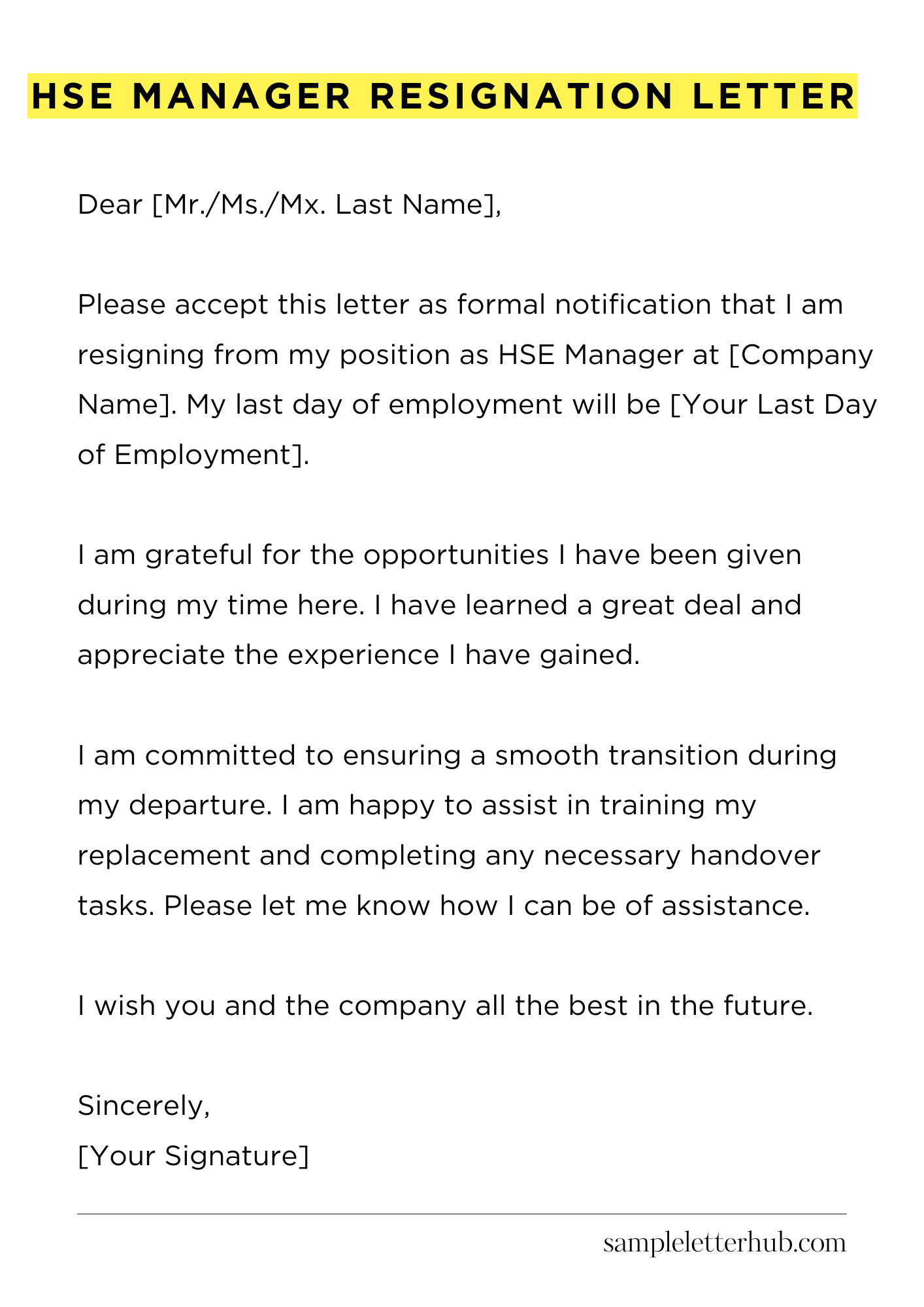
Dear [Mr./Ms./Mx. Last Name],
Please accept this letter as formal notification that I am resigning from my position as HSE Manager at [Company Name]. My last day of employment will be [Your Last Day of Employment].
I am grateful for the opportunities I have been given during my time here. I have learned a great deal and appreciate the experience I have gained.
I am committed to ensuring a smooth transition during my departure. I am happy to assist in training my replacement and completing any necessary handover tasks. Please let me know how I can be of assistance.
I wish you and the company all the best in the future.
Sincerely,
[Your Signature]
How to Write an HSE Manager Resignation Letter
So, you’re ready to move on. You’ve accepted a new position, you’re pursuing a different career path, or perhaps you’ve simply decided it’s time for a change.
Whatever the reason, you’re preparing to resign from your role as an HSE Manager. This is a crucial step! It’s not just about stopping your employment but about leaving a professional and positive impression. Your resignation letter, while seemingly simple, is a key piece of this process. Let’s delve into how to write a compelling one.
1. Formalities: The Foundation of Your Letter
First things first. You must be clear and concise. Your letter should begin with the date and your contact information. After that, address the letter to the appropriate person—usually your direct supervisor or the Human Resources department. Use a formal tone throughout, maintaining a professional demeanor even if you’re not entirely thrilled with your current job.
The opening paragraph is crucial to state your intention: your official resignation from the position of HSE Manager. Explicitly state your last day of employment. This is where you specify the exact date your employment will end. Be sure to reference your employment contract if it mentions a required notice period. Adhering to these is non-negotiable.
2. The Body: Expressing Gratitude and Providing Context
The body of your letter is where you expand a bit. This is the place to express your gratitude for the opportunity to work at the company. Acknowledge the experience you’ve gained and any contributions you’ve made. This shows professionalism and leaves a positive impression, regardless of your personal feelings.
A brief, positive statement about your experience goes a long way. You are not obligated to explain *why* you are leaving in extreme detail, but offering a general reason can be helpful. For example, you might mention seeking new opportunities or pursuing personal development. Keep it brief. There is no need to make it verbose.
3. Key Elements: Addressing Specifics and the Handover Process
Within the body, consider mentioning the handover process. Offer your assistance in facilitating a smooth transition. This is a very important aspect of any professional departure. Offer to help with training your replacement or preparing documentation. This demonstrates responsibility and a commitment to ensuring business continuity.
In your letter, if you are planning to leave any data, mention them so they can be prepared on time. In cases where the handover is more complex, suggest a meeting to discuss it in detail. Indicate your willingness to help by responding to any questions after leaving, if necessary.
4. Keep It Concise: Clarity and Brevity are Essential
Keep the letter concise. Avoid rambling or excessive detail. Your resignation letter is not the place to air grievances or delve into lengthy explanations of your dissatisfaction. Its primary function is to officially announce your departure.
Stick to the essential points: your intention to resign, your last day of employment, a brief expression of gratitude, and your willingness to assist in the transition. Make sure your letter is no longer than one page. It’s often best to keep it even shorter.
5. Final Steps: Review, Proofread, and Submit
Proofread the letter carefully. Ensure there are no grammatical errors or typos. Mistakes diminish your professionalism. Double-check all dates and names. Review the letter again from the perspective of your employer. Does it convey the right message? Does it leave a good impression? Once you’re satisfied, print a copy for your records.
Then submit the letter according to your company’s procedures, whether via email or in hard copy. Always obtain confirmation that your letter has been received. This protects you by documenting the official resignation process.
FAQs about HSE Manager Resignation Letter
Understanding the nuances of an HSE Manager’s resignation is crucial for both the departing employee and the organization. Here are some of the most frequently asked questions on this topic:
What essential information should be included in an HSE Manager’s resignation letter?
An effective resignation letter from an HSE Manager should include: a formal statement of resignation, the effective date of departure, a concise reason for leaving (optional but often included), acknowledgment of any ongoing projects or responsibilities, an offer to assist with the transition, contact information, and a professional closing.
It’s also wise to include a thank you for the opportunity.
What is the typical notice period required from an HSE Manager, and how is it determined?
The notice period for an HSE Manager is usually outlined in their employment contract or company policy. It often ranges from two to four weeks, but this can vary. Key factors determining the length include the seniority of the role, the complexity of the organization, and local labor laws. Always refer to the employment contract as the primary guide.
How should an HSE Manager handle the handover process in their resignation letter?
The letter should express a willingness to assist with a smooth transition. Specific actions might include offering to train a replacement, completing outstanding tasks, documenting key processes, or providing contact details for any follow-up questions. Be clear about the timeframe you are available for handover.
Can an HSE Manager’s resignation letter be used to address any grievances or concerns?
While the resignation letter is primarily for formally stating your departure, you can include a brief, professional statement of concern.
However, it’s generally recommended to address any significant issues separately, either before or after submitting the resignation letter, through the appropriate channels, such as human resources or management. Avoid lengthy complaints in the resignation letter.
What are the legal implications an HSE Manager should consider when submitting a resignation letter?
Legal considerations include adherence to the employment contract, compliance with relevant labor laws regarding notice periods and final paychecks, and understanding the implications of any non-compete clauses.
It’s advisable to consult with an employment lawyer if there are any doubts or complexities regarding these areas. Ensure all legal obligations are met and seek legal advice if required.
Related:
Resignation letter due to rude boss
Resignation letter moving to another state
Resignation letter due to illness of family member
Resignation letter due to study