

An HR Representative resignation letter is a formal document. It informs your employer of your intention to leave. This letter initiates the official departure process. It’s a key part of your employment record.
This article is your guide to writing a stellar resignation letter. We provide various templates. You’ll find different examples. These samples will cover various scenarios. They’re designed to make your writing process simple.
Ready to craft your resignation? Let’s explore the best ways to say goodbye. Get ready to find the perfect words. We will show you how.
Hr Representative Resignation Letter
Below is a sample of a Hr Representative Resignation Letter:
[Your Name]
[Your Address]
[Your Phone Number]
[Your Email Address]
[Date]
[HR Representative’s Name] (If known, otherwise use title)
HR Department
[Company Name]
[Company Address]
Dear [Mr./Ms./Mx. Last Name],
Please accept this letter as formal notification that I am resigning from my position as HR Representative at [Company Name]. My last day of employment will be [Your Last Day of Employment].
I would like to thank you for the opportunity to work at [Company Name]. I have gained valuable experience during my time here.
I am committed to assisting with the transition process in any way I can to ensure a smooth handover of my responsibilities. Please let me know how I can be of assistance.
I wish [Company Name] continued success in the future.
Sincerely,
[Your Signature]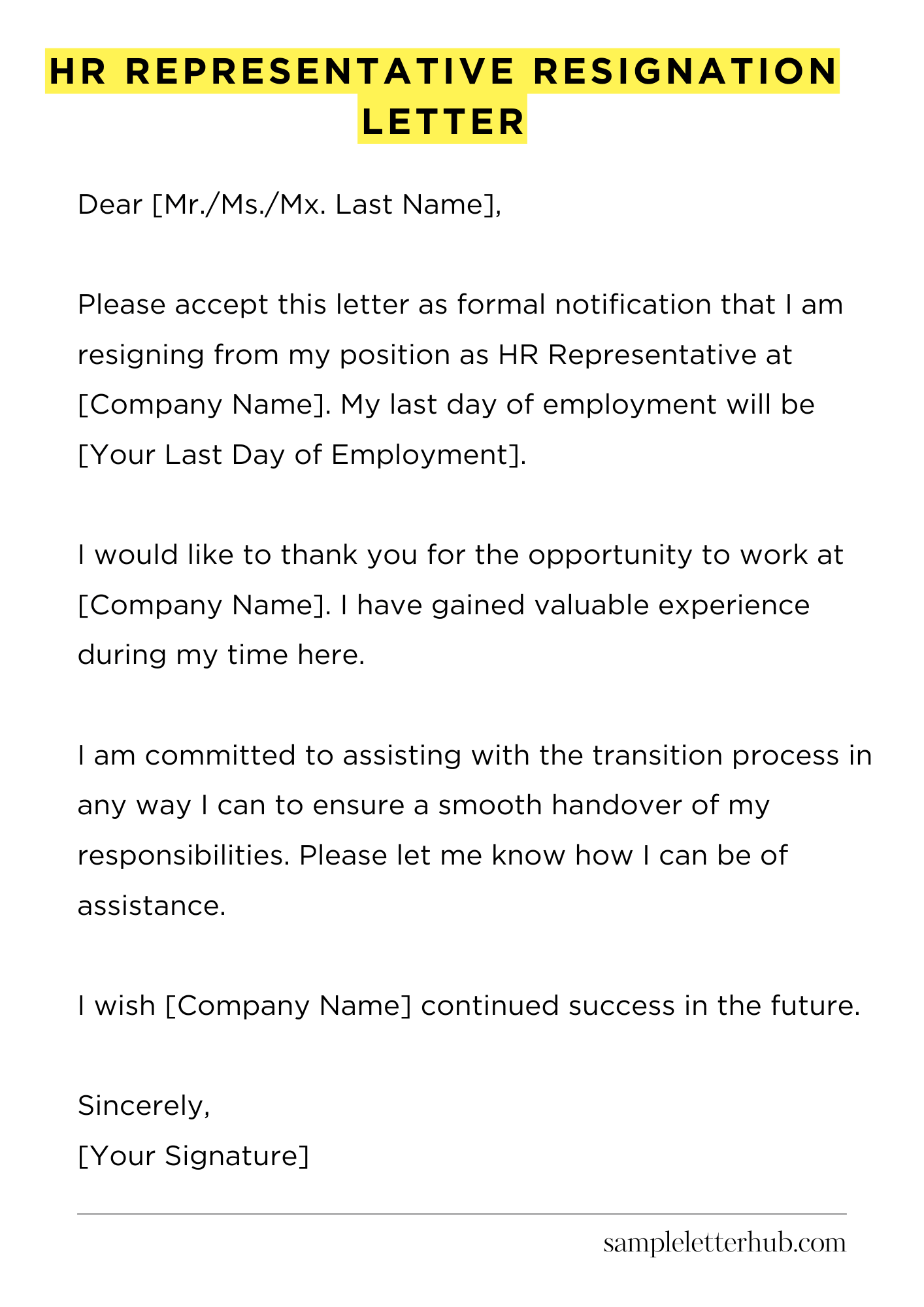
How to Write an HR Representative Resignation Letter
1. Grasping the Basics: Why Your Resignation Matters
Resigning from a job, especially as an HR professional, requires more than just a quick email. You’re leaving a crucial role with sensitive information and ongoing responsibilities.
Your resignation letter sets the tone for your departure and can impact your future career. Think of it as a formal goodbye. It’s a statement, and you want to ensure it’s a good one. A well-crafted letter can leave a positive lasting impression. This will be very helpful in the future.
2. Essential Components: What to Absolutely Include
Every resignation letter, regardless of your industry, needs specific elements. First, and foremost, state your intention to resign clearly. Mention the effective date of your departure. Keep it simple and straightforward. Then, express your gratitude for the opportunity. You should reflect positively on your time with the company.
Consider briefly acknowledging any specific experiences or learning opportunities that were beneficial to you. You can also mention your willingness to assist in the transition of your duties. This shows professionalism. Finally, ensure you sign the letter. Make sure to print the letter and sign it physically.
3. Crafting the Content: Tips for a Powerful Message
The tone of your letter is critical. Aim for professionalism and positivity. Steer clear of negative comments about your colleagues, superiors, or the company itself. Keep the language polite, even if you are leaving due to dissatisfaction. Focus on your future plans or the reasons for your departure in a way that remains neutral.
Do not burn any bridges. Be as concise as possible, avoid lengthy explanations. Keep your letter to one page. Proofread it very carefully for any errors. Double-check all details, especially the date and the recipient’s name and title. It’s easy to make mistakes so double-check everything.
4. Tailoring to HR: Specific Considerations for the Role
As an HR representative, your resignation letter carries added weight. You handle sensitive information, so your departure demands extra care. Mention your commitment to confidentiality in your letter.
Emphasize your willingness to support the transition process. Offer to assist in training your replacement. Also, consider the specific tasks and projects you’re involved in, and mention your plans to ensure a smooth handover. Do not leave the team hanging. The goal is to leave on good terms and show your professionalism.
5. Formatting and Delivery: Polishing the Final Product
The format of your letter matters. Use a professional business letter format. Include your contact information at the top, followed by the date, and the recipient’s name and title.
Type it, do not handwrite it. If possible, deliver the letter in person to your direct supervisor or the appropriate HR contact. Get a receipt or an acknowledgment of receipt. This protects you. Keep a copy for your records. This ensures you have proof of your resignation. After all, the letter is your official notice.
FAQs about HR Representative Resignation Letter
What is the primary purpose of an HR Representative resignation letter?
The primary purpose of an HR Representative resignation letter is to formally notify the employer of the employee’s intent to leave their position. It serves as an official record of the resignation, the last day of employment, and can include other pertinent details.
What key elements should be included in an HR Representative resignation letter?
A well-crafted HR Representative resignation letter should include: a clear statement of resignation, the effective date of departure, a brief statement of gratitude (optional but recommended), a formal closing, and the employee’s signature. It’s often advisable to briefly state the reason for leaving, though this is not always mandatory.
How should an HR Representative address their resignation letter?
An HR Representative’s resignation letter should be addressed to their immediate supervisor, the HR Manager, or a designated person within the organization. The recipient should be someone who has the authority to accept the resignation. Ensure to use the correct professional title and name.
Can an HR Representative’s resignation letter be used as a reference?
While a resignation letter itself is not typically used as a reference letter, it can serve as a component of the employee’s record. It documents the employee’s employment dates and may be considered alongside other performance reviews or information when a reference is requested.
What are the legal considerations regarding an HR Representative resignation letter?
Legal considerations for an HR Representative’s resignation letter typically revolve around compliance with employment contracts or company policies. For example, ensuring that the appropriate notice period is provided. It’s also important to avoid including potentially defamatory or damaging information.
HR reps should also ensure that they are following any legal requirements based on local and state labor laws.
Related:
Resignation letter due to rude boss
Resignation letter moving to another state
Resignation letter due to illness of family member
Resignation letter due to study