

Sometimes, a freelancer needs to end a work contract. A freelancer resignation letter makes it official. It informs the client of the decision. It also states the last day of work. This letter provides a clear and professional way to depart.
Writing this letter can feel tricky. You want to be polite. You also need to protect yourself. We get it. That’s why we’re here to help.
We’ve compiled helpful samples and examples. Use these to create your own letter. Find a template that suits your situation. Make your exit smooth and stress-free.
Freelancer Resignation Letter
Below is a sample of a Freelancer Resignation Letter:
[Your Name/Freelance Business Name]
[Your Address]
[Your Phone Number]
[Your Email Address]
[Date]
[Client Name]
[Client Address]
Subject: Resignation from Freelance Services
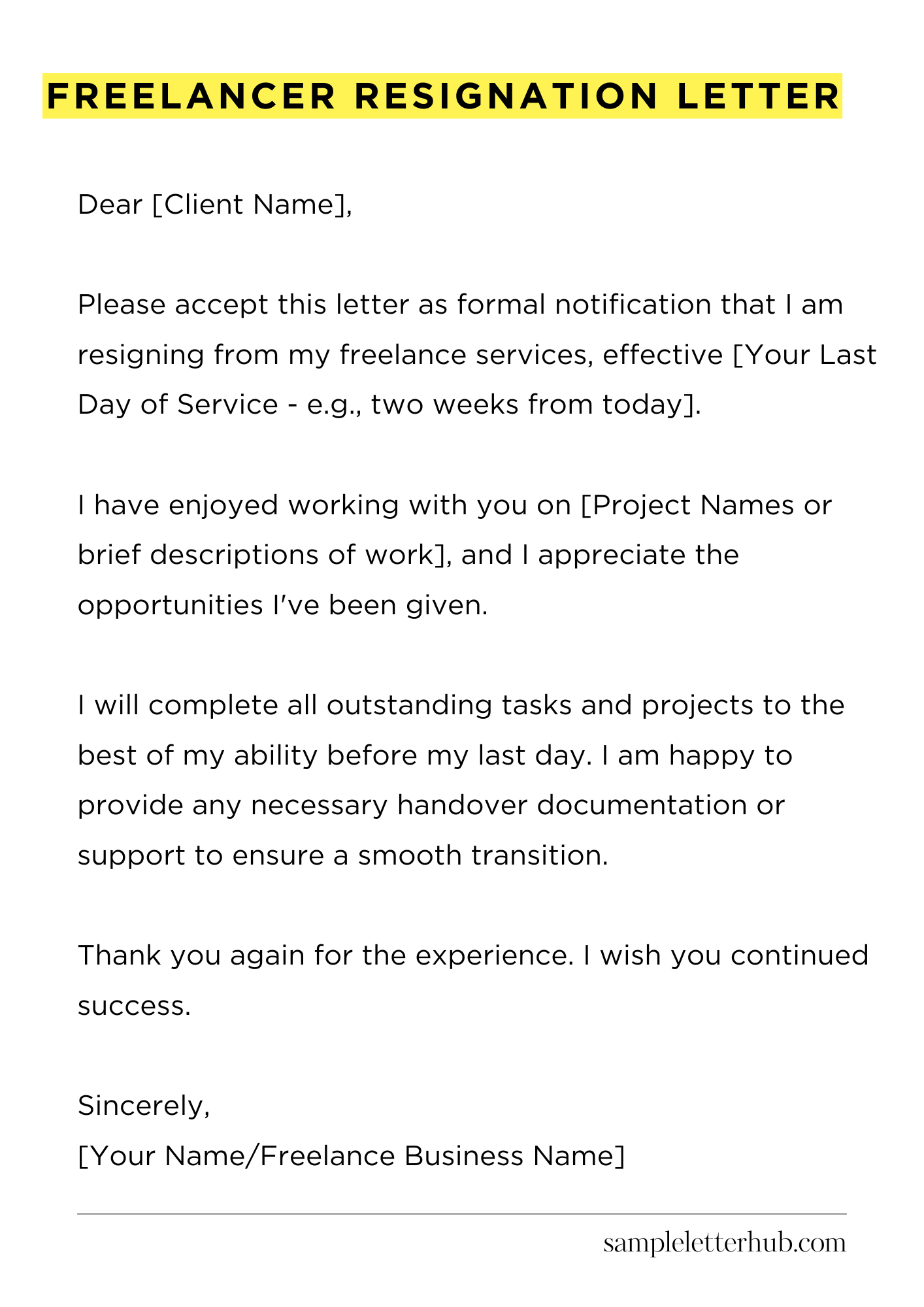
Dear [Client Name],
Please accept this letter as formal notification that I am resigning from my freelance services, effective [Your Last Day of Service – e.g., two weeks from today].
I have enjoyed working with you on [Project Names or brief descriptions of work], and I appreciate the opportunities I’ve been given.
I will complete all outstanding tasks and projects to the best of my ability before my last day. I am happy to provide any necessary handover documentation or support to ensure a smooth transition.
Thank you again for the experience. I wish you continued success.
Sincerely,
[Your Name/Freelance Business Name]
How to Write a Freelancer Resignation Letter
Why a Resignation Letter Matters
You’re flying solo as a freelancer. Congratulations! You’re your own boss. But, what happens when you need to move on to a new project or opportunity?
That’s where a resignation letter comes in. It’s more than just a formality; it’s a professional courtesy. Sending a well-crafted letter ensures a smooth transition. It also protects your reputation. Think of it as leaving a positive last impression. This impression could open doors for future referrals or recommendations. Don’t underestimate the power of a well-written letter.
Essential Elements to Include
So, what exactly should be in this letter? First, always state your intention to resign clearly. Be direct. Mention the specific project or client you are resigning from, too. It makes things easier for everyone to understand. Next, include your last day of work. This provides clarity about your departure.
If there is a reason for your resignation, it can be added too. However, this is optional, and the tone must be neutral. It is extremely important that you express your gratitude for the opportunity. Thank the client for the experience. Finally, keep it concise; avoid unnecessary details or negativity. Keep in mind that less is often more.
Structuring Your Letter: A Practical Guide
Structure matters. Start with a professional salutation. This includes the client’s name or title if known. Next, open with your intention to resign. This should be a direct and straightforward sentence. Include the date of your last working day. Follow this with a brief statement of gratitude.
Perhaps highlight something positive from your time working with the client. It’s also good to offer assistance during the transition. Offer to help with handing over tasks. Close with a professional closing, such as “Sincerely” or “Best regards”, followed by your name and contact information. Easy peasy!
Avoiding Common Pitfalls
Certain mistakes can make your letter less effective. Avoid negativity. Don’t complain about the client or project. Focus on the positive aspects of the experience. Also, refrain from making demands or setting unrealistic expectations. You are leaving, not dictating terms.
Be sure to proofread carefully. Typos and grammatical errors are unprofessional. Double-check your contact information, too. You don’t want to miss any replies. Finally, avoid burning bridges. Maintain a professional tone throughout. You want to leave on good terms, to preserve your professional reputation. Think ahead and plan everything perfectly.
The Benefits of a Well-Written Resignation
The benefits are plenty. A well-written resignation letter leaves a positive final impression. It can lead to a positive reference. A positive reference will help you with future clients. It provides a clean break. It avoids any future misunderstandings. It opens doors for future opportunities.
The freelancer world is small. Professionalism is always the key! You never know when your paths might cross again. In other words, writing a great resignation letter is a smart career move.
FAQs about Freelancer Resignation Letter
What is the primary purpose of a freelancer resignation letter?
The primary purpose of a freelancer resignation letter is to formally notify a client or project manager of your decision to end your working relationship. It serves as an official record of your departure, specifying the effective date and allowing for a smooth transition or handover of responsibilities.
What key elements should be included in a freelancer resignation letter?
A comprehensive freelancer resignation letter should include: your name and contact information, the client’s or project manager’s name and contact information, a clear statement of your resignation, the intended last day of work, a brief expression of gratitude for the opportunity, and any necessary information regarding the handover of ongoing projects or files.
It’s often advisable to state your availability for any handover-related questions.
How much notice should a freelancer provide in a resignation letter?
The amount of notice a freelancer should provide varies, and is influenced by the contract or agreement established with the client. Review your contract for any specified notice periods. If there is no contractual obligation, a minimum of two weeks is generally considered professional. Longer notice periods are always appreciated, especially for complex projects.
Should I provide a reason for resigning in my freelancer resignation letter?
While not mandatory, providing a reason for your resignation can be helpful, especially if you wish to maintain a positive relationship with the client. Keep the reason concise, professional, and positive, such as pursuing new opportunities, focusing on other projects, or personal reasons. Avoid negativity, or detailed criticisms. The tone should remain respectful.
How should a freelancer handle the handover of projects and files in their resignation letter?
Your resignation letter should outline your commitment to a smooth handover. Mention your willingness to cooperate during the transition, detailing the available time to provide necessary documentation, training, or support. It may include specific information regarding the location of shared documents, and the names of any proposed substitutes or the process of selecting a replacement.
Related:
Resignation letter due to rude boss
Resignation letter moving to another state
Resignation letter due to illness of family member
Resignation letter due to study