

A flight instructor resignation letter is a formal document. It informs your employer of your intention to leave your flight instructor position. The primary purpose is to officially communicate your departure. It also helps to establish a professional record of your employment.
So, you’re ready to move on? Crafting the perfect resignation can feel tricky. We’ve got you covered. We’ll provide a variety of flight instructor resignation letter samples. These will help you tailor your own letter.
Need a head start? We understand. Use our templates as a springboard. Make the process as smooth as possible. Say goodbye to guesswork. Start composing your letter now.
Flight Instructor Resignation Letter
Below is a sample of a Flight Instructor Resignation Letter:
[Your Name]
[Your Address]
[Your Phone Number]
[Your Email Address]
[Date]
[Flight School Name]
[Flight School Address]
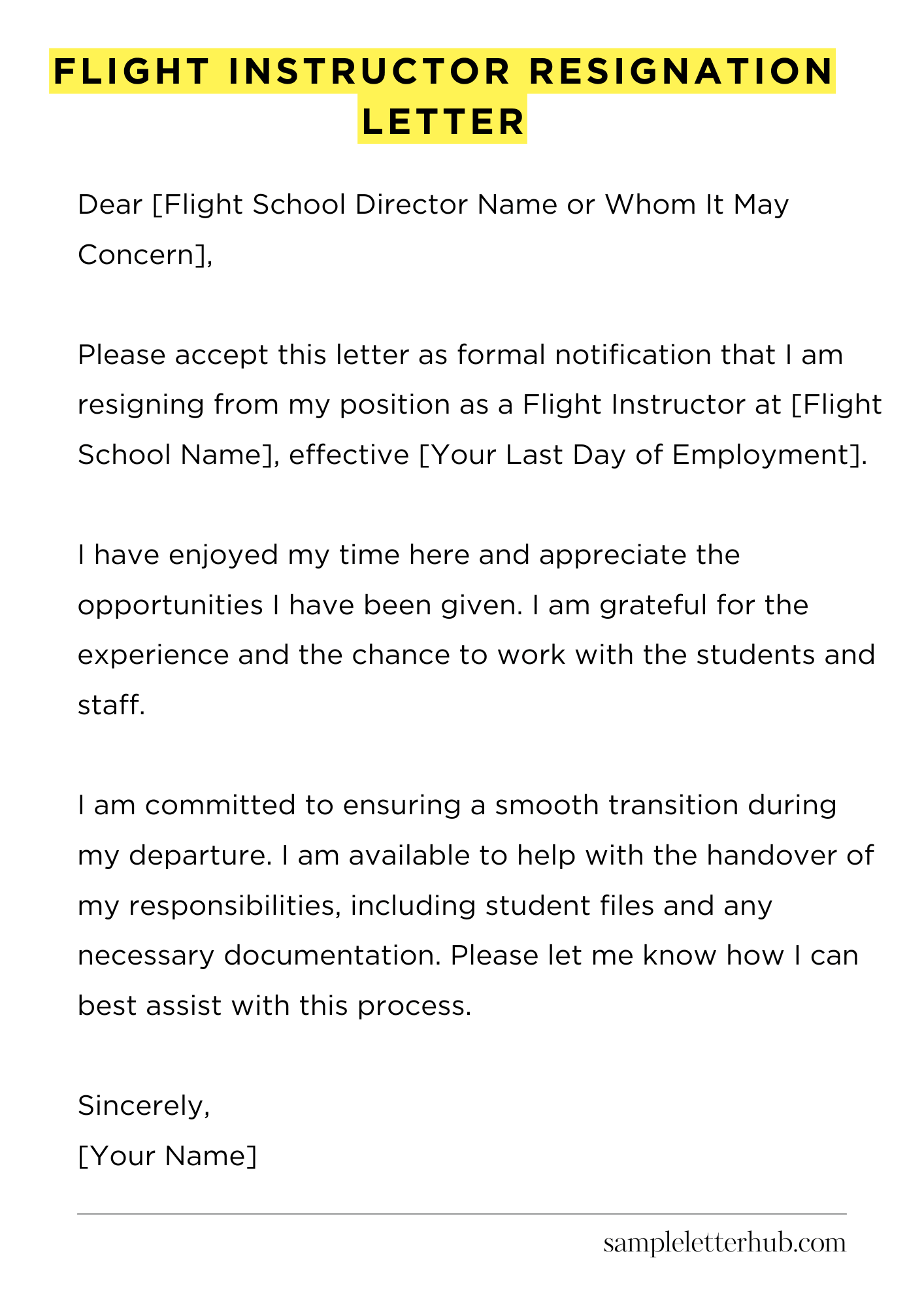
Dear [Flight School Director Name or Whom It May Concern],
Please accept this letter as formal notification that I am resigning from my position as a Flight Instructor at [Flight School Name], effective [Your Last Day of Employment].
I have enjoyed my time here and appreciate the opportunities I have been given. I am grateful for the experience and the chance to work with the students and staff.
I am committed to ensuring a smooth transition during my departure. I am available to help with the handover of my responsibilities, including student files and any necessary documentation. Please let me know how I can best assist with this process.
Thank you again for the experience. I wish you and the flight school all the best in the future.
Sincerely,
[Your Name]
How to Write a Flight Instructor Resignation Letter
1. Why Bother with a Letter Anyway?
So, you’re ready to move on from your flight instructor gig. That’s great! Maybe you’ve got a shiny new opportunity, or perhaps you’re just ready for a change of pace.
Whatever the reason, you’re going to need to officially resign. And that means a letter. But why? Well, a formal resignation letter isn’t just some bureaucratic formality; it’s actually really important. Firstly, it creates a clear, documented record of your departure.
This can protect both you and your employer. Secondly, it helps ensure a smooth transition. Your letter gives your employer time to plan for your replacement. Finally, it keeps things professional. Leaving on good terms can open doors in the future. You never know when you might need a recommendation or want to collaborate again.
2. The Essential Ingredients: What to Include
Alright, let’s get down to the nitty-gritty of what actually *goes* in the letter. You don’t need to write a novel. Start with a clear and concise opening. State your intention to resign and the specific date your resignation will be effective.
This is crucial! After that, keep it simple. Briefly acknowledge your employment, and the position you hold. Show some gratitude. Thank your employer for the opportunity to work there.
Mention something specific, if you like. Perhaps you learned a valuable lesson, or enjoyed working with a particular colleague. It’s a nice touch. Finally, make it easy for them. Include your contact information in case they need to get in touch about anything regarding your transition.
3. Crafting the Perfect Tone: Keep it Positive
Tone matters, especially when you’re leaving a job. Even if your experience wasn’t perfect, keeping your letter positive is usually the best approach. Avoid negativity.
Don’t dwell on problems or complaints, it doesn’t leave a good impression. Focus on gratitude and appreciation. Expressing thanks shows professionalism and leaves a lasting positive impact. Be polite and respectful. Remember, you might need a reference from this employer down the line. Keep the language professional.
Steer clear of slang or overly casual language. Your letter should reflect your professionalism. A positive tone makes for a much smoother and more pleasant departure.
4. Formatting for Success: Make it Readable
Good formatting goes hand in hand with clear communication. Start with a clean layout. Use a standard business letter format. This typically includes your address, the date, and the recipient’s information.
Use a professional font like Times New Roman or Arial. Keep the font size between 10 and 12 points for readability. Use clear paragraphs. Keep paragraphs short and to the point. Avoid long blocks of text that might be difficult to read.
Proofread carefully. Always, always, always proofread your letter before sending it. Check for typos, grammatical errors, and ensure the information is accurate. Errors can undermine your professionalism.
5. The Finishing Touches: Before You Send
Almost there! Before you hit send, there are a couple of things to consider. Give it to someone else to review. It’s always good to have a fresh pair of eyes look over your letter. This can help catch anything you might have missed. Make a copy for your records. Keep a copy of the letter for your personal files.
This is important for reference later, especially if you need it for future employment. Understand any company policies. Before you send your letter, make sure you understand your company’s resignation policies.
This can help ensure that you follow the proper procedures. Finally, deliver it correctly. Follow your employer’s preferred method for submitting resignations, whether it’s through email, hard copy, or a specific HR portal. And there you have it! A well-written resignation letter is a great way to end your time as a flight instructor on a high note.
FAQs about Flight Instructor Resignation Letter
What is the primary purpose of a Flight Instructor resignation letter?
The primary purpose of a flight instructor resignation letter is to formally notify their employer (usually a flight school or aviation organization) of their intent to leave their position. It serves as an official record of the resignation, the effective date of departure, and often expresses gratitude or provides context for the decision.
What key elements should be included in a Flight Instructor resignation letter?
A well-crafted flight instructor resignation letter should include: the date, the recipient’s name and title, a clear statement of resignation, the effective date of resignation, a brief and professional expression of gratitude for the opportunity (if desired), a statement regarding the return of company property (if applicable).
How much notice should a Flight Instructor provide in their resignation letter?
The amount of notice a flight instructor should provide depends on the employment contract, company policy, and local labor laws. However, a standard practice is typically two weeks’ notice.
Always refer to your employment agreement or consult with HR for the required notice period. Providing ample notice is considered professional and can help ensure a smooth transition.
Should a Flight Instructor explain the reason for resignation in the letter?
While not mandatory, briefly stating the reason for resignation can be beneficial. It helps provide context and can be helpful for the employer to understand and plan for the departure.
Keep it brief, professional, and focus on the future. Common reasons include accepting a different job, seeking career advancement, or personal reasons. Avoid negative statements or complaints.
What are some common mistakes to avoid in a Flight Instructor resignation letter?
Common mistakes to avoid include: being overly emotional or negative, failing to provide the correct notice period, not including a clear effective date of resignation, neglecting to return company property, and omitting contact information.
Always maintain a professional tone, proofread carefully, and keep a copy for your records. It’s also best to avoid burning bridges or criticizing the employer.
Related:
Resignation letter due to rude boss
Resignation letter moving to another state
Resignation letter due to illness of family member
Resignation letter due to study