


So, you’re leaving your finance job? You’ll need a “finance resignation letter.” This letter formally announces your departure. It’s a crucial step in ending your employment professionally. The letter informs your employer of your decision.
Writing this letter can feel tricky. You want to be clear and respectful. We understand. That’s why we’re here to help.
We’ve got you covered. We’ve compiled various templates. Examples of finance resignation letters are included. Consider them your starting point. Use them to craft your own perfect letter.
Finance Resignation Letter
Below is a sample of a Finance Resignation Letter:
[Your Name]
[Your Address]
[Your Phone Number]
[Your Email Address]
[Date]
[Employer’s Name]
[Company Name]
[Company Address]
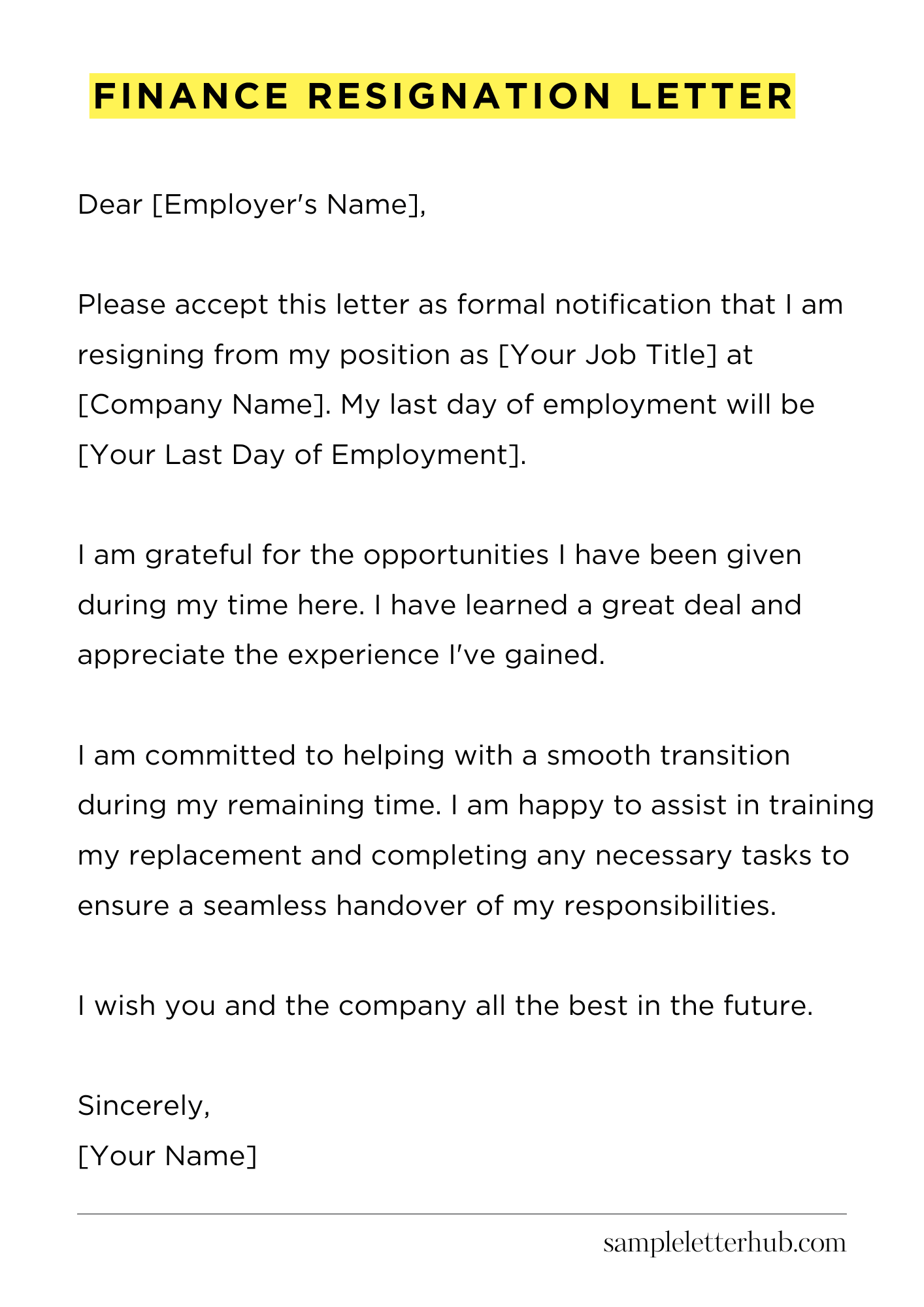
Dear [Employer’s Name],
Please accept this letter as formal notification that I am resigning from my position as [Your Job Title] at [Company Name]. My last day of employment will be [Your Last Day of Employment].
I am grateful for the opportunities I have been given during my time here. I have learned a great deal and appreciate the experience I’ve gained.
I am committed to helping with a smooth transition during my remaining time. I am happy to assist in training my replacement and completing any necessary tasks to ensure a seamless handover of my responsibilities.
I wish you and the company all the best in the future.
Sincerely,
[Your Name]
How to Write a Finance Resignation Letter
Resigning from any job can be a daunting task. Leaving the world of finance, however, requires a particularly careful approach. This is because finance roles often involve sensitive information and ongoing projects.
A well-crafted resignation letter is crucial. It ensures a smooth transition and maintains a professional reputation. Here’s how to write a finance resignation letter that’s both effective and respectful.
1. Keep it Concise and Clear
Clarity is key. Your letter’s primary purpose is to formally announce your departure. Get straight to the point. Start by stating your intention to resign. Include your last day of employment.
Don’t be vague or beat around the bush. Use clear and direct language. This avoids any confusion. A straightforward approach is always best.
Here’s a sample opening: “Please accept this letter as formal notification that I am resigning from my position as [Your Job Title] at [Company Name], effective [Your Last Day of Employment].”
Remember to check your employment contract for required notice periods. Adhering to these terms is vital to maintain professionalism.
2. Show Gratitude and Professionalism
Even if you’re leaving due to negative circumstances, maintain a positive tone. Express gratitude for the opportunity to work at the company. Mention any valuable experiences or skills you gained. This demonstrates professionalism. This leaves a good lasting impression. It also avoids burning bridges.
Consider a sentence like: “I am grateful for the opportunities I’ve been given during my time at [Company Name], and I have greatly valued my experience here.” A touch of sincerity goes a long way.
3. Address Outstanding Tasks and Offer Assistance
Finance roles often involve ongoing projects and critical deadlines. Acknowledge your current responsibilities in your letter. Offer assistance during the transition period. This shows consideration for your colleagues and the company. State your willingness to help ensure a smooth handover.
For example, you could write: “I am committed to ensuring a smooth transition. I am happy to assist in training my replacement and completing any outstanding tasks before my departure.
This includes things like [mention specific tasks].” This offer of support showcases your commitment. It helps to maintain a positive relationship.
4. Keep Confidentiality in Mind
Finance professionals deal with sensitive data daily. Your resignation letter is no exception. Avoid sharing any confidential information about the company.
Do not divulge any trade secrets. Refrain from making negative comments about colleagues or the company. Stick to the facts. Maintain a respectful and professional demeanor. Remember, this letter is a permanent record.
5. Review and Proofread Meticulously
Before submitting your letter, review it thoroughly. Proofread for any grammatical errors or typos. Double-check all dates and job titles. Ensure your tone is professional and respectful.
Get a second pair of eyes to review it. Even the smallest mistake can undermine your credibility. Submitting a polished letter reflects your attention to detail. This is a vital skill in the finance industry.
Following these guidelines will help you craft a finance resignation letter. You’ll ensure a positive transition. Also, you maintain your professional reputation. Good luck with your future endeavors!
FAQs about Finance Resignation Letter
What are the essential elements to include in a finance resignation letter?
A comprehensive finance resignation letter should include your formal resignation statement, the effective date of your resignation, a brief expression of gratitude for the opportunity, and any relevant details about the handover of your responsibilities.
It is also advisable to confirm the return of company property and express your willingness to assist during the transition period.
How much notice should I give when resigning from a finance role?
The standard notice period for finance roles typically aligns with employment contracts or company policy. However, a minimum of two weeks is generally considered standard, though you may be required to give longer, for example, a month or more. Review your employment contract and company handbook to determine the notice period required by your employer.
Considering the sensitive nature of the finance domain, providing ample notice is a gesture of professional courtesy and allows for a smoother transition.
Should I provide a reason for leaving in my finance resignation letter?
While it’s not mandatory, briefly stating your reason for leaving can be beneficial. It’s generally best to keep the reason concise and professional. You can simply state that you are pursuing another opportunity or that it’s a personal decision. Avoid negative comments about the company or colleagues.
However, if there are significant issues that you believe the employer should be aware of, you may consider bringing them up during your exit interview.
What is the appropriate tone for a finance resignation letter?
The tone should be professional, respectful, and courteous. Express your gratitude for the opportunity, and remain positive even if you are leaving due to negative circumstances. Avoid using inflammatory language or making accusations. Maintain a formal and business-like tone throughout the letter.
Is it necessary to mention the return of company property in the resignation letter?
Yes, it is often wise to mention the return of company property to clarify your intentions. Include a statement confirming your commitment to returning any company-owned assets, such as laptops, smartphones, or access cards. This demonstrates responsibility and helps avoid any misunderstandings during your departure.
Related:
Resignation letter due to rude boss
Resignation letter moving to another state
Resignation letter due to illness of family member
Resignation letter due to study