

Thinking of leaving your e-learning job? You’ll need a resignation letter. An e-learning resignation letter is a formal notice. It tells your employer you’re quitting. It officially marks the end of your employment.
Writing this letter can seem tricky. You want to be professional. You also want it to be clear and concise. Don’t worry, we’re here to help.
We’ve got you covered with examples. We will provide different templates. You can adapt them to your situation. These sample letters will help streamline your writing process.
Elearning Resignation Letter
Below is a sample of a Elearning Resignation Letter:
[Your Name]
[Your Address]
[Your Phone Number]
[Your Email Address]
[Date]
[Employer’s Name]
[Employer’s Title]
[Company Name]
[Company Address]
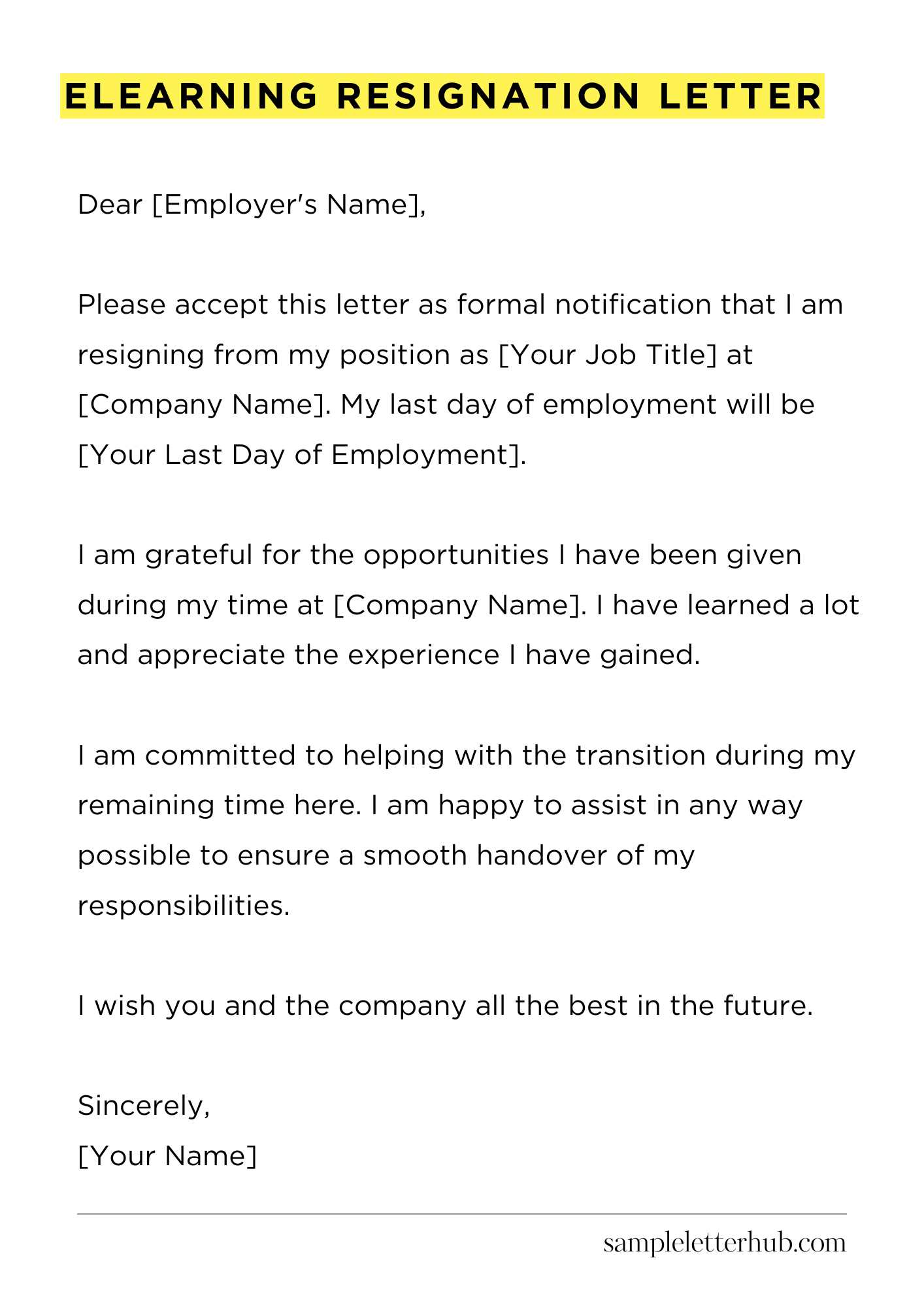
Dear [Employer’s Name],
Please accept this letter as formal notification that I am resigning from my position as [Your Job Title] at [Company Name]. My last day of employment will be [Your Last Day of Employment].
I am grateful for the opportunities I have been given during my time at [Company Name]. I have learned a lot and appreciate the experience I have gained.
I am committed to helping with the transition during my remaining time here. I am happy to assist in any way possible to ensure a smooth handover of my responsibilities.
I wish you and the company all the best in the future.
Sincerely,
[Your Name]
How to Write an eLearning Resignation Letter
Leaving a job can be a big step. Especially when it comes to the world of eLearning. You might have found a better opportunity, or maybe it’s time for a career change. Regardless of your reason, you’ll need to write a resignation letter.
This isn’t just about saying goodbye; it’s about doing it professionally. That’s why you need to get it right. Here’s a guide to help you craft an effective eLearning resignation letter.
1. Start with a Clear and Concise Introduction
Your opening needs to be direct. Begin by stating your intention clearly. Use a formal tone. This is not the time for casual language. State your name and your position. Then, explicitly state that you’re resigning.
Mention the effective date of your resignation. For instance, “Please accept this letter as formal notification that I, [Your Name], am resigning from my position as [Your Position] at [Company Name], effective [Your Last Day of Employment].” Simplicity and clarity are key here. Don’t overcomplicate it.
2. Express Gratitude and Acknowledge Your Experience
This is crucial. Show your appreciation for the opportunity. Briefly mention what you have gained from your time at the company. Talk about specific projects or experiences if you feel comfortable.
This helps maintain a positive relationship. Avoid negativity. Even if you had challenges, keep your tone professional. Remember, you want to leave a good impression. Consider phrases like, “I am grateful for the opportunities I’ve been given…” or “I have learned a great deal during my time here…” It’s a small thing, but it goes a long way.
3. Provide Necessary Details and Offer Assistance
Now, this is where you show your commitment to a smooth transition. Be helpful. Offer to assist with the handover of your responsibilities. You could offer to train a replacement. Mention your willingness to document your tasks. Also, it’s wise to include your contact information. This is to allow for any follow-up questions.
Your willingness to support the team reflects well on you. It demonstrates professionalism and consideration. Think about how you’d want a departing employee to act. That’s the tone you should aim for.
4. Keep it Short and Sweet, and Proofread Carefully
Length matters. Keep the letter concise. Aim for one page. Avoid rambling. Get to the point. Most importantly, proofread! Check for any grammatical errors or typos. Have someone else read it over for you.
A mistake can undermine your professionalism. Pay close attention to the details. Ensure the format is appropriate. Use a standard business letter format. This shows respect. A clean, well-written letter reflects positively on your attention to detail. Double check everything. You want to make a lasting, positive impression.
5. Conclusion and Final Thoughts
End on a positive note. Reiterate your thanks. Restate your effective date. You might wish the company and your colleagues well. Keep it brief. You can also offer a final, simple closing, like “Sincerely,” or “Respectfully,” followed by your full name.
Remember, this letter is a reflection of you. Make it count. Your goal is to leave gracefully and maintain good professional relationships. A well-written resignation letter can set the stage for future opportunities. It’s an important step in your eLearning career journey. Good luck with your next endeavor!
FAQs about Elearning resignation letter
How do I write an effective resignation letter for an eLearning position?
An effective resignation letter for an eLearning position should be professional, concise, and respectful. Start by stating your intention to resign and the effective date. Briefly express gratitude for the opportunity.
Mention any specific projects or experiences you valued, if desired. Keep it positive and avoid negative comments. Proofread carefully for any errors before submitting.
What key elements should be included in an eLearning resignation letter?
Key elements include a clear statement of resignation, your official name, the date, and the date of your last day of employment. Expressing gratitude to your employer is also good etiquette.
Consider briefly mentioning any completed projects or contributions you’re proud of. Maintain a professional tone and offer assistance with the transition process if possible, such as helping with knowledge transfer or training of your replacement.
What is the appropriate tone and language for an eLearning resignation letter?
The appropriate tone is professional, positive, and respectful. Use clear, concise language. Avoid jargon unless it’s widely understood in your workplace. Steer clear of negative comments or complaints. Maintain a friendly and appreciative demeanor. Express your gratitude for the opportunity and wish your employer and colleagues well for the future.
Should I provide a reason for resigning in my eLearning resignation letter?
Providing a reason for resigning is optional. While you aren’t generally required to provide a reason, some individuals choose to do so. If you choose to offer a reason, keep it brief and positive.
If you’re leaving for a new opportunity, simply stating that you’re pursuing other career interests is sufficient. Avoid detailed explanations or negative statements about your current employer.
What should I do after submitting my eLearning resignation letter?
After submitting your letter, follow up with your manager to discuss the transition. Be prepared to answer questions and assist with the handover of your responsibilities.
Maintain a professional attitude throughout your notice period. Complete any outstanding tasks to the best of your ability. Keep your manager informed of your progress. Finally, thank your colleagues and wish them well upon your departure.
Related:
Resignation letter due to rude boss
Resignation letter moving to another state
Resignation letter due to illness of family member
Resignation letter due to study