

A “Diretor Financeiro” resignation letter is a formal document. It is written by a Chief Financial Officer (CFO). The purpose? To officially announce their departure from a company. It’s a crucial step in the resignation process. It ensures everything is handled professionally.
Writing this letter can feel tricky. You need to be clear, concise, and professional. That’s where we come in. We have a variety of samples and templates. They will make the writing process much easier.
We have crafted different examples. Each one caters to various situations. You can customize them to fit your specific needs. Simply pick a template and personalize it. This makes it quick and easy to create your resignation letter.
Diretor Financeiro Resignation Letter
Below is a sample of a Diretor Financeiro Resignation Letter:
[Your Name]
[Your Address]
[Your Phone Number]
[Your Email Address]
[Date]
[Hiring Manager Name] (If known, otherwise use title)
Director of Finance
[Company Name]
[Company Address]
Dear [Mr./Ms./Mx. Last Name or Director of Finance],
Please accept this letter as formal notification that I am resigning from my position as Director of Finance at [Company Name], effective [Your Last Day of Employment].
I have truly valued my time here and appreciate the opportunities I have been given. I have learned a great deal and am grateful for the experience and support I have received during my employment.
I am committed to ensuring a smooth transition during my departure. I am available to assist in training my replacement and completing any outstanding tasks. Please let me know how I can be of assistance during this period.
I wish you and [Company Name] continued success in the future.
Sincerely,
[Your Signature]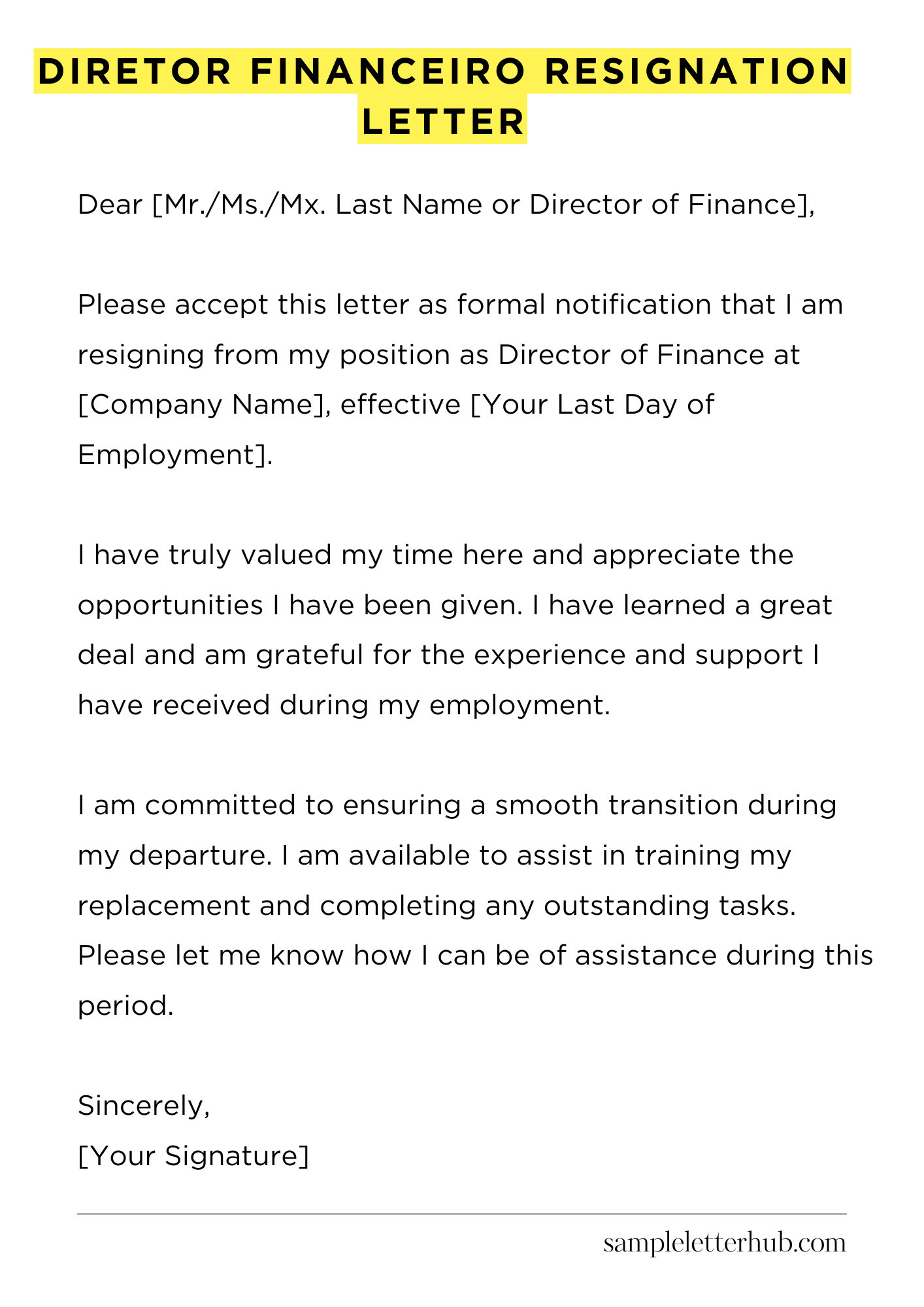
How to Write a Director of Finance Resignation Letter
1. Preparation is Key: Before You Begin
So, you’ve made the decision. You’re moving on. Leaving your Director of Finance role is a significant step. Before you put pen to paper (or fingers to keyboard), take a moment. You need to prepare properly.
First, carefully review your employment contract. Understand the specifics surrounding your departure, like required notice periods. Failing to comply can lead to complications, so don’t overlook it.
Next, reflect on your tenure. What are your accomplishments? How did you contribute? Jot these down. It’s helpful when you draft the letter. It’s also important to have a clear understanding of your future plans; this helps avoid awkwardness later. Finally, and most importantly, ensure your decision is final. Resignations are not usually something you take back.
2. Structure: The Anatomy of a Resignation Letter
A well-structured letter is crucial. Let’s break down the essential components. Begin with your name, address, the date, and the recipient’s information (usually your manager or the CEO). The first paragraph should clearly state your intention to resign. Keep it concise and direct; there’s no need for elaborate preambles.
Next, include your official last day of employment. This is where you’ll reference your contract’s stipulations. The following section is the most critical: express your gratitude. Acknowledge the opportunities you’ve been given. Briefly mention positive experiences or accomplishments. Keep it sincere. Avoid negativity.
Finally, offer your assistance with the transition. Offer to help train your replacement, or complete any ongoing projects. End with a professional closing, such as “Sincerely” or “Respectfully,” followed by your signature.
3. Content: What to Say and What to Avoid
The content is everything. Let’s dig deeper. Keep your letter professional and polite. Always. Avoid any negative comments about the company, your colleagues, or your former boss. Even if you have grievances, now’s not the time. Focus on the positive aspects of your experience. As we said before, highlight your contributions.
Think about specific projects you managed, financial goals you achieved, or teams you led. This reinforces your value. Avoid personal attacks or overly emotional language. Keep your tone neutral. Stick to facts. Ensure your language is clear and concise. Use proper grammar and spelling. Proofread, proofread, and proofread again! A sloppy letter reflects poorly on you.
4. Tailoring Your Letter: Adapt and Customize
Generic templates are available online, but personalize your letter. It’s the smart way to go. This shows that you took the time and effort. Consider your specific circumstances. Did you have a close working relationship with your boss? Did you work on a particular project that you want to mention?
Adapt the tone and content to match. However, certain elements remain constant. Always include your official last day. Always offer assistance with the transition. Always express gratitude. If you’re leaving for another job, you don’t need to specify where. However, if you are retiring, you can include that detail if you’d like.
The core goal is to leave on a positive note, maintaining your professional reputation. Think of the letter as your final statement, or final impression.
5. Delivery and Follow-Up: The Final Steps
Once your letter is drafted and proofread, consider your delivery strategy. Check your company policy. Typically, you will give the letter to your immediate supervisor. It is preferable to hand it in person. This allows for a final conversation. If that is not possible, send it via email. Always keep a copy for your records.
After submitting your letter, be prepared for a response. Your employer may schedule an exit interview. They may have questions about your departure. They may also discuss transition plans. Be prepared to answer professionally and courteously. Follow through on any offers of assistance you made in your letter.
Remember to handle all remaining tasks related to your resignation, such as returning company property. Finally, maintain a positive attitude throughout the process. A gracious exit will benefit you in the long run.
FAQs about Diretor Financeiro resignation letter
What is the essential information to include in a Diretor Financeiro resignation letter?
A Diretor Financeiro resignation letter should include your formal resignation, the effective date of your departure, a concise statement of gratitude for the opportunity, and any necessary details regarding the handover of responsibilities. It’s also wise to express your willingness to assist during the transition period. Finally, include your signature.
How much notice should a Diretor Financeiro give when resigning?
The standard notice period for a Diretor Financeiro is typically determined by their employment contract or local labor laws. However, a notice period of at least four weeks or one month is common.
It’s crucial to review the employment contract for the specific requirement and to provide as much notice as possible, ideally exceeding the minimum requirement, to facilitate a smooth transition.
Should a Diretor Financeiro explain the reasons for their resignation in the letter?
While not mandatory, briefly mentioning the reason for resignation can be beneficial. It allows for a polite and professional ending. This can be done with a brief, neutral statement, such as “to pursue other opportunities,” or “to focus on personal commitments.” Avoid overly detailed or negative explanations.
What is the appropriate tone for a Diretor Financeiro resignation letter?
The tone of the resignation letter should be professional, respectful, and appreciative. It’s crucial to maintain a positive and courteous attitude, regardless of the reasons for leaving. Refrain from expressing negativity or making any personal attacks. Focus on expressing gratitude for the experience and opportunities provided.
What should a Diretor Financeiro do after submitting their resignation letter?
Following the submission of the resignation letter, a Diretor Financeiro should cooperate fully with the employer during the transition period. This includes participating in handover meetings, training successors, and completing any remaining tasks. It is also important to maintain confidentiality regarding company information and to ensure a smooth and professional departure.
Related:
Resignation letter due to rude boss
Resignation letter moving to another state
Resignation letter due to illness of family member
Resignation letter due to study