

A Deputy Director resignation letter is a formal document. It announces your departure from the role. The purpose is to officially inform your employer of your intention to leave. It should also specify your last day of employment.
Crafting the perfect resignation letter can be tough. We understand it needs to be professional and clear. That’s why we’re here to help. You will find various templates and examples.
Get ready to make your life easier. This article offers several samples. They can guide you through the process. Use them to write your own letter. Let’s get started.
Deputy Director Resignation Letter
Below is a sample of a Deputy Director Resignation Letter:
[Your Name]
[Your Address]
[Your Phone Number]
[Your Email Address]
[Date]
[Hiring Manager Name] (If known, otherwise use title)
Deputy Director
[Organization Name]
[Organization Address]
Dear [Mr./Ms./Mx. Last Name or Hiring Manager],
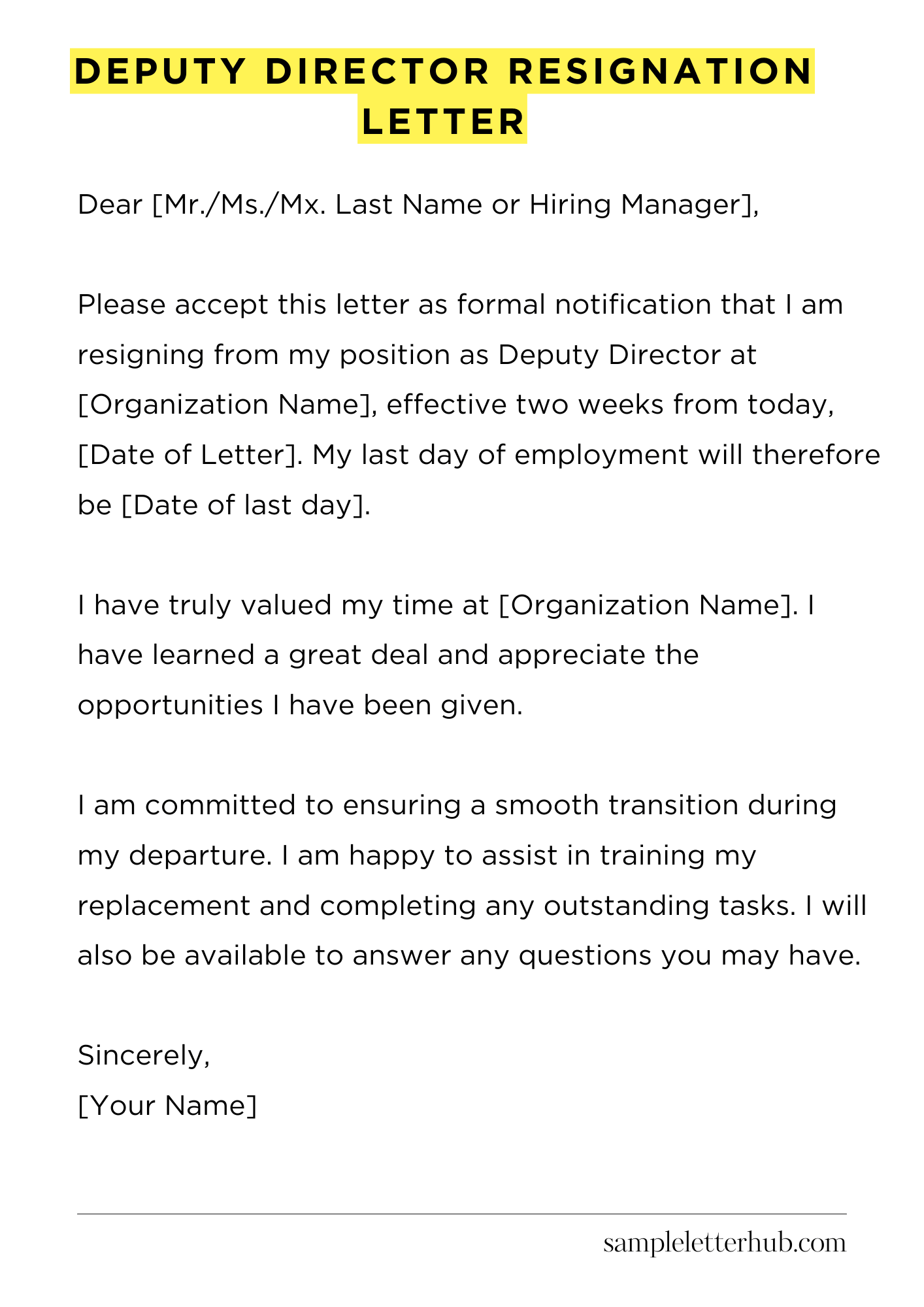
Please accept this letter as formal notification that I am resigning from my position as Deputy Director at [Organization Name], effective two weeks from today, [Date of Letter]. My last day of employment will therefore be [Date of last day].
I have truly valued my time at [Organization Name]. I have learned a great deal and appreciate the opportunities I have been given.
I am committed to ensuring a smooth transition during my departure. I am happy to assist in training my replacement and completing any outstanding tasks. I will also be available to answer any questions you may have.
I wish [Organization Name] continued success in the future.
Sincerely,
[Your Name]
How to Write a Deputy Director Resignation Letter
Understanding the Basics: Why It Matters
Resigning from a Deputy Director position is a significant step. You need to do it right. Your resignation letter is more than just a formality; it’s a professional statement that reflects your character and leaves a lasting impression. Consider it a crucial piece of your career puzzle. A well-crafted letter can open doors for you down the line. A poorly written one, well, it could damage your reputation.
This document can impact your future opportunities, especially when seeking references. Make sure everything is perfect.
Crafting the Structure: Your Roadmap to Success
Let’s get down to the nitty-gritty. Your letter should follow a specific structure. Keep it simple and clear. Start with a formal salutation, using the appropriate title and the recipient’s name (e.g., “Dear Mr./Ms. [Last Name]”).
Next, state your intention to resign directly. Mention your official position and the effective date of your departure. Keep the opening statements professional. After that, express your gratitude for the opportunity. Include the things you enjoyed. It is good to mention any achievements too. Keep the message positive.
Then, provide a brief, professional reason for your resignation. You don’t need to overshare. Be concise. Finally, conclude with a thank you, reiterate your commitment to a smooth transition (if you are), and include your contact information for future correspondence. End with a professional closing (e.g., “Sincerely” or “Best Regards”).
Writing the Content: Saying the Right Things
The content is key. Now, what do you actually write? Make sure to maintain a formal tone. Avoid negativity, even if your experience wasn’t entirely positive. Start with a direct statement of resignation. For example, “Please accept this letter as formal notification that I am resigning from my position as Deputy Director, effective [Date].”
Show your appreciation. “I am grateful for the opportunities I’ve had during my time here” is a great line to include. Keep your reasons brief, “I am pursuing a new opportunity.” Don’t elaborate unnecessarily. If you are willing, offer assistance with the transition. End by expressing thanks. Mention you can be reached at your phone number or email.
Transition and Delivery: Making a Smooth Exit
Now, how do you manage the actual transition? Ensure you follow your company’s protocols. Review your employment contract. It may contain specific requirements regarding notice periods and resignation procedures.
Ensure you give sufficient notice. Most employers require two weeks, although more senior positions often require longer. Don’t just email the letter. It is vital to present the letter in person. After you’ve submitted your letter, be prepared for a discussion.
It is important to be professional. Avoid burning bridges. Be willing to assist in training your replacement. Make sure to gather all essential personal belongings.
Final Thoughts: Polishing Your Masterpiece
Before sending it, proofread your letter meticulously. Use spell-check and grammar-check, and consider asking a trusted colleague to review it for clarity and tone. Check everything again. Make sure everything is correct. The smallest error can detract from your message. Keep a copy for your records. Consider your resignation letter a final professional statement.
By following these steps, you can create a Deputy Director resignation letter that reflects professionalism, courtesy, and a positive outlook for the future.
FAQs about Deputy Director resignation letter
How much notice should a Deputy Director give when resigning?
The standard notice period for a Deputy Director is typically outlined in their employment contract or company policy. Common notice periods range from two weeks to three months, with three months often being the norm for leadership roles.
It is crucial to review the employment contract to determine the specific requirement and adhere to it to avoid any potential legal or professional repercussions.
What should be included in a Deputy Director resignation letter?
A well-crafted resignation letter should include: a formal statement of resignation; the effective date of resignation; a brief statement of gratitude for the opportunity; a concise and professional reason for leaving (optional); any necessary details regarding the handover of responsibilities; and a professional closing with your contact information.
Keep the tone professional and positive, even if your reasons for leaving are not entirely positive.
How can a Deputy Director ensure a smooth transition after resigning?
To ensure a smooth transition, a Deputy Director should: offer to assist in the handover process; prepare detailed documentation of current projects and responsibilities; identify and train a replacement if possible; be available for consultation during the transition period; and maintain a professional and cooperative demeanor throughout the process.
Proper planning and communication are key to minimizing disruption.
What are the legal implications of resigning as a Deputy Director?
The legal implications of resigning as a Deputy Director can vary based on the employment contract and applicable local labor laws. Reviewing the contract is paramount. It’s also important to be aware of any non-compete clauses, confidentiality agreements, or intellectual property rights.
Consulting with an employment lawyer is advised if there are concerns about these legal aspects.
Can a Deputy Director negotiate the terms of their resignation?
Yes, a Deputy Director may negotiate certain terms of their resignation, particularly if there are specific concerns or requests. These can include: the effective date of resignation; the nature of the handover process; or the inclusion of specific clauses in the separation agreement. It is important to have these negotiations in writing, and if necessary, seek legal counsel to protect your interests.
Related:
Resignation letter due to rude boss
Resignation letter moving to another state
Resignation letter due to illness of family member
Resignation letter due to study