

Leaving a job requires a formal letter. This letter is a resignation letter. Specifically, it’s for a Customer Account Manager. The purpose? To officially inform your employer of your departure. It also states your last day of work. It’s a crucial step in the process.
Facing this task can feel daunting. Crafting the perfect resignation letter isn’t always easy. That’s why we’re here to help. We’ll provide a variety of templates. These samples will guide you.
Use these examples as a starting point. Adapt them to your unique situation. We aim to make the process smoother. Get ready to write your letter with confidence!
Customer Account Manager Resignation Letter
Below is a sample of a Customer Account Manager Resignation Letter:
[Your Name]
[Your Address]
[Your Phone Number]
[Your Email Address]
[Date]
[Recipient Name]
[Recipient Title]
[Company Name]
[Company Address]
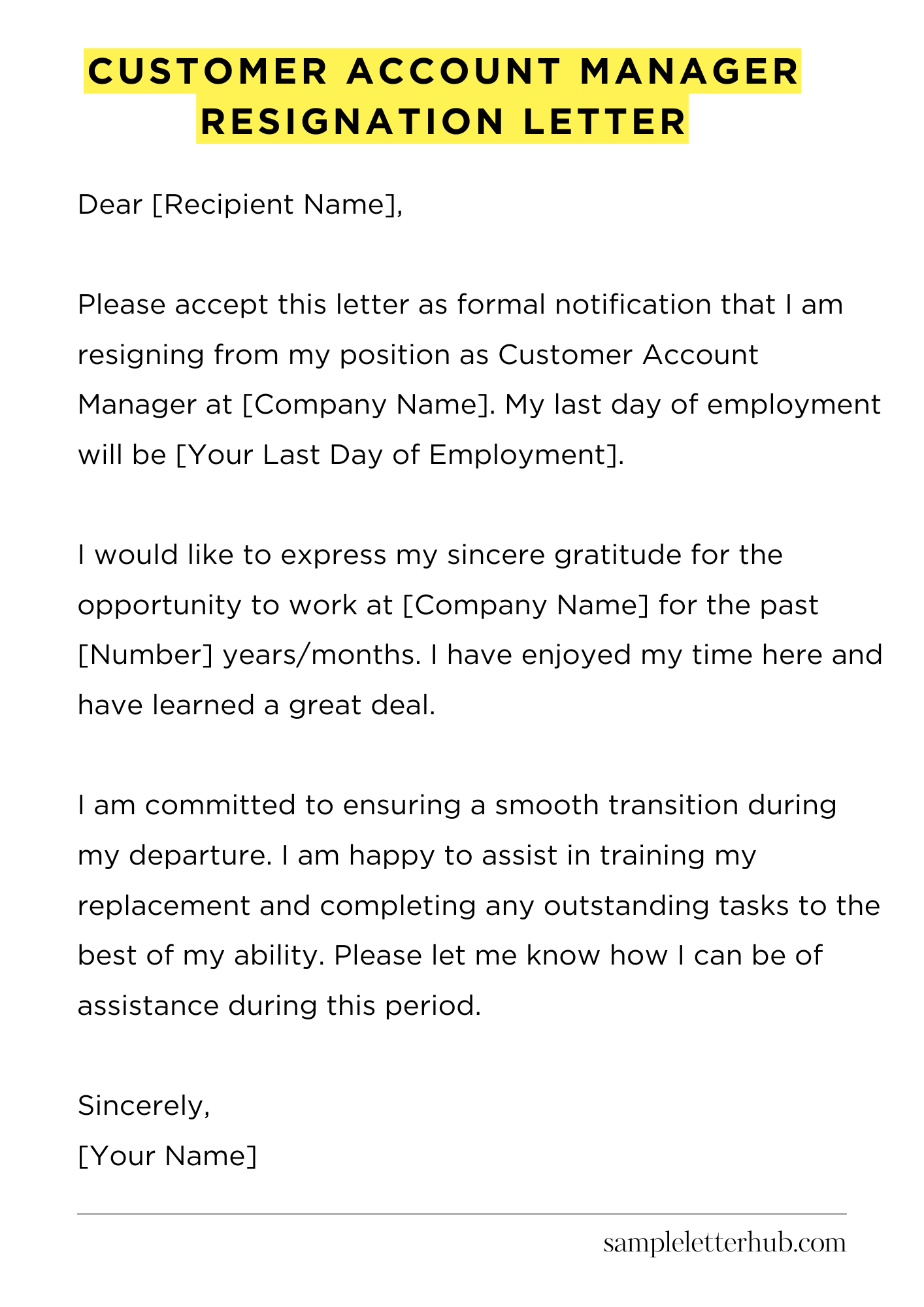
Dear [Recipient Name],
Please accept this letter as formal notification that I am resigning from my position as Customer Account Manager at [Company Name]. My last day of employment will be [Your Last Day of Employment].
I would like to express my sincere gratitude for the opportunity to work at [Company Name] for the past [Number] years/months. I have enjoyed my time here and have learned a great deal.
I am committed to ensuring a smooth transition during my departure. I am happy to assist in training my replacement and completing any outstanding tasks to the best of my ability. Please let me know how I can be of assistance during this period.
I wish you and [Company Name] all the best in the future.
Sincerely,
[Your Name]
How to Write a Customer Account Manager Resignation Letter
So, you’ve made a big decision. You’re ready to move on from your role as a Customer Account Manager. Good for you! But before you leap into the next chapter, you need to handle the crucial step of writing a resignation letter. This isn’t just a formality; it’s a professional courtesy and a vital part of your career journey.
It ensures a smooth transition and leaves a positive impression, even if you’re leaving on less than amicable terms. Let’s break down how to craft an effective resignation letter.
1. Keep It Concise and Clear
Simplicity is key. Your letter’s primary purpose is to officially announce your departure. Resist the urge to write a novel. Get straight to the point. State your intent to resign, your last day of employment, and your role. Make sure your tone is professional. Avoid emotional language, regardless of how you feel about the job or the company.
Stick to the facts. This clarity demonstrates respect for your employer and makes the process straightforward for them. Remember, brevity can be powerful.
2. Express Gratitude (Even If It’s Hard)
Even if your experience wasn’t perfect, expressing gratitude is highly recommended. It’s the courteous thing to do. Thank your employer for the opportunity to work there. This is especially important for future opportunities, as it leaves a positive lasting impression. Mention any specific experiences, skills gained, or mentors that were important to you.
Acknowledge your time and the chance to contribute to the company’s success. Even a simple “Thank you for the opportunity to have worked here” goes a long way. It demonstrates your professionalism.
3. Provide a Transition Plan (If Possible)
Ideally, offer to help with the transition. This shows consideration for your colleagues and your employer. You can offer to train your replacement. You can also create documentation to make the transition easier. Offer a list of outstanding projects. A thoughtful transition plan can speak volumes about your integrity.
It helps ease the burden of your departure. Your former employer may think very highly of you for it. It shows you’re not just thinking about yourself, you are thinking about the greater good.
4. Maintain a Professional Tone
Your tone should always be professional. Stay away from gossip and complaining. Avoid negative comments about colleagues or the company. Think of it as a farewell note for future you. No matter your reasons for leaving, be respectful in your communication. This will increase the odds of a favorable reference in the future.
Always proofread your letter before sending it. Make sure you don’t have any errors, grammatical or otherwise. Maintain a positive and respectful outlook throughout the letter.
5. Formatting and Delivery
Format your letter professionally. Use a standard business letter format. Include your name, address, and the date. Send the letter to your manager and HR department.
Save a copy for your records. Consider sending it via email and through formal mail delivery. Make sure the email subject is clear: “Resignation – [Your Name]”. This helps the letter stand out. Be sure to confirm that the letter was received. This gives you peace of mind.
FAQs about Customer Account Manager resignation letter
Understanding the nuances of a Customer Account Manager’s resignation letter is crucial for both employees and employers. This guide addresses the most commonly encountered questions on this important topic.
What essential information should I include in a Customer Account Manager resignation letter?
Your resignation letter should include: your official resignation, the date of your last day of employment, a concise statement of gratitude for the opportunity, and any necessary details regarding the handover of your responsibilities.
It’s often advisable to briefly mention your reasons for leaving, if you feel comfortable doing so, and to offer assistance during the transition period. Ensure accuracy in your company and contact information.
How much notice should I give when resigning as a Customer Account Manager?
The standard notice period varies depending on your employment contract and local labor laws. However, a two-week notice is typical in many professional settings. Review your contract carefully for any specific requirements. Providing more notice, if possible, can be beneficial in terms of maintaining good relationships with your employer and ensuring a smooth transition.
What are some of the common reasons for resigning from a Customer Account Manager role, and should I include them in my letter?
Common reasons include: accepting a new job opportunity, seeking career advancement, dissatisfaction with the current role or company, and personal circumstances. Whether or not to include the reasons in your letter is a matter of personal discretion.
While it’s not always necessary to provide detailed explanations, a brief and professional statement, such as “pursuing a new opportunity” or “seeking career growth,” can be appropriate. However, avoid negativity and focus on a positive tone.
How should I handle the handover of my responsibilities after submitting my resignation letter?
After submitting your letter, proactively work with your manager to create a handover plan. This involves identifying key responsibilities, documenting processes, training your replacement, and ensuring client relationships are seamlessly transferred. Prioritize tasks and communicate progress regularly.
Be accessible and responsive during your notice period to facilitate a smooth transition for both your team and your clients.
What is the importance of maintaining professionalism in a Customer Account Manager resignation letter?
Maintaining professionalism is paramount. Your resignation letter is a formal document and should reflect your positive attitude and work ethic. It helps preserve a professional relationship with your employer, and it prevents negative information to be shared about you in the future with your next employer.
A well-written, respectful letter leaves a positive lasting impression and can be valuable if you need a reference in the future.
Related:
Resignation letter due to rude boss
Resignation letter moving to another state
Resignation letter due to illness of family member
Resignation letter due to study