

A Conference Coordinator resignation letter is a formal document. It informs your employer of your intention to leave. This letter officially ends your employment. It sets the date of your last day.
Thinking of moving on? Writing this letter might seem tough. We’re here to help you get started. We’ll share some templates and examples. These are designed to make it simple.
Ready to craft your own letter? We’ll provide different sample formats. You can adapt them to your specific situation. This will help you write a professional resignation.
Conference Coordinator Resignation Letter
Below is a sample of a Conference Coordinator Resignation Letter:
[Your Name]
[Your Address]
[Your Phone Number]
[Your Email Address]
[Date]
[Conference Coordinator’s Manager Name]
[Conference Coordinator’s Manager Title]
[Organization Name]
[Organization Address]
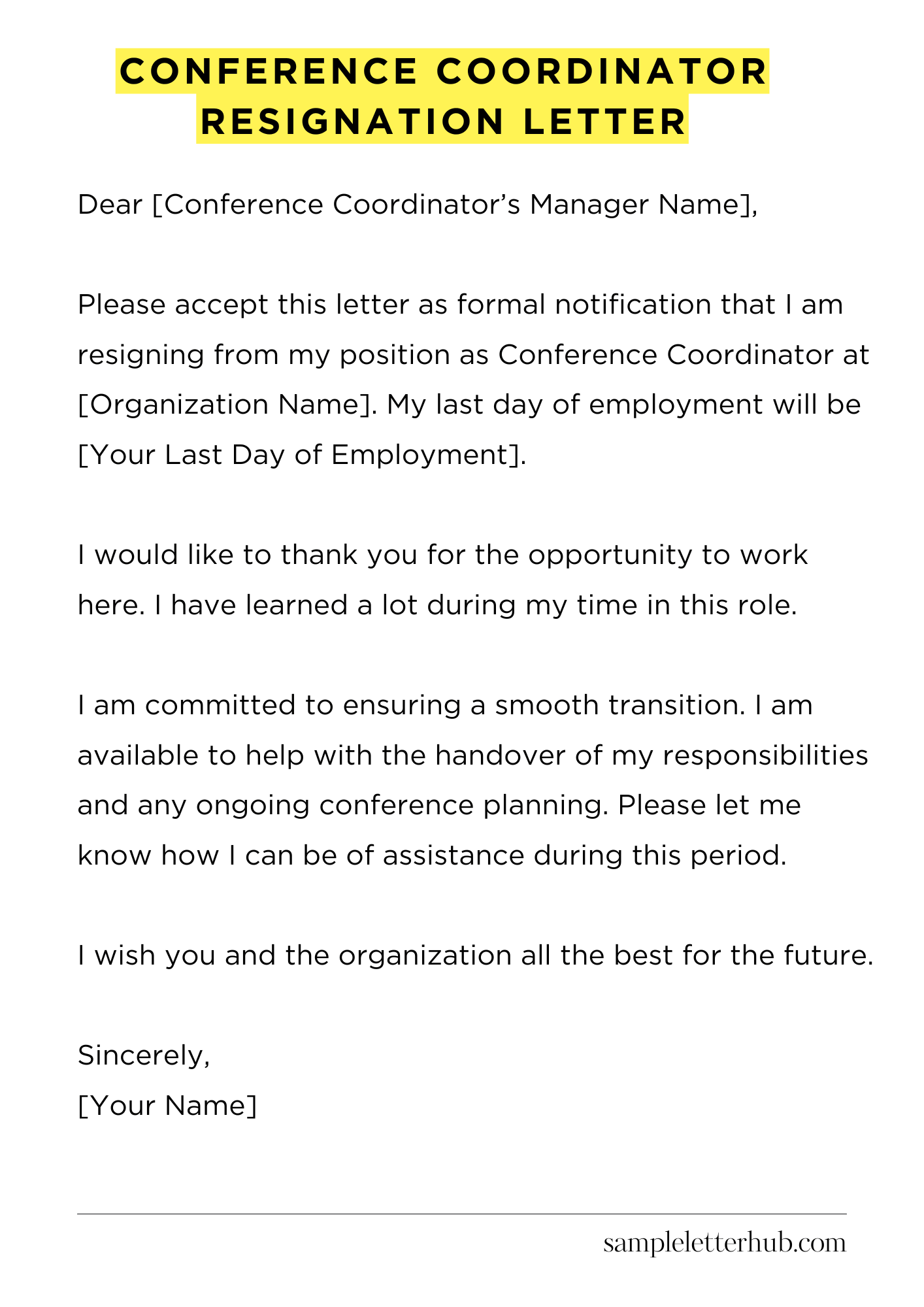
Dear [Conference Coordinator’s Manager Name],
Please accept this letter as formal notification that I am resigning from my position as Conference Coordinator at [Organization Name]. My last day of employment will be [Your Last Day of Employment].
I would like to thank you for the opportunity to work here. I have learned a lot during my time in this role.
I am committed to ensuring a smooth transition. I am available to help with the handover of my responsibilities and any ongoing conference planning. Please let me know how I can be of assistance during this period.
I wish you and the organization all the best for the future.
Sincerely,
[Your Name]
How to Write a Conference Coordinator Resignation Letter
Resigning from a job can feel like a big step. Especially when it involves a role like Conference Coordinator. You’ve likely invested time, energy, and a lot of planning in making events happen. Writing a proper resignation letter is the professional way to go. This essential document allows you to express your decision formally and with respect.
1. Get Started: The Basics You Need
Your resignation letter needs to be clear and concise. Start with your contact information at the top. This includes your name, address, phone number, and email. Next, add the date you are writing the letter.
Below that, include the recipient’s information. This usually means your supervisor’s name and title. Also, include the company’s name and address. Following these simple steps ensures your letter is easy to identify and route correctly.
2. The Core Message: Stating Your Resignation
The most important part of your letter is the declaration of your resignation. Begin with a direct statement. For example, “Please accept this letter as formal notification that I am resigning from my position as Conference Coordinator.”
Keep it simple and to the point. State your last day of employment. This is crucial for planning the transition. A good idea is to reiterate it within the first few sentences.
3. Expressing Gratitude: Showing Your Appreciation
Even if the job wasn’t perfect, showing gratitude is crucial. This demonstrates professionalism. Briefly express your appreciation for the opportunity. You can mention specific experiences or skills you gained. Consider thanking the company for the experience and the colleagues you have worked with. A brief, heartfelt sentence can go a long way.
4. Offering Assistance: Smooth Transition
Being helpful during your departure is another sign of professionalism. Offer your assistance during the transition period. State your willingness to help train your replacement, or complete any ongoing tasks.
This shows that you are committed to a seamless handover. Offer to answer questions or provide any necessary documentation. Your proactive approach leaves a positive impression.
5. The Final Touch: Closing and Signature
Conclude your letter with a professional closing. Use a formal closing, like “Sincerely” or “Best regards.” Below your closing, leave space for your signature. Print your name underneath your signature. Keep a copy of the letter for your records. Consider hand-delivering your letter or sending it via certified mail.
This provides confirmation of receipt and adds a layer of professionalism.
FAQs about Conference Coordinator resignation letter
What is the primary purpose of a Conference Coordinator resignation letter?
The primary purpose of a Conference Coordinator resignation letter is to formally notify the employer of the employee’s intent to leave their position. It serves as an official record of the resignation, including the effective date of departure, and provides an opportunity to express gratitude or provide additional details about the transition.
What key elements should be included in a Conference Coordinator resignation letter?
Essential elements include a clear statement of resignation, the specific effective date of departure, a brief expression of gratitude for the employment opportunity, and (optionally) a concise explanation for the resignation. It’s also typical to offer assistance with the transition process.
How far in advance should a Conference Coordinator submit their resignation letter?
The standard practice is to provide at least two weeks’ notice, though this can vary depending on company policy or contractual agreements. Checking the employment contract or employee handbook for specific guidelines on the required notice period is recommended.
Should a Conference Coordinator resignation letter include the reason for leaving?
While not mandatory, including a brief, professional reason for leaving can be helpful, especially if you wish to maintain positive relationships with your employer. This could be a reference to a new opportunity, a change in personal circumstances, or a simple statement of seeking a new challenge. Keep the tone positive and focused on the future.
How should a Conference Coordinator handle the transition process in their resignation letter?
The letter should express your willingness to assist with the transition. You can offer to train your replacement, complete any outstanding tasks, or provide documentation to ensure a smooth handover. Offering to be available for questions after departure can also be a considerate gesture.
Related:
Resignation letter due to rude boss
Resignation letter moving to another state
Resignation letter due to illness of family member
Resignation letter due to study