

Facing a career change? A “Communication Officer resignation letter” is your formal goodbye. It’s a crucial document. It officially informs your employer of your departure. It serves as a record of your resignation.
This article is designed to help. We’ve got you covered. We’ll provide a variety of examples. These are sample resignation letters. They can be adapted. Use them as inspiration. Craft your perfect farewell message.
Ready to start? We’ll provide different formats. We have templates for various situations. Your transition should be as smooth as possible. Let’s get you started.
Communication Officer Resignation Letter
Below is a sample of a Communication Officer Resignation Letter:
[Your Name]
[Your Address]
[Your Phone Number]
[Your Email Address]
[Date]
[Hiring Manager Name] (If known, otherwise use title)
[Hiring Manager Title]
[Company Name]
[Company Address]
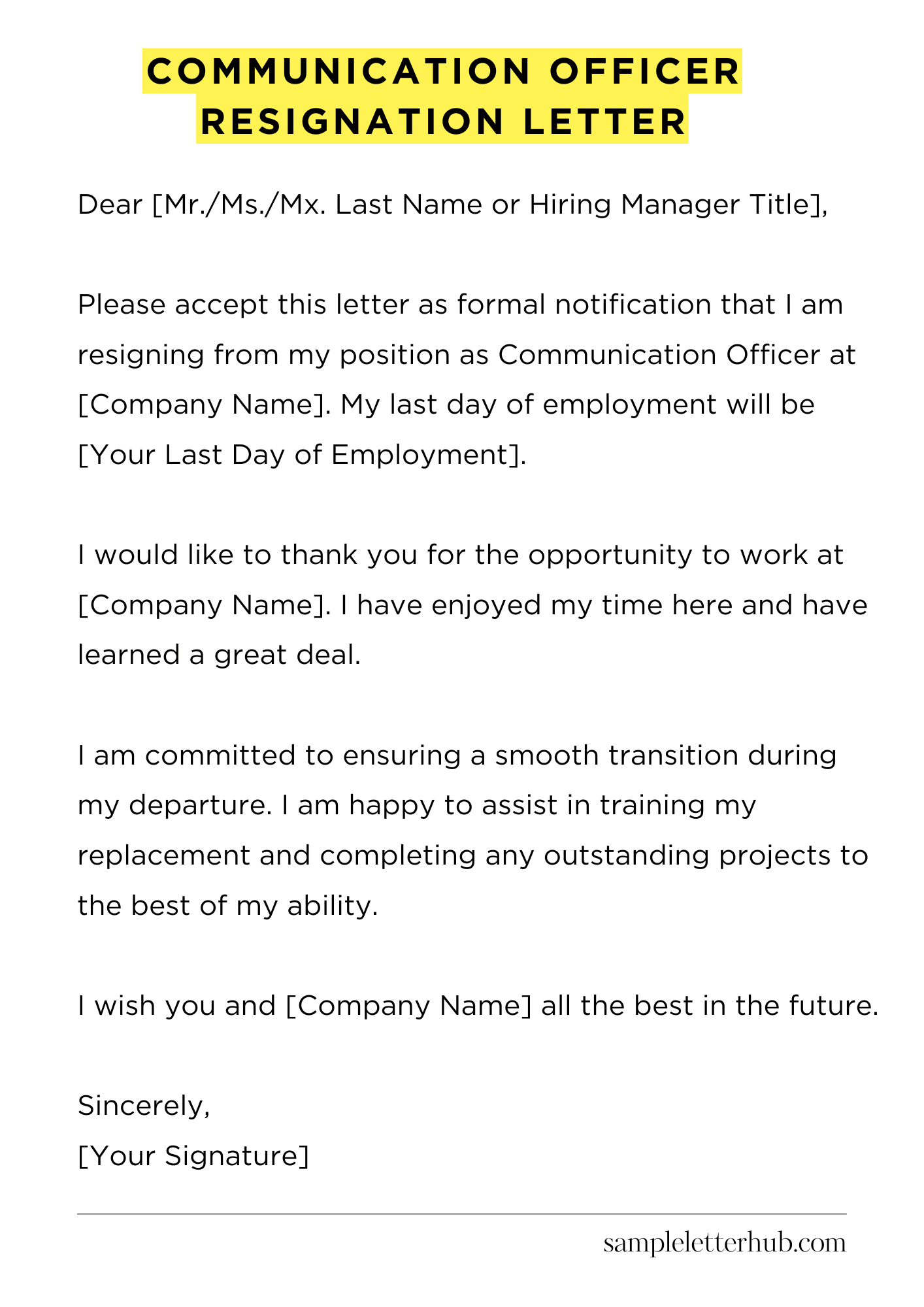
Dear [Mr./Ms./Mx. Last Name or Hiring Manager Title],
Please accept this letter as formal notification that I am resigning from my position as Communication Officer at [Company Name]. My last day of employment will be [Your Last Day of Employment].
I would like to thank you for the opportunity to work at [Company Name]. I have enjoyed my time here and have learned a great deal.
I am committed to ensuring a smooth transition during my departure. I am happy to assist in training my replacement and completing any outstanding projects to the best of my ability.
I wish you and [Company Name] all the best in the future.
Sincerely,
[Your Signature]
How to Write a Communication Officer Resignation Letter
So, you’re moving on? Congratulations on your next chapter! Resigning from your role as a Communication Officer means you have to craft a professional resignation letter. This is more than just a formality; it’s a critical piece of communication that can impact your future professional relationships. Let’s walk through how to do it right.
Step 1: Get the Basics Right
First things first. You must include the date at the top, followed by the recipient’s name (your direct supervisor or HR), their title, and the company’s name and address.
A clear and concise subject line is essential. Something like “Resignation – [Your Name]” will do the trick. You will want to keep it simple and straightforward. Think about how you want to be remembered at this company. Accuracy and professionalism are key here.
Step 2: State Your Intent and End Date
This is where you make it clear. Directly state that you are resigning from your position as Communication Officer. Include your last day of employment. This is crucial for planning purposes and ensuring a smooth transition.
Be definitive! For example, “Please accept this letter as formal notification that I am resigning from my position as Communication Officer, effective [Date].” You don’t need to beat around the bush; get straight to the point.
Step 3: Express Gratitude and Highlight Achievements (Optional)
While a resignation letter is about leaving, it’s also a chance to show appreciation. Briefly express your gratitude for the opportunity to work at the company. You could mention any specific positive experiences or what you’ve learned.
If you have the space and desire, you can also briefly mention some key accomplishments during your tenure. Keep it positive! It’s all about maintaining a positive relationship. Avoid negativity at all costs.
Step 4: Offer Assistance with the Transition
Show your professionalism by offering to assist with the transition. This is a crucial element. This could include training your replacement, documenting your processes, or completing ongoing projects.
A simple statement such as, “I am committed to ensuring a smooth transition and am happy to assist in any way possible” is perfect. This shows you’re a team player and care about leaving things in good shape.
Step 5: Closing and Signature
End your letter with a polite closing, such as “Sincerely” or “Best regards.” Then, include your typed name, and leave space for your signature above it. Sign the letter in blue or black ink. Proofread it carefully before submitting. Ensure there are no typos or grammatical errors.
This attention to detail will leave a lasting positive impression. Submitting a well-written letter reinforces your professionalism and ensures a positive departure from your position. Remember, this is a part of your professional record!
FAQs about Communication Officer resignation letter
Resigning from a position as a Communication Officer requires careful consideration and a well-crafted letter. Below are some of the most common questions people have regarding this process, along with their answers.
What is the essential information to include in a Communication Officer resignation letter?
A Communication Officer resignation letter should include your formal resignation, the effective date of your departure, a concise and professional statement of your reason for leaving (if you choose to include one), a brief expression of gratitude to the company or supervisor.
How much notice should a Communication Officer give when resigning?
The standard notice period for a Communication Officer, as with most professional roles, is typically two weeks. However, this can vary based on your employment contract, company policy, or local labor laws. Always refer to your employment agreement to clarify the required notice period. If no such agreement exists, two weeks is generally the accepted standard.
Should I provide a reason for resigning in my Communication Officer resignation letter?
While not mandatory, it’s often courteous to briefly state your reason for leaving. You can keep it brief and professional. Some common examples include pursuing another opportunity, relocating, or personal reasons. It is also acceptable to state that you are resigning for “personal reasons” if you prefer not to disclose details. The specifics of your reason are optional.
How should I handle outstanding projects or responsibilities in my Communication Officer resignation letter?
In your letter, offer your assistance in the transition process. This shows professionalism and a commitment to ensuring a smooth handover. You can offer to train your replacement, document ongoing projects, or provide a list of key contacts and deadlines. It also demonstrates your professionalism.
What tone and format should I use in my Communication Officer resignation letter?
Maintain a professional and respectful tone throughout your resignation letter. Use a formal business letter format. Keep the language clear and concise, avoiding overly emotional or negative statements. Your letter should be well-organized, with a clear subject line and a polite closing.
Related:
Resignation letter due to rude boss
Resignation letter moving to another state
Resignation letter due to illness of family member
Resignation letter due to study